
For five days this week, the fastest dogs in the country will tear across a stadium field in Tucson, threading weave poles at a blur and launching over jumps while their humans sprint alongside, pointing and shouting cues. The 2026 Cynosport Dog Agility World Games, presented by Purina Pro Plan, run November 11 through 15 at the Kino Sports Complex in Tucson, Arizona. Admission is free, the gates open to the public, and the action starts around 9 a.m. daily across multiple rings.
It is the United States Dog Agility Association's flagship event of the year, and this one carries extra weight: it closes out USDAA's 40th anniversary celebration. If you have never watched top-level agility, this is the week to tune in or, if you're anywhere near southern Arizona, to grab a folding chair and go. And if watching leaves you wondering whether your own dog could do that, the honest answer is: probably, and more easily than you'd think.
What's happening in Tucson this week
The Cynosport World Games are, in effect, the national championship of USDAA agility. Only dogs that earned their spot during a long qualifying season get to run here. Teams spent the past year chasing qualifying runs at local trials and regional championships, and the ones who made it are, as USDAA puts it, "some of the world's top agility teams." There are no exhibition or just-for-fun entries at this level. Every dog on that field earned the ticket.
Over the five days, competitors chase USDAA's most coveted titles across several tournament formats. The centerpiece is the Grand Prix of Dog Agility, alongside the Steeplechase, the team event, and the Purina Pro Plan Dog Agility League, with cash prizes paid out in the championship finals. Judges, running orders, and multiple rings keep the whole complex humming from morning to late afternoon. Purina Pro Plan is the presenting sponsor; Max200 provides the competition equipment.
Tucson is familiar ground for the event, and the Kino Sports Complex's wide-open fields give spectators room to wander between rings and catch different classes back to back. For a free sporting event, the density of elite athleticism on display is hard to beat.
A sport that started with 79 dogs
Agility looks modern, but its roots run deep. The sport made its public debut as entertainment at England's Crufts Dog Show in 1978, and it crossed the Atlantic soon after. USDAA founder Kenneth Tatsch announced the organization in November 1986, and today USDAA bills itself as "the world's largest independent canine sports authority dedicated to promoting the sport of dog agility."
The Grand Prix, the tournament anchoring this week's finals, tells the growth story in miniature. When Tatsch launched it in 1988 as North America's first dog agility tournament, it drew 79 competitors. It has since expanded into a sprawling pipeline of more than 100 local qualifiers feeding regional championships and, finally, the world finals, with competitors from more than 20 countries taking part over the years. "There have been remarkable transformations within the sport over these past 35 years," Tatsch reflected. "All sports evolve, and dog agility is no different."
That evolution is exactly why this weekend is worth your attention even if you've never set foot in an agility ring. What you'll see in Tucson is the polished, high-speed tip of a hobby that millions of ordinary dog owners dabble in at their local clubs every week.
What you're actually watching
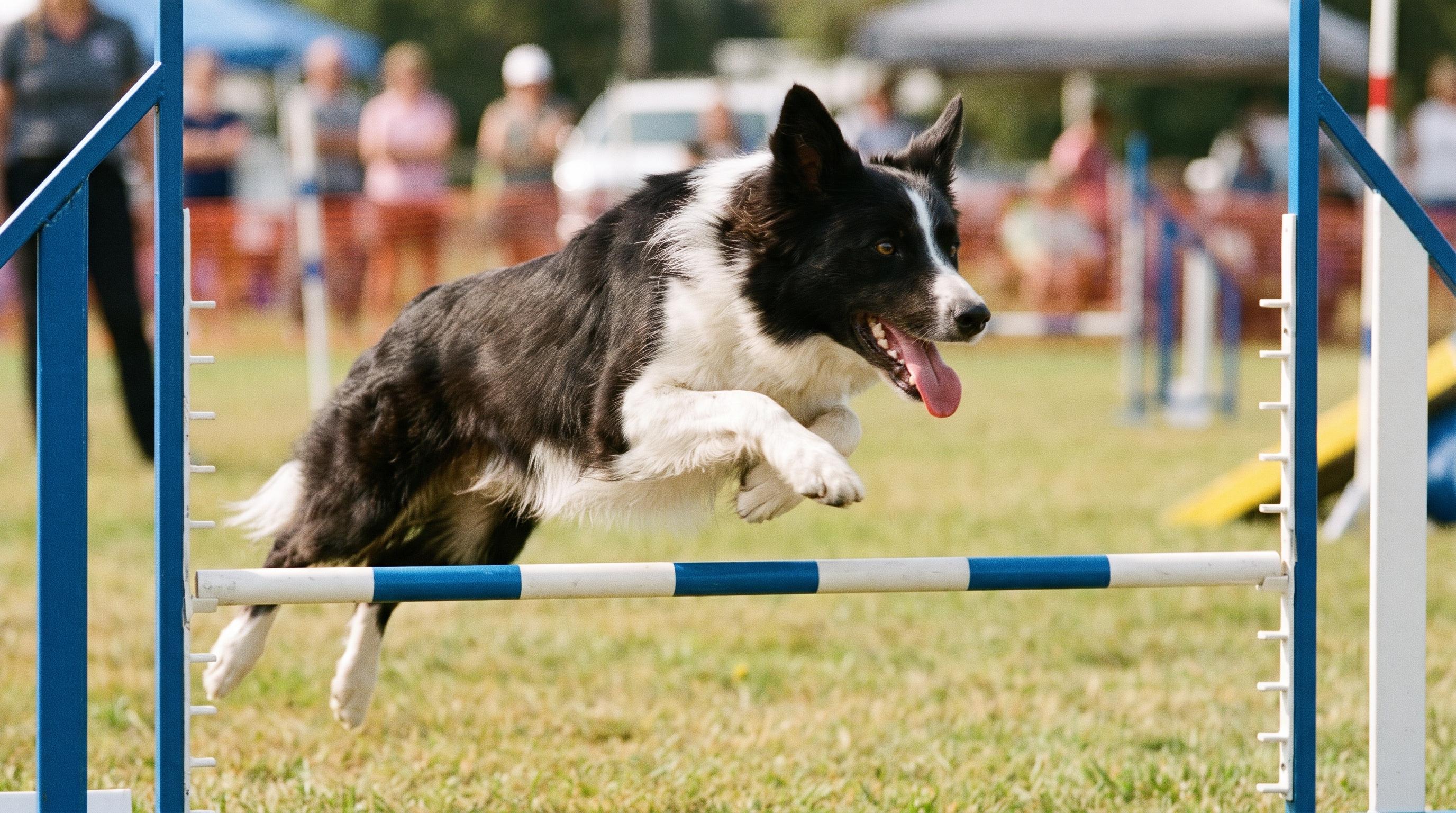
At its core, agility is an obstacle course the dog runs off-leash while the handler directs from a few feet away, never touching the dog or the equipment. The American Kennel Club calls it "a sport of exquisite teamwork," and that's the key to understanding what's hard about it. The dog supplies the speed and the obstacle skills; the handler supplies the navigation, often deciding a split second ahead which way to send the dog next. Courses change every single run, so there's no memorizing a routine. The team has to read each other in real time.
The obstacles themselves are a recognizable set: jumps and tire jumps, open tunnels, weave poles, seesaws, dog walks, and A-frames. The climbing obstacles have painted yellow "contact zones" the dog must touch on the way down, which keeps the sport safe and fair. A clean run is a blend of raw speed and precision, and the fastest dog doesn't always win if it skips a weave pole or flies off a contact.
This is not just a Border Collie sport
It's easy to assume agility belongs to the whip-fast herding breeds, and yes, Border Collies dominate the podium. But the sport is built to be open to nearly everyone. The AKC notes that any purebred or mixed-breed dog can participate, with competitors ranging from Border Collies to Chihuahuas. Jump heights are set by the dog's size, and a lower "Preferred" height class exists for dogs who need an easier option. Older dogs compete. Deaf dogs compete. Rescue mutts of every shape compete.
The benefits reach well past ribbons, too. Agility gives dogs real exercise, social time, and a sense of purpose, and the AKC points out it can help anxious or high-energy dogs build self-control and confidence. For the human half of the team, it's a crash course in communication and timing, plus a built-in community of dog people. That teamwork payoff is the same reason so many owners get hooked after a single beginner class.
How to get your own dog started
You do not need a world-class athlete or a backyard full of equipment to try this. You need a dog with some baseline manners and a willingness to work for treats or a toy.
Start with the foundation. Before any jumping or weaving, your dog should have solid basic obedience, a reliable recall, and the ability to focus on you around distractions. And if you've got a puppy, talk to your vet first: a young dog's growth plates need to close before they take on full-height jumps, weaves, and contact obstacles, which usually means waiting until well into the first year or beyond.
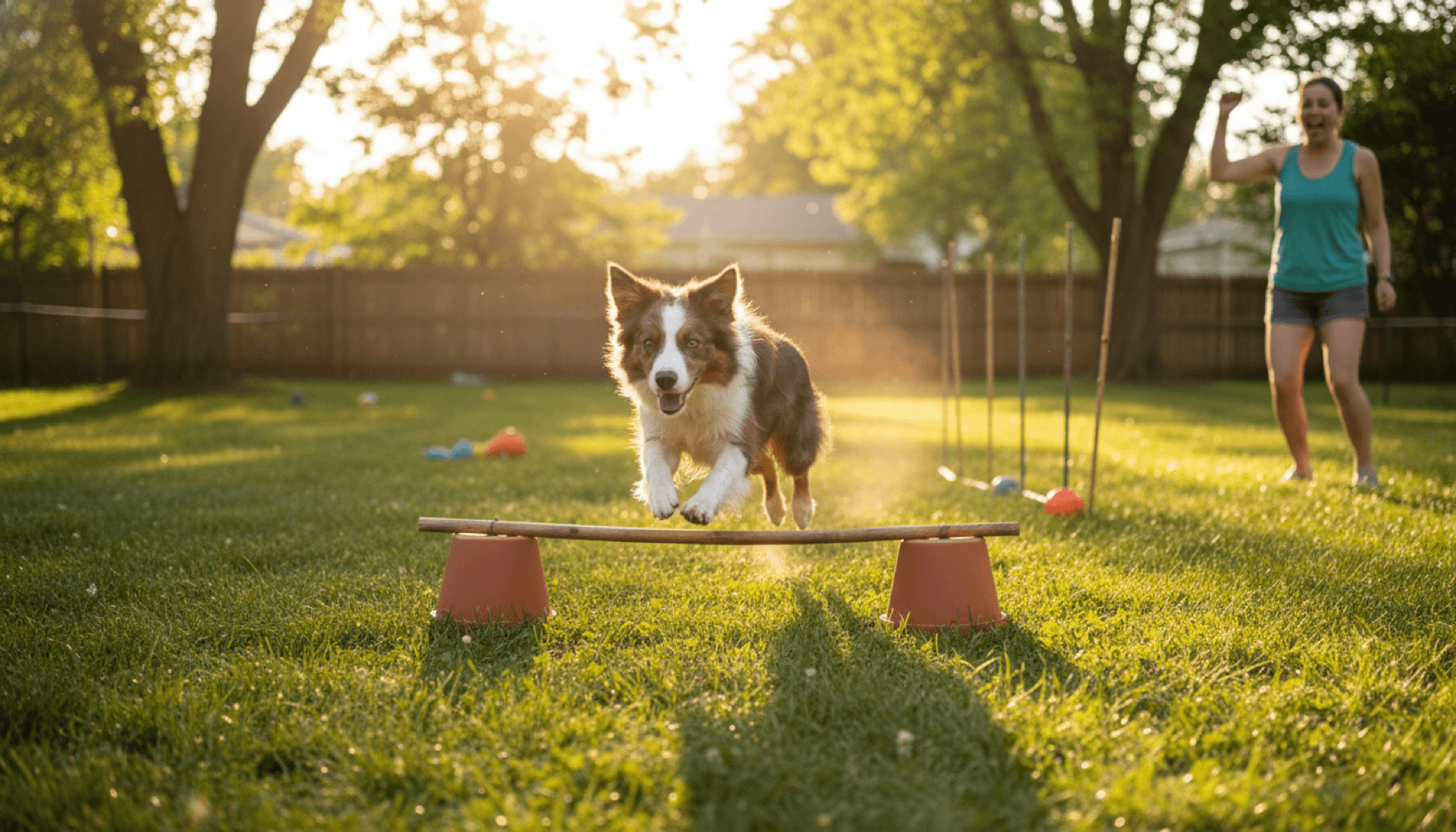
From there, find a class. Many kennel clubs and training schools offer intro agility, and the best way to start is to find a local club or class that welcomes beginners. Look for an instructor who leans on positive, reward-based methods. You can practice foundation skills at home with nothing fancy: a blanket draped over two chairs makes a perfectly good first tunnel, and luring your dog to move on both your left and right sides builds the handling vocabulary you'll use later.
When you and your dog are ready to test the waters, beginner-friendly entry points exist by design. Low-pressure introductory trials and team-based league formats let newcomers run shortened courses, sometimes without the trickier weave poles or seesaw, so a green dog can experience a real course without the full championship gauntlet. Nobody starts at Cynosport. Everyone starts with a blanket tunnel.
So carve out a little time this week to watch the best in the country do it at full speed in Tucson, then go see what a few treats and a homemade tunnel can do in your own living room. For more on training, play, and living well with your dog, keep it locked on Sidewalk Dog, where we cover the whole spectrum of the dog-owning life, from first classes to the finish line.