
The Peter Pan Dog: What Breed Is Nana, the Beloved Nursemaid?
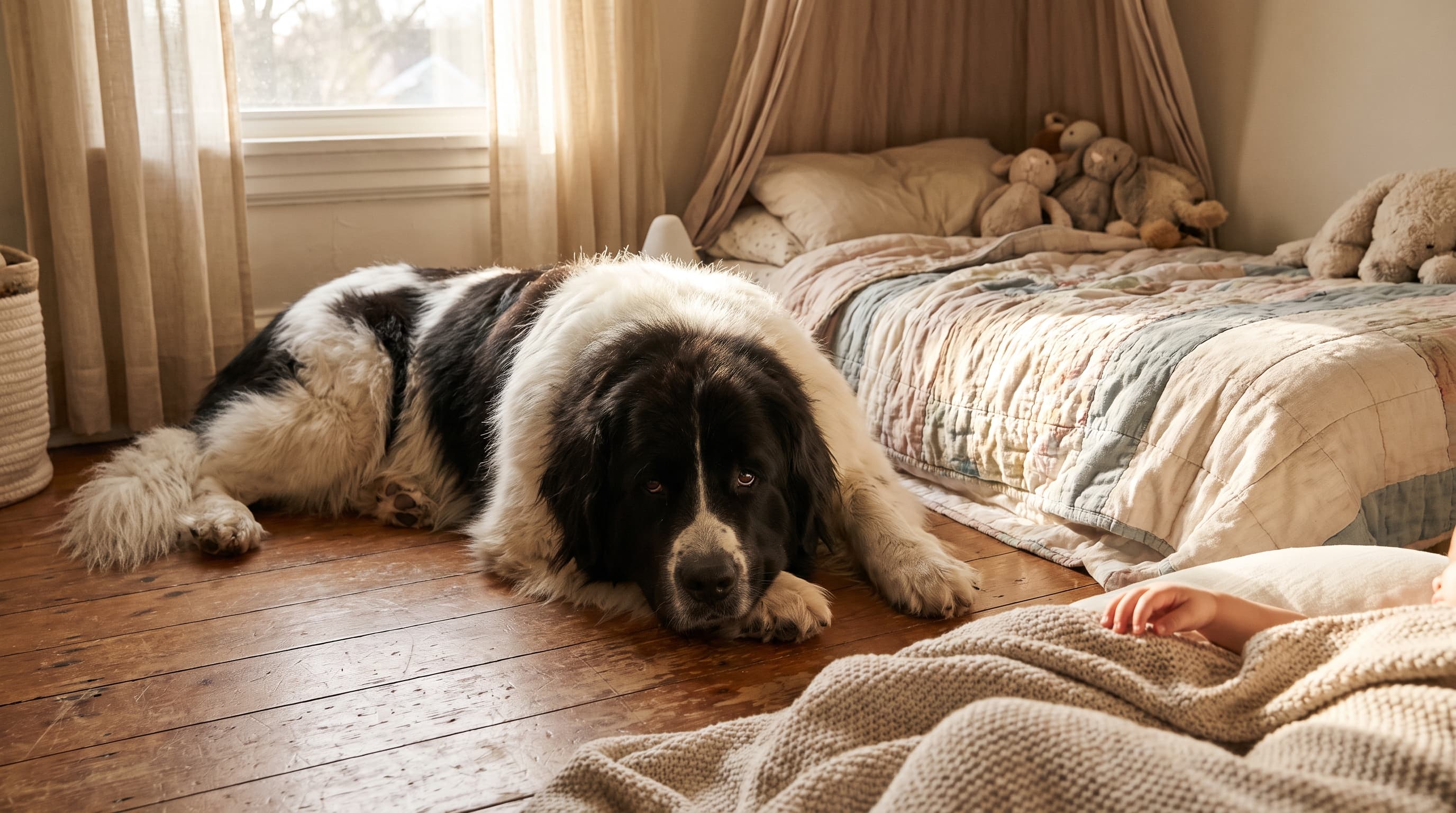
The Peter Pan dog is Nana, the Darling family's canine nursemaid. In J.M. Barrie's original 1904 play and novel, Nana is a Newfoundland—a giant, gentle breed famous for minding children. Disney's 1953 animated film reimagined her as a St. Bernard, another huge, protective dog, which is why fans see two different breeds.
What Breed Is the Peter Pan Dog?
Ask ten people what breed Nana is and you may get two answers—and both are correct, depending on the version. In J.M. Barrie's source material, Nana is unmistakably a Newfoundland, the massive, sweet-natured working breed bred to haul nets and rescue drowning sailors off the coast of Canada. In Walt Disney's beloved animated adaptation, she was redrawn as a St. Bernard, the Alpine rescue giant.
Both breeds are enormous, thickly coated, patient, and deeply devoted to their families—so the swap barely registered for most viewers. The real story of why the Peter Pan dog exists at all, though, comes straight from Barrie's own home.
Nana in J.M. Barrie's Original Story: A Newfoundland
When Peter Pan; or, the Boy Who Wouldn't Grow Up first premiered on the London stage on December 27, 1904, according to Britannica, Nana was already a scene-stealer. She is not a magical creature—just an ordinary dog whom the Darlings employ as a nurse for Wendy, John, and Michael. She tucks the children in, administers medicine, and frets when Peter appears at the nursery window.
Nana was inspired by a real dog. Barrie and his wife Mary owned a black-and-white Newfoundland named Luath, and according to The Newfoundland Club, Nana's stage costume was modeled directly on him. Arthur Lupino, the first actor to play Nana on all fours, even studied Luath at Barrie's home—borrowing gestures like banging a paw on the floor. Barrie clearly had a soft spot for enormous, gentle dogs.
Disney's Nana: Why a St. Bernard?
Here's the twist that resolves the confusion: before Luath, Barrie owned a St. Bernard named Porthos. The writer adored both giant breeds, and over the decades adaptations have leaned toward one or the other. Disney's 1953 film made Nana a St. Bernard, a breed audiences instantly recognized as a big, lovable, protective family guardian.
According to Dogster, the change worked because St. Bernards and Newfoundlands share so many traits—towering size, thick double coats, calm dispositions, and a reputation for gentleness with kids. To a casual viewer, the switch was seamless. So while purists will tell you the "true" Peter Pan dog is a Newfoundland, Disney fans grew up picturing a St. Bernard, and neither is wrong.
Nana in Live-Action Films and Stage Productions
Nana has been portrayed countless ways across more than a century of adaptations. On stage, she is traditionally played by an actor in a full dog costume—a tradition dating back to Lupino's Luath-inspired performance. In live-action films, productions have used a mix of trained dogs, costumed performers, and, more recently, digital effects to bring her to life. Because Nana's defining qualities are her size and her nurturing calm, filmmakers have consistently reached for giant, mellow breeds or their look-alikes rather than a specific pedigree.
This flexibility is part of Nana's charm. She is less a particular dog and more an idea: the loyal family guardian who loves the children as her own. That timeless image is why she remains one of the most recognizable dogs in fiction, right alongside the pups in our roundup of iconic dogs in movies.
Why Newfoundlands Are Called "Nanny Dogs"
Nana didn't earn her nursemaid role by accident. The Newfoundland has a genuine, centuries-old reputation as a "nanny dog." The AKC describes the breed as a "patient and watchful" guardian that is famously good with children. Their sheer size is balanced by an almost supernatural gentleness, plus a strong instinct to keep an eye on their people—especially the little ones.
Newfoundlands are also natural water rescuers, with webbed feet and a water-resistant coat, which deepened their myth as protectors. It's easy to see why Barrie looked at his own Newfoundland and imagined a dog capable of running an entire nursery. If a big, calm, kid-friendly companion appeals to you, our full Newfoundland breed guide covers their care, grooming, and famous temperament in detail.
Big, Gentle Breeds That Live Up to the Nana Legend
The Peter Pan dog represents a whole category of giant, tender-hearted breeds that many families love. Beyond the Newfoundland and St. Bernard, breeds like the Bernese Mountain Dog, Great Pyrenees, and Leonberger share that same "gentle giant" profile: large, devoted, and patient with children when properly raised and socialized. That said, giant breeds come with real responsibilities—big food bills, shorter average lifespans, drool, heavy shedding, and a need for early training so their size never becomes a hazard.
No dog, however sweet its reputation, should ever be left as the sole supervisor of a child. Real-life Nanas need supervision too. Choosing a family dog is about matching a breed's energy, size, and temperament to your household—not just its screen fame. If a literary name for your own gentle giant appeals to you, browse our list of dog names from movies for inspiration.
Frequently Asked Questions
What kind of dog is Nana in Peter Pan?
In J.M. Barrie's original story, Nana is a Newfoundland. In Disney's 1953 animated film, she is depicted as a St. Bernard. Both are giant, gentle breeds known for being good with children.
Was Nana based on a real dog?
Yes. Nana was inspired by Barrie's own black-and-white Newfoundland named Luath. Barrie also previously owned a St. Bernard named Porthos, which is likely why later adaptations sometimes chose that breed.
Why did Disney make Nana a St. Bernard?
Disney chose a St. Bernard because audiences already recognized the breed as a large, lovable, protective family dog. It shares size, coat, and temperament with the Newfoundland, so the change felt natural on screen.
Are Newfoundlands really good with children?
Newfoundlands have a long-standing reputation as gentle "nanny dogs" and are known for patience with kids. Even so, all dogs need supervision around young children and should never be relied on as a child's caretaker.
Is the Peter Pan dog a real breed?
The Peter Pan dog isn't a distinct breed—it's the character Nana, portrayed as a Newfoundland in the book and a St. Bernard in Disney's film. Both are established giant breeds you can meet today.
What was the name of Peter Pan's dog?
The dog's name is Nana. She belongs to the Darling family and serves as a nursemaid to the three Darling children—Wendy, John, and Michael—at the start of the story.
The Enduring Charm of Nana
Whether you picture a shaggy Newfoundland or a jowly St. Bernard, the Peter Pan dog endures because she embodies something every dog lover recognizes: a loyal companion who watches over the people she loves. Nana turned a family pet into a hero, and her legacy still shapes how we imagine the perfect gentle giant. Love stories like this? Subscribe to the Daily Wag newsletter for weekly breed spotlights, dog-culture deep dives, and tips to help your own four-legged nanny thrive.