
What Kind of Dog Is Scooby-Doo? The Breed Behind the Cartoon
Scooby-Doo is a Great Dane — a giant, German-bred breed often called the "gentle giant." Animator Iwao Takamoto studied a show-quality Great Dane and then deliberately reversed the breed's ideal traits, giving Scooby a sloped back, bowed legs, a small chin, and spotted brown coat to make him lovable and goofy rather than regal. So Scooby is officially a Great Dane, just an intentionally un-Dane-like one.
That contradiction — "he's a Great Dane, but he looks nothing like one" — is exactly why people keep searching for the answer. Below we'll settle the breed question for good, explain why Scooby looks the way he does, and dig into what real Great Danes are actually like, including whether one belongs in your home.
Is Scooby-Doo really a Great Dane?
Yes. Since the show's 1969 debut, Scooby-Doo (full name "Scoobert Doo") has always been written and described as a Great Dane. According to Wikipedia's profile of the character, designer Iwao Takamoto consulted a Great Dane breeder while developing Scooby, learning the hallmarks of a prize-winning specimen — a straight back, a strong straight set of legs, a well-shaped head — and then chose to do the opposite for comedic effect. The breeder reportedly "shuddered" at the result. That's why Scooby reads as a Great Dane to anyone who knows the breed, even though he'd never win a ribbon.
Why doesn't Scooby look like a typical Great Dane?
Real Great Danes are sleek, muscular, and statuesque. Scooby is hunched, knobby-kneed, and speckled. The mismatch is on purpose. A "perfect" Great Dane would have looked intimidating and aloof — the opposite of the cowardly, food-obsessed best friend the writers wanted. By exaggerating flaws (the bowed legs, the double chin, the slouch), Takamoto made Scooby approachable and funny. His brown-with-black-spots coat is another giveaway that he's a cartoon first and a breed second: while Great Danes come in several recognized colors, Scooby's particular leopard-like brown spotting isn't a real Great Dane pattern. As Dogster notes, the design choices were all in service of personality, not accuracy.
Fun facts about Scooby the character
- Scooby first appeared in Scooby-Doo, Where Are You! in 1969 and has starred in dozens of series and films since.
- His full name is "Scoobert Doo," and his nephew Scrappy-Doo is also drawn as a Great Dane (a puppy-proportioned one).
- "Scooby Snacks" cemented the breed's reputation as deeply food-motivated — which, for once, tracks with reality.
For more famous fictional pups and the breeds behind them, see our roundups of iconic movie dogs and the real breed behind a beloved Bluey character.
What real Great Danes are actually like
Strip away the cartoon and you get one of the most impressive dogs on the planet. The Great Dane originated in Germany, where larger mastiff-type dogs were bred for hunting wild boar and later refined into the elegant estate companion we know today. Britannica describes the modern Dane as a giant working breed prized for its combination of size and gentle temperament, and the American Kennel Club calls them friendly, patient, and dependable "gentle giants."
Size and appearance
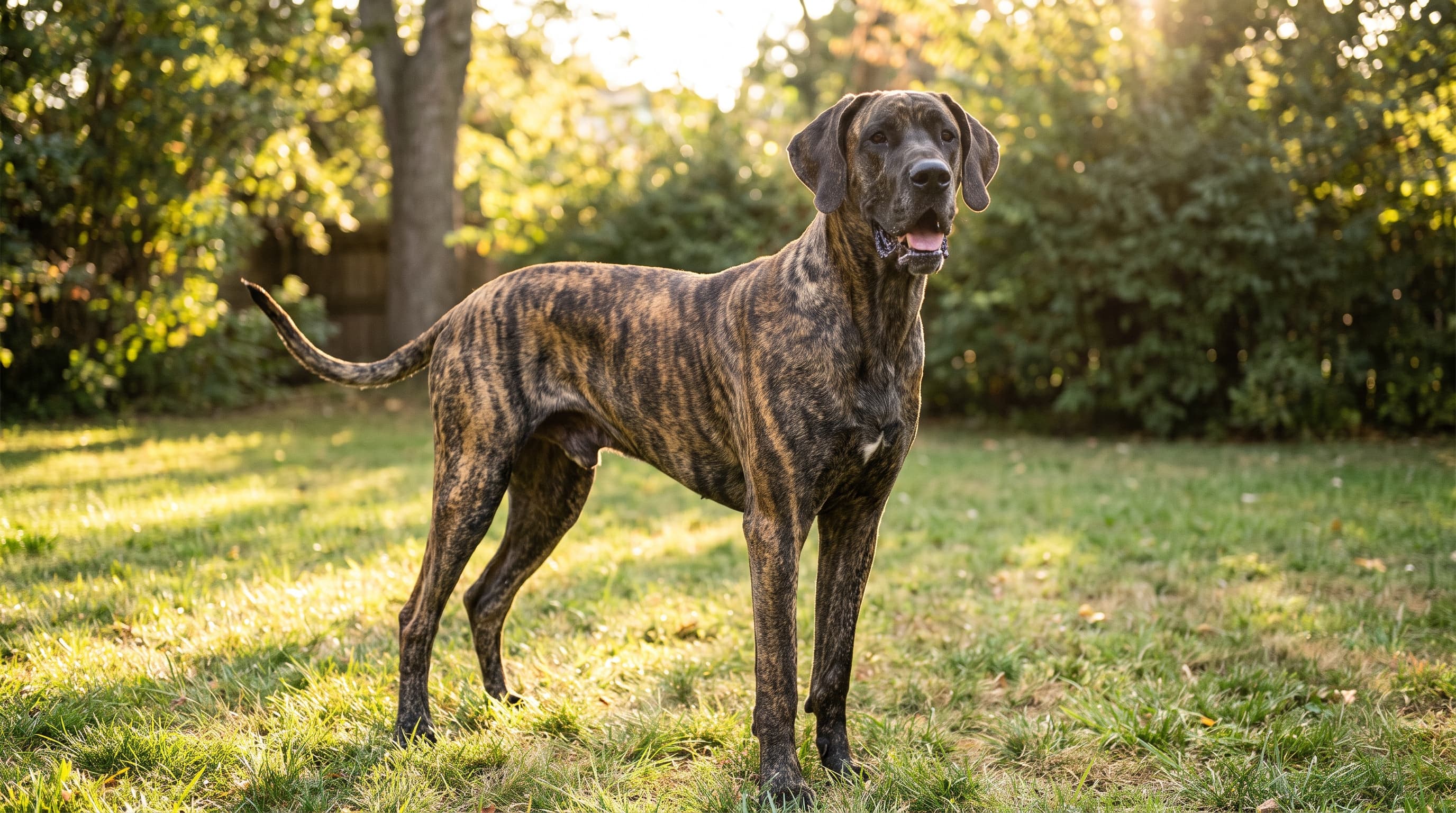
Great Danes are genuinely enormous. Males typically stand 30 to 32 inches at the shoulder and many weigh 140 to 175 pounds; females run a bit smaller. On their hind legs, a Dane can tower over an adult human. Their coat is short, smooth, and easy to care for, and it comes in recognized colors and patterns including fawn, brindle, blue, black, harlequin, and mantle.
Temperament
Despite their size, well-bred and well-socialized Great Danes are famously sweet, affectionate, and people-oriented — true couch-loving "velcro dogs" that often think they're lap dogs. They're generally patient and good with children and other pets when raised with them, though their sheer size means supervision around small kids is wise. Early socialization and consistent, positive training matter a lot, simply because a 150-pound dog needs good manners.
Energy, exercise, and grooming
Danes are moderate-energy dogs, not marathoners. A couple of daily walks and some yard play usually satisfy them, and adults are often surprisingly mellow indoors — which is part of why some apartment dwellers make it work, despite the space they take up. Grooming is easy thanks to that short coat (a weekly brush handles normal shedding), but big dogs come with big-dog needs: substantial food, supportive bedding for their joints, and careful feeding routines.
Health and lifespan
The hardest part of loving a giant breed is time. Great Danes typically live only about 7 to 10 years, and as a deep-chested breed they're at higher risk for bloat (gastric dilatation-volvulus), a sudden, life-threatening emergency. They can also face heart conditions and joint issues. Feeding a large-breed-appropriate diet — see our picks for large-breed puppy foods — and working closely with your vet on growth and bloat prevention are essential. Always consult your veterinarian about screening and an individualized care plan for a giant-breed dog.
Is a Great Dane the right dog for you?
A Great Dane can be a wonderful, gentle family companion — but the commitment is real. You'll need space (even mellow giants need room to turn around), a budget for large quantities of quality food and bigger-ticket vet care, and an honest acceptance of a shorter lifespan. If you love the idea of a calm, devoted giant and can meet those needs, few breeds are more rewarding. If you're drawn to big, protective, family-friendly dogs but want other options, compare notes with our guides to the fluffy, livestock-guarding Great Pyrenees and the powerful, loyal Greater Swiss Mountain Dog–Rottweiler mix.
Frequently asked questions
What breed is Scooby-Doo?
Scooby-Doo is a Great Dane. He's drawn in an exaggerated, imperfect way for comedy, but the creators always intended and described him as a Great Dane.
Why does Scooby-Doo have spots if Great Danes don't look like that?
Scooby's brown coat with black leopard-like spots is a cartoon design choice, not a real Great Dane color pattern. Real Danes come in colors like fawn, brindle, blue, black, harlequin, and mantle. The spots were meant to make him distinctive and endearing.
What kind of dog is Scrappy-Doo?
Scrappy-Doo, Scooby's small nephew, is also a Great Dane — drawn with puppy proportions. His brave, scrappy personality is the comic opposite of his timid uncle.
Are Great Danes good family dogs?
Yes, generally. Well-socialized Great Danes are gentle, affectionate, and patient, which makes them popular family dogs. Because of their size, supervise them around very young children and invest in early training.
How long do Great Danes live?
Great Danes typically live about 7 to 10 years, which is shorter than many smaller breeds. Giant breeds age faster and face higher risks for certain health issues, so regular veterinary care is especially important.
How big do Great Danes get?
Males often stand 30–32 inches at the shoulder and weigh roughly 140–175 pounds; females are somewhat smaller. Standing on their hind legs, many Great Danes are taller than an adult person.
The bottom line
Scooby-Doo is, and always has been, a Great Dane — just a gloriously imperfect, cartoon-ified one designed to make us laugh. The real breed behind the legend is a gentle, devoted giant with a famously short life and famously big heart. If Scooby made you curious about Great Danes, talk to reputable breeders, rescues, and your veterinarian to learn whether a gentle giant fits your home.
Love learning the stories behind famous dogs and big lovable breeds? Explore our Great Pyrenees and Greater Swiss–Rottweiler breed guides, then subscribe to the Daily Wag newsletter for more breed deep-dives and pop-culture dog facts.