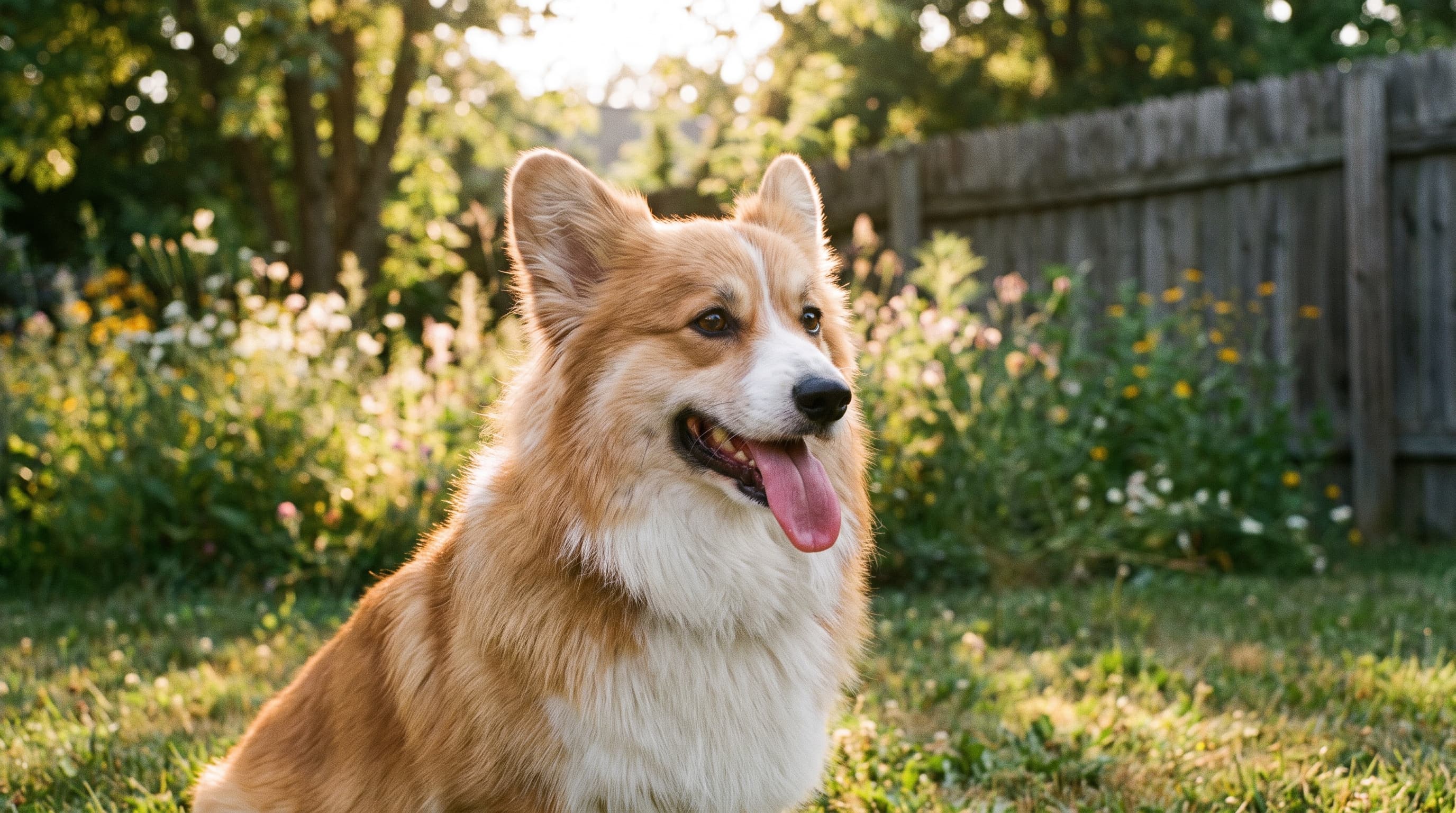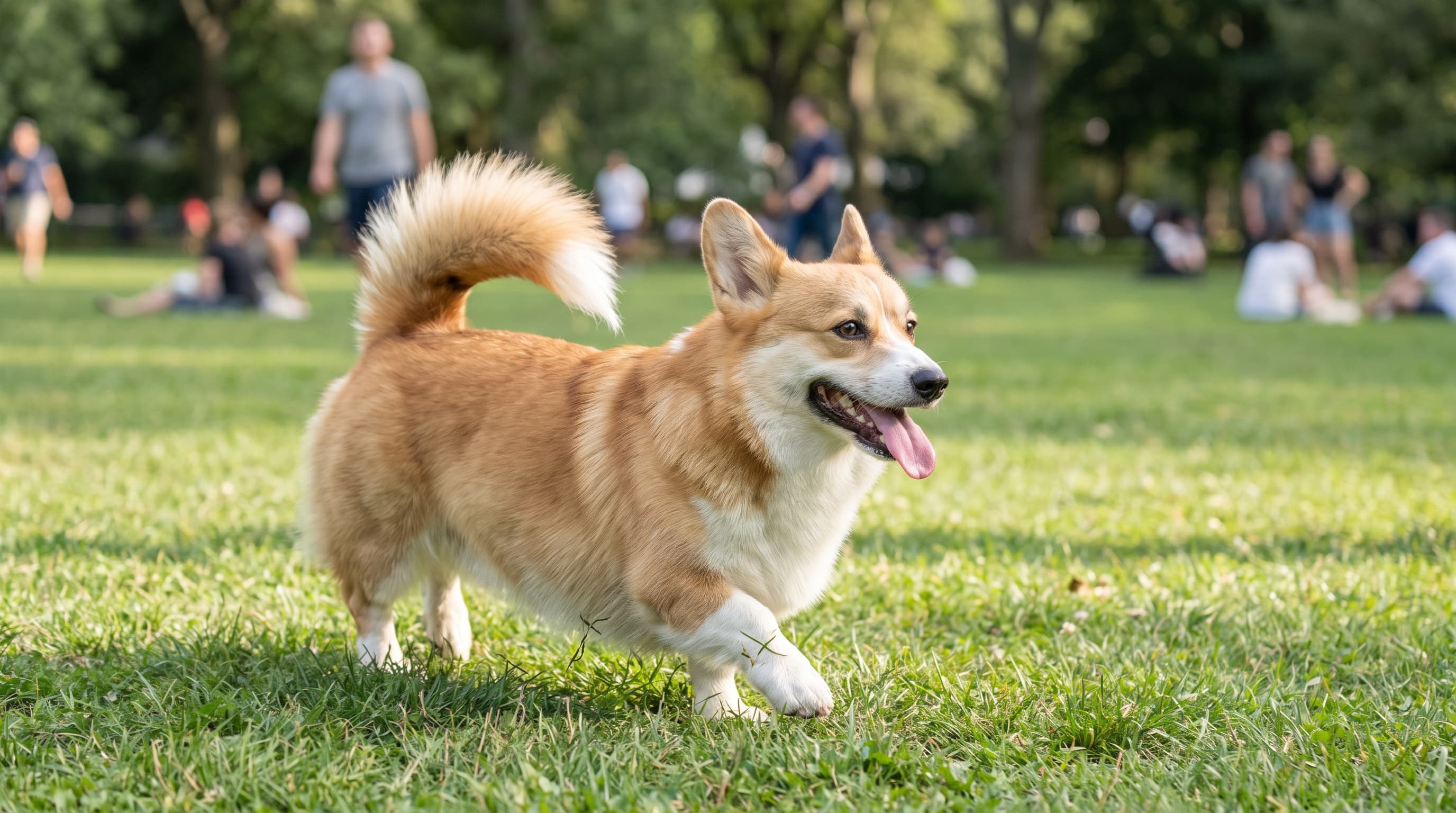

Every corgi is born with a tail. A corgi with tail intact is simply one that wasn't docked — or it's a Cardigan Welsh Corgi, the breed that always keeps its long, fox-like tail. Pembroke Welsh Corgis are traditionally docked or occasionally born with a natural bobtail, but full fluffy tails are quickly becoming the norm again.
Do Corgis Naturally Have Tails?
Yes. Both corgi breeds — the Pembroke Welsh Corgi and the Cardigan Welsh Corgi — are genetically tailed dogs. When you see a Pembroke without a tail, it's almost always because the tail was surgically shortened (docked) as a newborn, not because the dog was born that way. The widespread belief that "corgis don't have tails" comes entirely from decades of docking Pembrokes to meet a show-ring standard, according to Dogster's vet-reviewed look at corgi tails.
The two breeds differ in an easy-to-remember way. The Cardigan Welsh Corgi has always kept a long tail as part of its breed standard — think of the "C" in Cardigan standing for a "curved" tail. The Pembroke Welsh Corgi is the breed most people picture, and it's the one at the center of the tail conversation.
Why Are Some Corgis Born Without Tails? The Natural Bobtail Gene
Not every tailless Pembroke was docked. A minority are born with a genuinely short tail thanks to a natural bobtail mutation. A change in the T gene (sometimes called the C189G mutation) can cause a normally long-tailed dog to be born with a short, stubby, or nearly absent tail. It's a dominant trait, so a puppy only needs one copy to inherit the short tail.
This is why you'll occasionally meet a Pembroke breeder who produces "natural bobtail" puppies with no surgery involved. Because the gene is dominant but not present in every line, natural bobtails have always been somewhat unpredictable in litters — which is part of why docking became the shortcut for a uniform look. It's worth noting that two copies of some bobtail mutations can be associated with health problems, so responsible breeders manage these genetics carefully.
What Is Tail Docking, and Why Was It Done to Corgis?
Tail docking is the removal of part of a puppy's tail, typically done within the first few days of life. Historically, several working and herding breeds were docked for practical reasons — reducing injury risk while working livestock, or to fit an established breed standard. For Pembroke Welsh Corgis, the modern reality is that the vast majority are family pets, not farm herders, so docking today is almost entirely cosmetic.
The American Kennel Club breed standard for the Pembroke has long described a docked tail, which historically pushed show breeders toward docking. Meanwhile, the American Veterinary Medical Association opposes cosmetic tail docking and encourages removing it from breed standards, citing the lack of medical benefit. That tension — tradition versus welfare — is exactly why corgi tails have become a hot topic.
Is Tail Docking Legal? A Country-by-Country Snapshot
Where you live has a huge effect on how likely you are to see a corgi with a tail:
- United States: Cosmetic docking remains legal, and many show-line Pembrokes are still docked — though pet buyers increasingly request tails.
- United Kingdom: Cosmetic docking is banned (with narrow working-dog exemptions), so most UK Pembrokes now have full tails.
- Much of Europe, Australia, and beyond: Many countries have banned cosmetic docking under animal-welfare laws, making tailed corgis the standard.
The result is a growing global population of full-tailed Pembrokes, which is helping normalize the look and fuel the online "corgi with tail" fascination.
Corgis With Tails Are Having a Viral Moment
If your social feed has served you a fluffy-tailed corgi mid-zoomies, you're not alone. Full-tailed corgis have become a genuine internet phenomenon, with fans delighting in the plumed, wagging tails that many people didn't even realize corgis had. Coverage like this roundup of the corgi-with-tails trend captures how quickly attitudes are shifting toward celebrating the natural look.
Part of the appeal is expressiveness. A corgi's long tail is a whole extra communication tool — it wags, curls, and flags emotion in ways a docked nub can't. If you're curious about what all that wagging actually means, our guides on the science of the tail wag and why dogs chase their tails are a fun next read.
What a Corgi's Tail Actually Does
Beyond looking adorable, a tail is functional hardware. For a low-slung, fast-turning herding dog like a corgi, the tail helps with balance and counter-steering during the quick pivots the breed was built for. It also serves as a social broadcast system: a high, loose wag, a low tucked tail, and a stiff flag all signal very different moods to other dogs and to you. A docked corgi can still communicate with its whole body, but it loses one of the clearest signals in the canine toolkit.
This communication angle is a big reason welfare advocates favor keeping tails intact. Puppies and adult dogs read each other's tails constantly, and some behaviorists suggest dogs missing tails can face more misunderstandings during greetings. For pet owners, a full tail simply makes it easier to read how your corgi is feeling from across the yard.
Are There Downsides to a Corgi Having a Tail?
For the overwhelming majority of pet corgis, a tail is simply a tail — no special care required beyond normal grooming. A few practical notes:
- Grooming: A full corgi tail is fluffy and sheds like the rest of the double coat. Regular brushing keeps it tidy and mat-free.
- Show ring: In AKC conformation, a tailed Pembroke may be at a disadvantage against the traditional docked standard — a consideration only for people showing dogs, not for pet owners.
- Injuries: Long tails can occasionally get bumped or caught, but this is uncommon in typical pet life and not a reason to dock.
Bottom line: a tail is an asset, not a liability, for a companion corgi.
How to Find or Choose a Corgi With a Tail
If a full-tailed corgi is your dream, you have good options:
- Choose a Cardigan Welsh Corgi if you love the herding-corgi look with a guaranteed long tail.
- Seek a Pembroke breeder who leaves tails intact or produces natural bobtails. Ask directly about their tail practices and health testing.
- Consider adoption — rescue corgis and corgi mixes come with all kinds of tails, and many undocked pups are waiting for homes.
Whichever route you choose, prioritize a source that health-tests for the issues corgis are prone to, such as hip and spine problems, over any single cosmetic trait.
Frequently Asked Questions
Do all corgis have tails?
Genetically, yes — all corgis are born with tails. Cardigan Welsh Corgis keep their long tails, while Pembroke Welsh Corgis are often docked or, less commonly, born with a natural bobtail.
Why do some Pembroke corgis have no tail?
Most tailless Pembrokes were docked as newborns to match a traditional show standard. A smaller number are born with a naturally short tail due to a dominant bobtail gene.
What's the difference between a Cardigan and a Pembroke corgi tail?
The Cardigan always has a long, fox-like brush tail. The Pembroke has historically been docked or bobtailed, though full tails are increasingly common as docking bans spread.
Is it better for a corgi to have a tail?
From a health and welfare standpoint, leaving the tail intact is generally preferred — there's no medical benefit to cosmetic docking, and the tail aids communication and balance. Many veterinary organizations oppose cosmetic docking.
Are corgis with tails purebred?
Yes. A tail doesn't make a corgi any less purebred. A full-tailed Pembroke can be every bit as much a registered, pedigreed corgi as a docked one — the tail is a cosmetic choice, not a marker of breed purity.
Do corgi tails need special grooming?
Not really. A corgi's tail is part of its double coat, so regular brushing to manage shedding and prevent mats is all it typically needs.
The Bottom Line
A corgi with a tail isn't a rare mutation or a different breed — it's simply a corgi whose tail was left the way nature made it. Cardigans always keep theirs, Pembrokes are increasingly keeping theirs as cosmetic docking falls out of favor, and the internet has fallen hard for that fluffy, expressive plume. Whether you're drawn to the look or the welfare argument behind it, choosing a full-tailed corgi from a responsible, health-focused source is a wonderful way to welcome one of the world's most beloved herding dogs into your home.
Love corgis and the little mysteries of dog anatomy and behavior? Subscribe to the Daily Wag newsletter for breed deep-dives, science-backed explainers, and joyful dog content in your inbox each week.