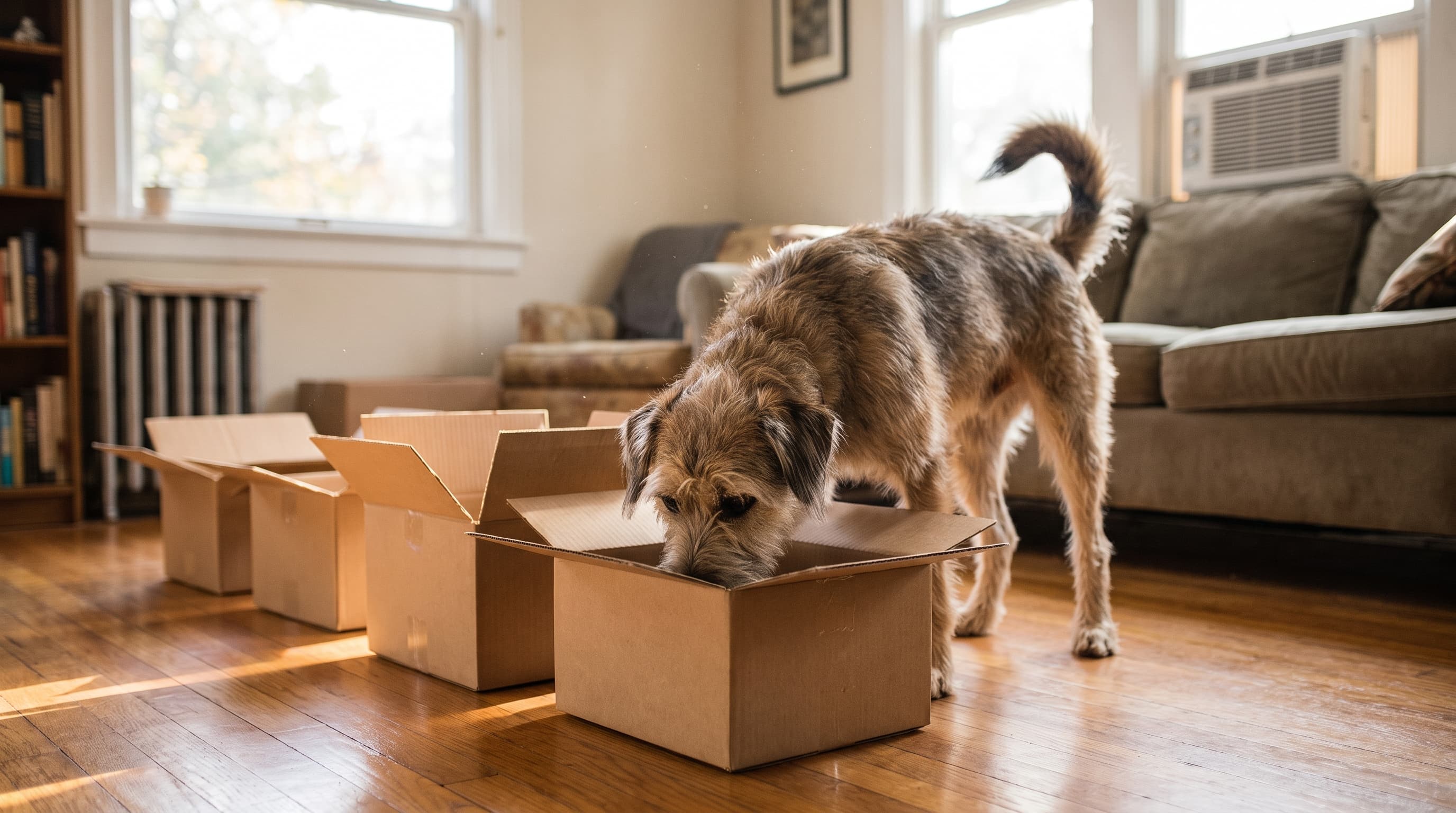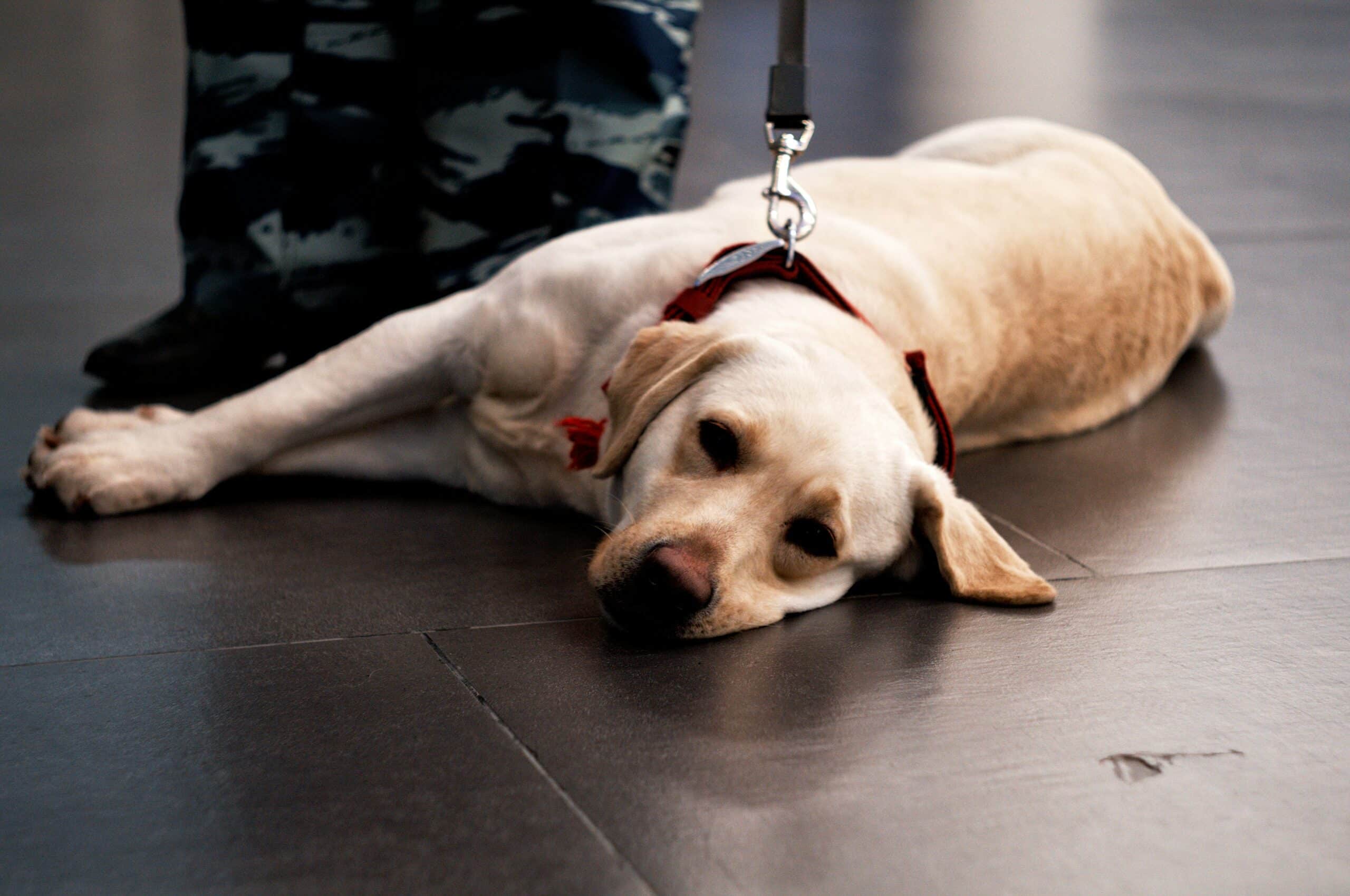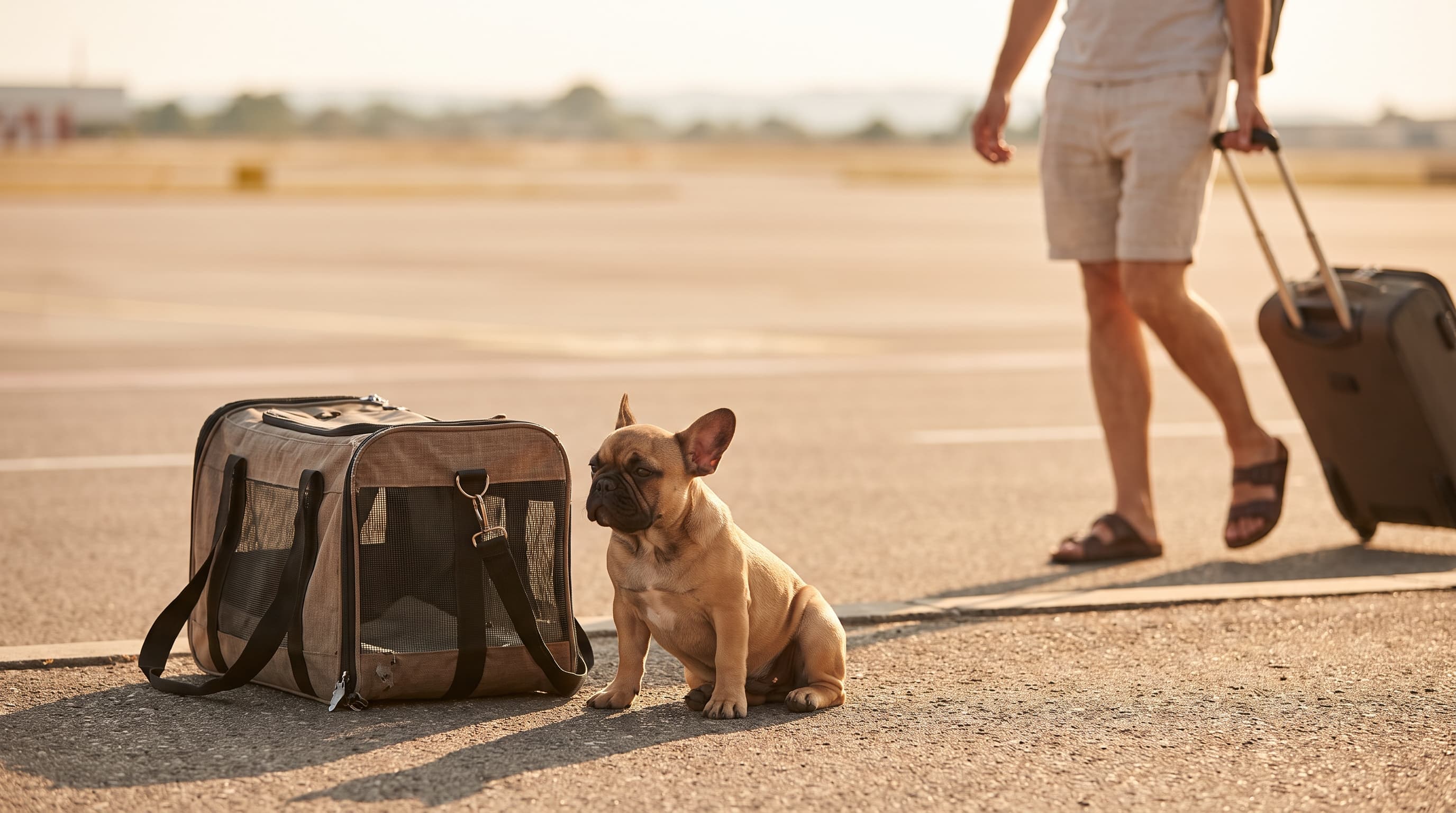

If your summer plans involve loading the dog into a crate and putting them on a plane, there's a hot-weather catch that catches thousands of pet parents off guard every year: the airline heat embargo. When temperatures at your departure, connection, or arrival airport climb past a set threshold—often as low as 85°F—many carriers simply refuse to fly your dog in the cargo hold. No exceptions, no appeals, no matter how carefully you booked. And in the summer of 2026, with heat waves baking much of the country, those embargoes are grounding more dogs than ever.
Here's the good news up front: with a little planning, most dogs can still travel safely this summer. But the rules have shifted dramatically in the past few years, and the old playbook—"just book them in cargo"—is largely gone. Here's exactly what's happening and how to get your pup where they're going.
What a heat embargo actually is
A heat embargo is a temporary, weather-triggered ban on transporting live animals in an aircraft's cargo hold. Airlines evaluate the forecast at every airport on your itinerary, and if any single one is too hot, your dog is bumped—even if the other stops are perfectly mild.
The thresholds are stricter than most owners expect. According to a carrier-by-carrier breakdown of 2026 heat embargo rules, Delta restricts cargo pet travel once ground temperatures top 80°F, while American Airlines draws its line at 85°F. Both also enforce cold-weather embargoes below 20°F. Alaska and Hawaiian Airlines generally accept pets only within a roughly 45°F to 85°F window at both ends of the trip.
Why so cautious? The American Veterinary Medical Association notes that a cargo hold can heat up fast on the ground, and the riskiest moments of any pet flight aren't at cruising altitude—they're during check-in, ground handling, and the wait to load, when a dog sits on a sun-baked tarmac with limited airflow.
The bigger shift: major airlines have quietly exited pet cargo
Heat embargoes are only half the story. Over the last several years, the biggest U.S. carriers have pulled back from flying pets as cargo altogether. United discontinued its public PetSafe cargo program, and both Delta and American now limit cargo pet shipments largely to active-duty military and U.S. State Department personnel relocating on orders.
That means for the average family, the cargo hold isn't just seasonally restricted—it may not be an option at all. Budget and low-cost carriers went a different direction: Southwest, JetBlue, Frontier, and Allegiant allow only small pets that fit in a carrier under the seat, with no cargo program for any breed. The upshot is that in 2026, most dogs fly in the cabin or don't fly commercially at all.
Why flat-faced dogs face the steepest restrictions
If you share your home with a French Bulldog, Pug, Bulldog, or Boston Terrier, the rules get even tougher. Brachycephalic—"short-nosed"—breeds are singled out for the strictest limits, and the reason is sobering. In a landmark review of airline incident data, the AVMA found that short-nosed dogs accounted for roughly half of the 122 flight-related dog deaths reported to the U.S. Department of Transportation over a five-year span—a wildly disproportionate share for a group that makes up a small slice of the dog population.
The physiology explains it. As the AVMA puts it, these breeds "don't breathe as efficiently as dogs with normal-length snouts and can have difficulty cooling off when they're playing or exercising, or if they're stressed or overheated." Panting is a dog's main cooling system, and a compressed airway makes it far less effective—exactly the wrong hardware for a hot, stressful cargo hold.
Breeds most affected
Airlines commonly restrict or refuse the following in cargo, and many apply lower heat thresholds to them even in the cabin: Bulldogs, French Bulldogs, Pugs, Boston Terriers, Boxers, Shih Tzus, Pekingese, and their mixes. If your dog has a pushed-in face, assume the strictest version of every rule applies and confirm directly with the airline before you book.
The airports where summer flying gets hardest
Some destinations are so reliably hot that carriers impose flat seasonal bans regardless of the day's forecast. Southwestern hubs like Phoenix, Tucson, Las Vegas, and Palm Springs frequently see pet-cargo restrictions running from May 1 through September 30. If you're flying to or from the desert Southwest with a dog this summer, plan as though cargo is off the table entirely.
Even outside those cities, 2026's embargo calendar is broad. Published 2026 summer embargo windows show United restricting hot-weather pet routes from June 1 to September 15 and Delta running a comparable May 15 to September 15 window on select routes. In practice, that covers the entire peak of family travel season.
What you can actually do this summer
None of this means your dog has to stay home. It means you need a smarter plan.
Fly in-cabin whenever your dog qualifies
The single biggest workaround is the cabin. Small dogs that fit in an airline-approved carrier under the seat—generally up to about 20 pounds including the bag—can usually travel with you even when cargo is embargoed, because the cabin stays climate-controlled the whole time. Check each airline's weight and carrier-dimension limits carefully; they vary, and American and most major carriers publish the exact specs online. Book your pet's spot early, since airlines cap the number of in-cabin pets per flight.
Time the flight and book far ahead
Choose the earliest morning or latest evening departures to sidestep peak tarmac heat, and favor nonstop routes so there's only one airport's forecast to clear instead of three. Pet-travel specialists recommend booking 90 to 120 days in advance during summer, both to lock in a limited cabin slot and to leave room to rebook if an embargo hits your travel date.
Consider ground transport for bigger dogs
For a large or flat-faced dog who can't fly in-cabin, professional climate-controlled ground transport has become the go-to alternative. It isn't fast, but it sidesteps embargoes entirely, keeps your dog in a temperature-regulated vehicle, and provides constant human supervision—none of which a cargo hold can promise in July.
Skip the sedatives
It's tempting to want a nervous flyer knocked out, but veterinarians broadly warn against sedating dogs for air travel. Sedation can impair a dog's balance and, critically, its ability to regulate temperature and breathe efficiently at altitude—a dangerous combination for any dog and a potentially deadly one for a short-nosed breed. Talk to your vet about crate-acclimation training and calming aids instead.
The bottom line
Summer 2026's heat embargoes and shrinking cargo options have made flying with a dog more complicated—but far safer, which is the whole point. Know your airline's temperature thresholds, respect the extra caution around flat-faced breeds, and lean on the cabin or the road when the forecast turns hostile. A little planning now beats a canceled trip—or a heartbreak—at the gate.
Heading somewhere fun with your pup this summer? Explore more of Sidewalk Dog's travel guides and hot-weather tips—including how to keep your dog cool and hydrated once you've landed—so every adventure ends with a happy, tail-wagging arrival.