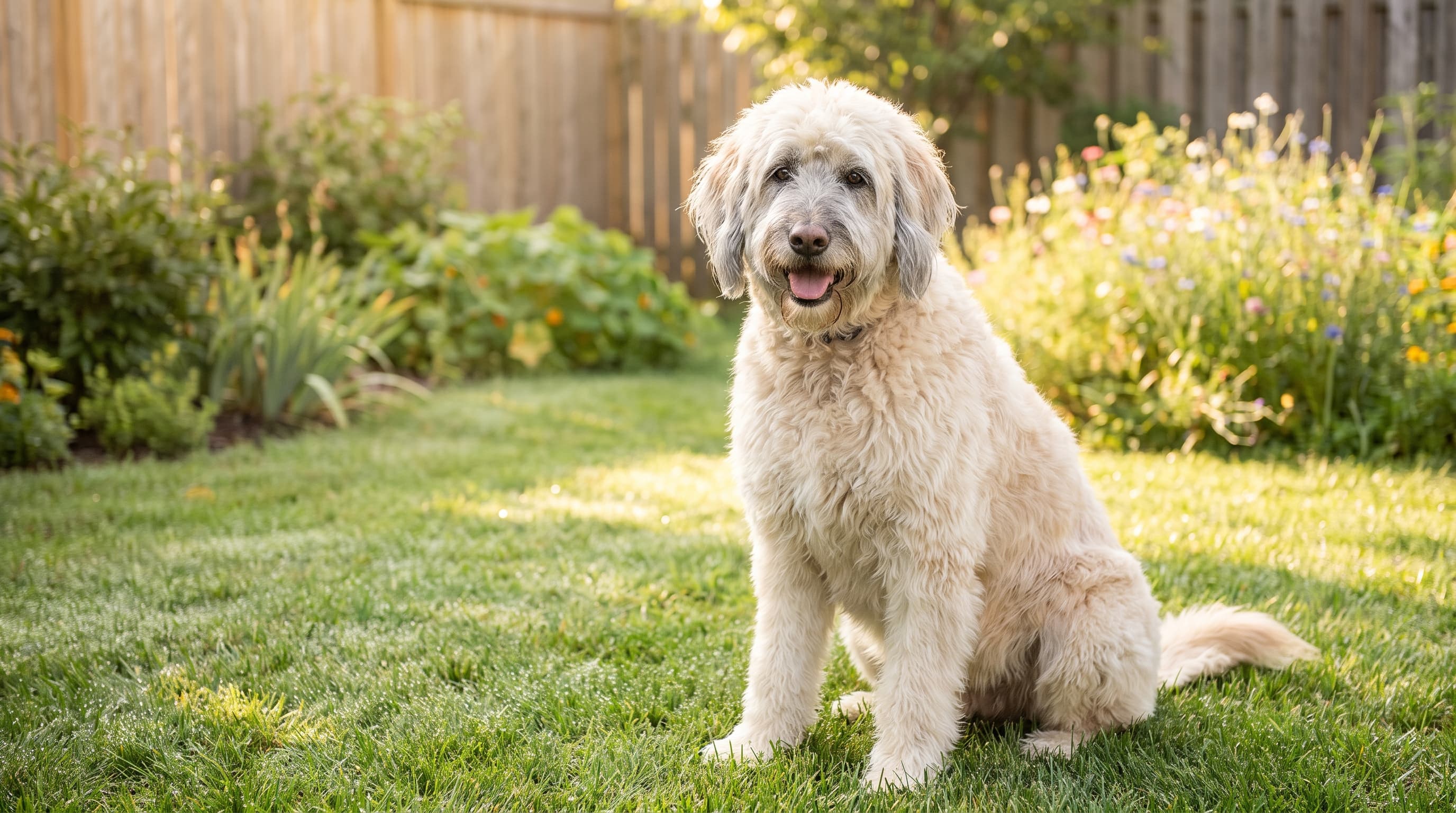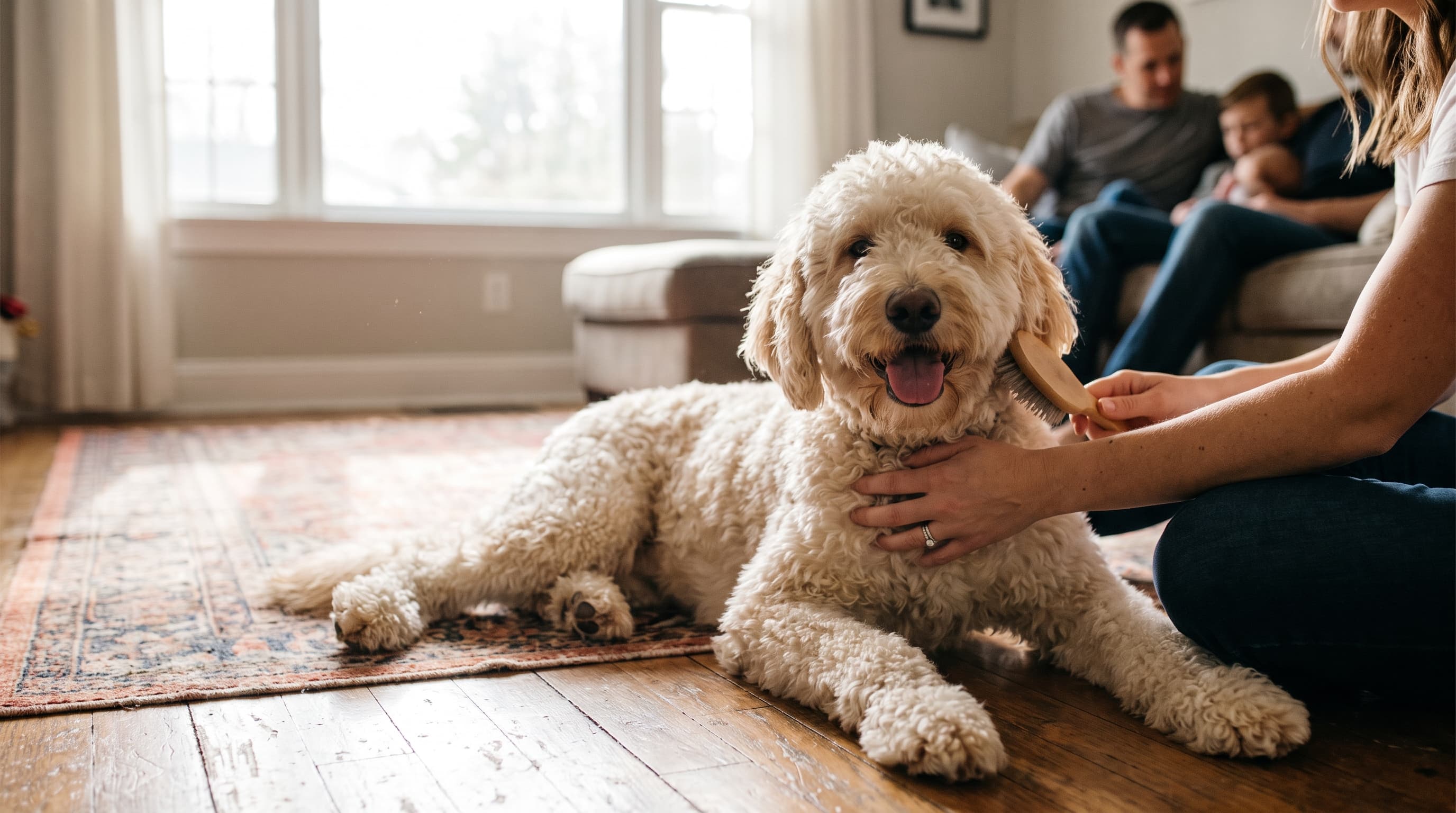

Are Goldendoodles hypoallergenic? Not completely — no dog truly is. Goldendoodles are lower-allergen than most breeds because their poodle heritage often produces a low-shedding coat that traps dander, but they still make the proteins that trigger allergies. How allergy-friendly an individual Goldendoodle is depends on its coat type, generation, and grooming.
What "Hypoallergenic" Actually Means
The word combines hypo (less) and allergenic (allergy-causing), so "hypoallergenic" only ever promises fewer allergens, not zero. Both the American College of Allergy experts and consumer health sources are blunt about it: as WebMD puts it, "there aren't any dog breeds that are 100% allergen-free." According to the Asthma and Allergy Foundation of America, people react to a protein found in a dog's dander (dead skin flakes), saliva, and urine — not to the hair itself. Because every dog produces dander, saliva, and urine, every dog produces allergens.
So why do Goldendoodles get the "hypoallergenic" label? It's a shedding story. Dogs that shed heavily fling dander-coated hair all over your home. A low-shedding dog keeps most of that dander locked in its coat until you brush or bathe it, so less of it ends up airborne and on your couch. That's the mechanism behind the reputation — management, not magic.
It's also why two people can have completely different experiences with the same breed. Someone with a mild dander sensitivity may live comfortably with a low-shedding Goldendoodle, while someone highly reactive to saliva proteins might struggle even with a curly-coated dog that barely sheds. Your individual allergy profile matters as much as the dog's coat, which is why testing your own reaction is the only reliable way to know.
Why Goldendoodles Are Often Allergy-Friendly
Goldendoodles are a cross between a Golden Retriever and a Poodle. Poodles carry a curly, continuously growing coat that sheds very little, and that trait is what makes some Goldendoodles a good fit for allergy-prone households. The Mayo Clinic notes that pet dander is such a stubborn allergen precisely because it's tiny and stays airborne for long stretches; a coat that holds dander in place instead of releasing it reduces day-to-day exposure.
The catch is that Goldendoodles are a mix, and coats vary from dog to dog — even within the same litter. A Goldendoodle that inherits more Golden Retriever coat genetics will shed more and shed more dander with it. One that leans poodle will shed less. You can't guarantee the outcome, which is why "Goldendoodles are hypoallergenic" is a generalization, not a promise.
Coat Type Matters More Than the Breed Name
Goldendoodles typically come in three coat textures, and they are not equally allergy-friendly:
- Curly (wool) coat: The most poodle-like coat. It sheds the least and traps the most dander, so it's usually the best bet for allergy sufferers — but it needs the most brushing to avoid matting.
- Wavy (fleece) coat: The classic "teddy bear" Goldendoodle look. Moderate shedding, moderate maintenance — a middle-ground option.
- Straight (flat) coat: The most Golden Retriever-like coat. It sheds the most and is the least allergy-friendly of the three.
If reducing allergens is your priority, the coat texture in front of you tells you far more than the breed label. For a deeper look at how coat genetics drive shedding, see our guide to whether Goldendoodles shed.
Do Generations (F1, F1B, F2) Change Allergy Odds?
Breeders label Goldendoodles by generation, and it's a rough guide to how poodle-heavy the coat is likely to be:
- F1 (Golden Retriever × Poodle): 50/50. Coats are the least predictable and can shed noticeably.
- F1B (F1 Goldendoodle × Poodle): about 75% Poodle. Often the most reliably low-shedding, curly-coated option — frequently recommended for allergy households.
- F2 and multigen: Results vary widely depending on the parents' coats.
Generation improves your odds of a low-shedding coat, but it still isn't a guarantee. A reputable breeder who has produced allergy-friendly litters before is more informative than the label alone.
How to Manage Dog Allergies With a Goldendoodle
The best predictor of success is a real-world test drive: spend meaningful time with the specific dog (or its parents) before committing, ideally more than once. Beyond that, the Mayo Clinic recommends practical exposure-reduction steps that work with any dog:
- Run a HEPA air purifier in the rooms you use most and use a vacuum with a HEPA filter.
- Keep the dog out of bedrooms to create allergen-free zones.
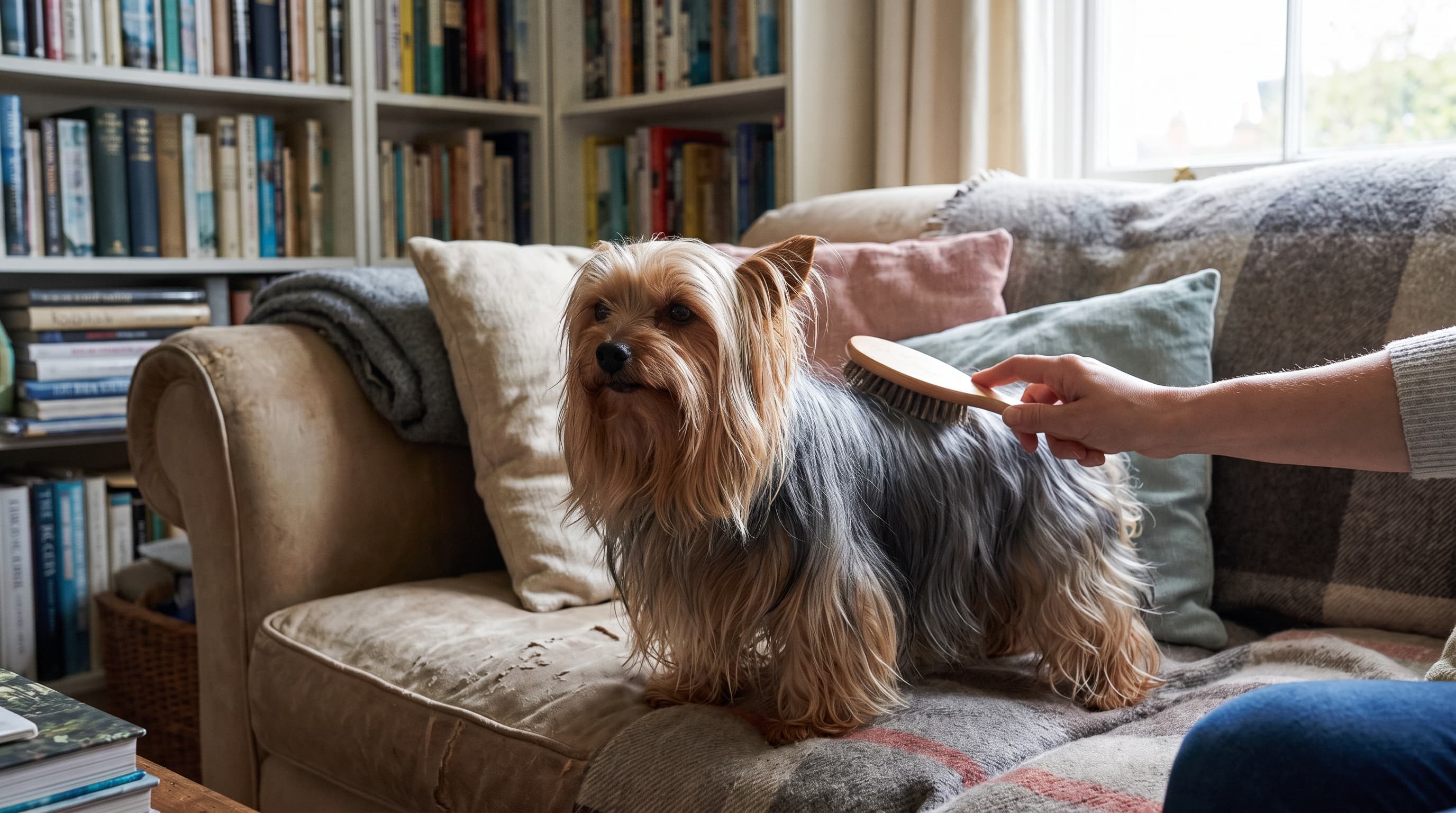
- Bathe and brush the dog regularly to remove loose dander — ideally have a non-allergic family member do the grooming.
- Wash your hands after petting and swap heavy carpets and drapes for easier-to-clean surfaces.
Consistent grooming does double duty: a well-maintained curly coat sheds and mats less. Our Goldendoodle haircut guide covers clip styles that keep the coat healthy and easy to manage.
How to Test a Goldendoodle Before You Commit
Because coats and allergen levels vary so much from dog to dog, the smartest move is to test your own reaction before bringing a Goldendoodle home. A few practical steps:
- Visit the specific dog more than once. A single short visit can miss a delayed reaction. Spend an hour or more, on separate days if possible, with the exact dog (or its parents and littermates).
- Touch, then wait. Pet the dog, let it lick your hand, and sit in the room with it. Note whether itchy eyes, sneezing, or congestion show up over the following hours.
- Meet the parents. A puppy's coat often resembles its parents', so a low-shedding, curly-coated sire and dam improve your odds — and let you gauge your reaction to that coat type.
- Ask about the coat and generation. Reputable breeders can tell you whether a pup is likely to have a wool, fleece, or flat coat, which strongly predicts shedding.
Keep in mind that Goldendoodles are moderate groomers regardless of allergy status. A low-shedding curly coat needs frequent brushing and professional trims every 6–8 weeks to prevent painful matting — and that grooming is also what keeps dander under control, as WebMD's overview of Goldendoodle shedding explains. If you can't commit to that upkeep, the coat's allergy benefits fade fast.
Goldendoodle vs. Other "Hypoallergenic" Dogs
Goldendoodles aren't the only low-shedding option. Purebred Poodles (the source of the trait) are a proven choice, and other doodles — Labradoodles, Bernedoodles — work on the same principle. Smaller breeds like the Yorkshire Terrier are also popular with allergy sufferers; we cover the reality in Are Yorkies hypoallergenic? If you love the low-shedding coat and want the most predictable version of it, a Standard Poodle is worth considering alongside the Goldendoodle.
Are Mini Goldendoodles More Hypoallergenic Than Standard?
Size alone doesn't make a Goldendoodle more or less allergy-friendly — coat type does. A Mini Goldendoodle (bred using a Miniature Poodle) is popular partly because it produces less total dander simply by being a smaller animal with less surface area and hair. In that narrow sense, a smaller dog can mean a bit less allergen in the home. But a straight-coated Mini can still shed more than a curly-coated Standard, so don't assume "mini" equals "hypoallergenic."
The same rule applies across every Goldendoodle size: prioritize the low-shedding wool or fleece coat, favor an F1B generation if allergies are a serious concern, and evaluate the specific dog in front of you rather than trusting a size or generation label. A smaller footprint can help at the margins, but coat texture and diligent grooming remain the real levers. If you're comparing doodle types, our full Goldendoodle breed guide breaks down how size, coat, and temperament vary.
Frequently Asked Questions
Are Goldendoodles 100% hypoallergenic?
No. No dog is fully hypoallergenic. Goldendoodles produce fewer airborne allergens than many breeds thanks to their low-shedding coats, but they still make dander, saliva, and urine proteins that can trigger allergies.
Which Goldendoodle is best for allergies?
A curly (wool) coat, often from an F1B generation, tends to shed the least and is generally the most allergy-friendly — though it requires the most brushing. Always meet the individual dog before deciding.
Do Goldendoodles shed at all?
Most shed very little, but some — especially straight-coated or Golden-dominant dogs — shed more. Even low-shedding Goldendoodles release some dander, so they are never shed-free or allergen-free.
Can I be allergic to a Goldendoodle even if it doesn't shed?
Yes. Allergies are triggered by proteins in dander, saliva, and urine, not by shedding itself. A low-shedding dog spreads less of those proteins around your home, but they're still present, so a reaction is still possible.
How can I reduce Goldendoodle allergens at home?
Use HEPA air filtration, keep the dog out of bedrooms, bathe and brush regularly (ideally by a non-allergic person), wash hands after contact, and choose hard flooring over carpet. Spending time with the specific dog first is the best test.
The Bottom Line
Goldendoodles are one of the more allergy-friendly dogs you can bring home, but "hypoallergenic" is a spectrum, not a guarantee. Focus on the individual dog's coat, prioritize a low-shedding curly texture, commit to regular grooming, and spend real time together before you decide. If you or a family member has severe allergies, talk with an allergist first — the right prep makes a Goldendoodle a realistic choice for many households.
Want more on choosing an allergy-friendly companion? Explore our full Goldendoodle breed guide and our Standard Poodle guide to compare two of the most popular low-shedding breeds — then subscribe to the Daily Wag newsletter for weekly dog-care tips, breed spotlights, and grooming advice.