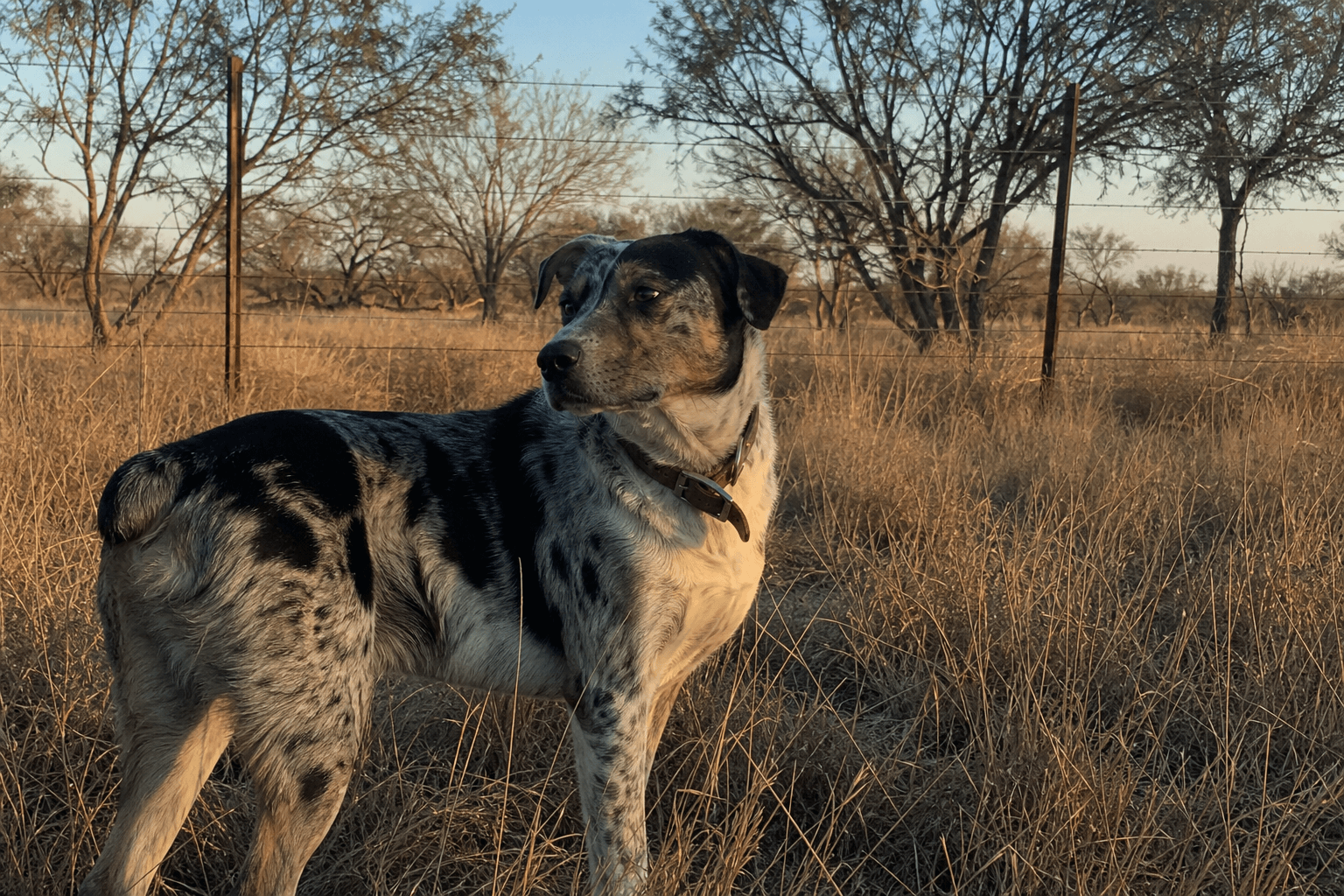

A parasite the United States wiped out in 1966 is back — and if you travel with your dog, especially anywhere in or through Texas, it's worth ten minutes of your attention.
New World screwworm (NWS) was confirmed in a Zavala County, Texas calf on June 3, 2026, the first domestically acquired case in nearly six decades. As of the USDA's daily dashboard on August 3, there are 44 confirmed infestations — 43 in Texas across 15 counties, plus one in New Mexico. All 44 have been in domestic animals, and here's the encouraging part: 36 are listed inactive (treated and closed) versus eight active, the widest gap since the outbreak began. No cases have turned up in wildlife, and the federal fly-trapping network has still caught zero wild screwworm flies.
So this is not a panic story. But it is a story that has quietly changed the paperwork rules for taking your dog across state lines in 45 states — and that has real implications for how you handle a scraped paw or a hot spot on a summer road trip.
What New World Screwworm Actually Is
Cochliomyia hominivorax is a fly that looks a lot like a common housefly, but with distinctive orange eyes and a metallic blue-green body. Its species name translates roughly to "man-eater," and unfortunately that's accurate in the way that matters: unlike ordinary maggots, which feed on dead tissue, screwworm larvae burrow into living flesh, screwing themselves deeper into the wound as they grow.
The female fly lays 200 to 300 eggs at the edge of a wound. According to the MSD Veterinary Manual, myiasis caused by this fly is a zoonosis affecting livestock, wildlife, dogs and other pets, and — rarely — humans. Untreated infestations can be fatal.
The detail dog owners most need to hear: the wound doesn't have to be dramatic. Veterinary guidance published in Clinician's Brief notes that flies can lay eggs on very small skin lesions — "potentially including something as minor as an insect bite." Risk factors include time spent outdoors, walking through rough brush, recent surgical incisions, allergic skin disease that damages the skin barrier, and excessive skin folds. Infestations can also start in healthy mucous membranes: the nose, ears, eyes, mouth, or genitals.
Why dogs specifically matter here
Two reasons. First, dogs get more small cuts than we notice — brush scrapes, cracked paw pads, ear tips, post-neuter incisions. Second, dogs move. The California Department of Food and Agriculture puts it bluntly on its NWS page: "Screwworms have most recently entered the US in dogs that have been imported from areas of the world where the flies are endemic." A dog in a crate can cross five state lines in a day. A cow cannot.
The Signs to Look For
If you're in or traveling through Texas, New Mexico, or anywhere along the southern border, check any wound daily. Watch for:
- A wound that gets bigger instead of smaller over 24–48 hours
- Visible larvae in a wound or body opening — often deep, so what you see may only be the tips of the maggots moving
- A distinct foul odor and serosanguineous (brownish-red) drainage
- Flies persistently landing on one spot on your dog
- Head shaking, pawing at an ear, or nasal discharge with no other explanation
- Lethargy, fever, or off food alongside any of the above
Do not try to flush it out and wait. Screwworm is a reportable foreign animal disease in the U.S. — diagnoses must be reported within 24 hours. Call your vet and say the word "screwworm" so they know to treat it as urgent.
What treatment looks like
The good news is that treatment in dogs is well established and fast. Per the MSD Veterinary Manual, options include a single oral dose of nitenpyram (1.43–4.42 mg/kg), which induces larval expulsion within about six hours, or lotilaner (minimum 20.5 mg/kg), which reaches 100% efficacy within 24 hours. Oral spinosad plus milbemycin is also highly effective. Afoxolaner with milbemycin works but more slowly. Your vet will pair medication with wound debridement and cleaning.
Important: these are treatments, not preventives. Topical pyrethroid sprays labeled against screwworm larvae "should only be used when larvae are present and not as a preventative," the manual notes. Do not start dosing your dog with anything on spec because you read a scary headline. Talk to your vet.
The Part Almost Nobody Has Told Dog Owners: Travel Paperwork Changed
This is the most underreported piece of the story, and it can strand a trip.
The American Kennel Club's Government Relations team reports that 45 states have created their own NWS-related movement rules and restrictions for animals, layered on top of their normal interstate importation requirements. Only Alaska, Hawaii, Nevada, Ohio, and Wyoming have not added screwworm-specific rules — and their standard import requirements still apply.
California is a useful example of how detailed this gets. Effective June 12, 2026, CDFA requires that companion animals — dogs explicitly included — coming from a state with an active NWS-infested zone have:
- A premovement veterinary inspection within 7 days of arrival (within 5 days if coming from an infested zone itself)
- An electronic Certificate of Veterinary Inspection (eCVI) with the required NWS statement
- A California entry permit
- Inspection again upon arrival at the California destination
Massachusetts issued a similar order in June, and all six New England states imposed movement restrictions on susceptible species — dogs and cats named specifically — originating in a state that contains an infested zone or an adjacent surveillance zone.
Read that last phrase again: originating in a state that contains an infested zone. Under some of these orders, it doesn't matter whether your dog was anywhere near Zavala County. If your dog is coming out of Texas, the paperwork may follow you.
Your pre-trip checklist
- Check three sets of rules, not one: your home state, every state you'll drive through (outbound and return), and your destination state. AKC's legislative alert page maintains a state-by-state list.
- Call your vet 2–3 weeks out. A CVI has a short validity window and requires an appointment. Some states want an electronic CVI, which not every clinic issues on the spot.
- Ask whether an entry permit is required — that's a separate document from the CVI, often obtained by your veterinarian.
- Print everything. Assume no cell service at the moment someone asks.
- Delay non-essential travel if your dog has an open wound or fresh surgical incision. This is the single highest-risk scenario.
If you're flying, competing, or moving a rescue dog across state lines this summer, build in extra lead time. Show and trial secretaries are being advised to check restrictions for events held anywhere near an infested zone, which means event requirements may change after you register.
How Worried Should You Actually Be?
Honestly: not very, if you live outside the affected region. The CDC describes the current risk to people and animals in the U.S. as "very low," and there have been no locally acquired human cases. CDC activated a Level 3 emergency response on June 11, 2026 — worth noting that Level 3 is the lowest tier in its three-level structure, meaning coordination and readiness rather than crisis. NWS also cannot spread animal-to-animal or person-to-person; it requires a fly laying eggs in a wound.
The containment picture is genuinely improving. Zero wild flies trapped, zero wildlife cases, and resolved infestations outnumbering active ones better than four to one are the three numbers vets are watching, and all three are pointing the right way. USDA opened a sterile fly dispersal facility in Texas in February 2026 and broke ground on a sterile fly production facility in April — the same sterile-insect technique that eradicated screwworm from North America the first time.
But context cuts both ways. The CDC also notes that Central American countries and Mexico have reported more than 189,000 animal cases and 2,340 human cases since the regional outbreak began in 2023. That's what's sitting on the other side of the border, and it's why the paperwork exists.
What to Do This Week
If you're in Texas, New Mexico, or the border region:
- Do a hands-on wound check every evening — paws, ears, muzzle, belly, under the collar, around any incision
- Keep fresh wounds covered when your dog is outside, and clean promptly
- Time walks for cooler parts of the day when fly activity is lower, and skip heavy brush
- Postpone elective surgery timing conversations to your vet — they'll advise on aftercare in an affected zone
- Save your state animal health office number: in Texas, that's the Texas Animal Health Commission
If you're anywhere else:
- Nothing urgent. Do check travel requirements before any interstate trip with your dog this summer
- Bookmark screwworm.gov for the official case dashboard rather than relying on social media counts
The bar for a good outcome here is simply this: don't let a small wound on your dog go unwatched for a week, and don't show up at a state line without your paperwork. Both are easy. Neither requires worrying.
Keep Exploring — Just Pack the Paperwork
None of this should keep you home. Summer is short, your dog is thrilled to be in the car, and the overwhelming majority of dogs in this country face zero screwworm risk. Get the CVI, check the wound, and go.
At Sidewalk Dog, we spend our time finding the patios, trails, breweries, and hotels that actually want your dog there — and telling you the unglamorous stuff, like which forms to bring, so the trip goes smoothly. Browse our city guides to plan your next dog-friendly outing, and sign up for our newsletter to get dog news that's useful before it's alarming.