
Mark your calendar: National Pet Obesity Awareness Day falls on Wednesday, October 14 this year, the anchor of what veterinarians now call Pet Obesity Month. And the timing matters more than usual. On October 1, the Association for Pet Obesity Prevention (APOP) released its updated 2026 guidelines and opened a fresh national survey of clinics across the country. The headline number they keep coming back to is a tough one for dog people to sit with: roughly 59% of dogs seen at U.S. veterinary clinics score in the overweight or obese range.
If you just glanced at your dog napping on the couch and thought, "not my guy," you are exactly the owner this awareness day is built for. Here is what the latest data says, why those extra pounds cost your dog more than you might expect, and the small, doable steps you can take this month.
The number behind the awareness day
The 59% figure comes from APOP's most recent full prevalence survey, in which veterinarians assessed the body condition of dogs at participating clinics. Broken down, about 37% of dogs were overweight and another 22% had obesity — meaning the majority of dogs walking through the clinic door are carrying more weight than is healthy for them. Cats fared even worse, at 61%.
That is not a one-year blip. Pet obesity rates have crept upward for the better part of a decade, which is precisely why APOP built a dedicated October awareness push around measurement and education. This year's drive runs a dual survey — one for pet owners and one for veterinary clinics recording weight and body condition — from October 1 through December 31, 2026, with full results expected in early 2027.
Your dog may be heavier than you think
Here is the part that trips up even devoted owners. Among people whose pets scored in the overweight or obese range, 32% described their pet as "normal," "ideal," or "thin." In other words, nearly one in three owners of a heavy dog genuinely does not see it.
That perception gap is understandable. We see our dogs every day, so gradual weight gain hides in plain sight. And years of cartoons, treats, and "he's just big-boned" culture have quietly reset what a normal-looking dog is supposed to be. The fix is a body condition score (BCS) — a hands-on 1-to-9 scale vets use to judge weight by feel, not just the number on the scale. At a healthy score you should be able to feel your dog's ribs easily under a thin layer of fat, see a visible waist from above, and notice a tummy tuck from the side. APOP offers free body condition charts and calorie calculators on its site so you can run the check at home before your next vet visit.
What the extra weight actually costs
The reason vets treat this as more than a cosmetic issue comes down to years of life. A landmark study of more than 50,000 dogs across 12 popular breeds, run by the University of Liverpool and Mars Petcare's Waltham research center, found that overweight dogs lived up to 2.5 years less, on average, than dogs at a healthy weight.
The size of that penalty varied by breed — from about five months for male German Shepherds to a full 2.5 years for male Yorkshire Terriers — but the direction was the same across every breed studied. Carrying excess weight is also linked to osteoarthritis, diabetes, heart disease, and certain cancers, along with breathing difficulty and higher anesthetic risk during surgery. It also simply makes everyday life harder: stiffer joints, less stamina on walks, and more labored breathing in heat.
Those downstream conditions tend to stack up. We've written before about how dogs juggling several chronic conditions at once face steeper health odds — and weight is one of the few risk factors owners can directly influence.
What's new in 2026: a disease, not a discipline problem
The biggest shift in this year's guidelines is in how vets and owners are being asked to talk about weight. APOP's 2026 update leans into person-first, blame-free language — "a dog with obesity" rather than "an obese dog" — and introduces new working categories of preclinical and clinical obesity to help clinicians flag risk earlier.
APOP founder Dr. Ernie Ward frames it bluntly: "Pet obesity is a disease, not a discipline issue," adding that "calorie restriction alone doesn't account for the biological complexity of weight regulation." The reframe matters because shame is a known conversation-killer. In APOP's 2025 survey, 87% of veterinary professionals said worry about how clients would react shaped how — or whether — they raised weight at all, even though 95% of them consider obesity a disease.
Five things you can do before October 14
You don't need a dramatic overhaul. The data points to a handful of high-leverage habits most owners skip.
1. Actually measure the food
Only 16% of dog owners weigh their pet's food; most eyeball it with a scoop, which quietly inflates portions. A cheap kitchen scale is the single easiest fix. Measure against your dog's target weight, not its current weight, and count treats as part of the daily total — the rule of thumb is to keep treats under 10% of calories.
2. Do a hands-on body check
Run the rib-waist-tuck test above once a month. Catching a half-pound of creep early beats reversing five pounds later.
3. Book the weight conversation
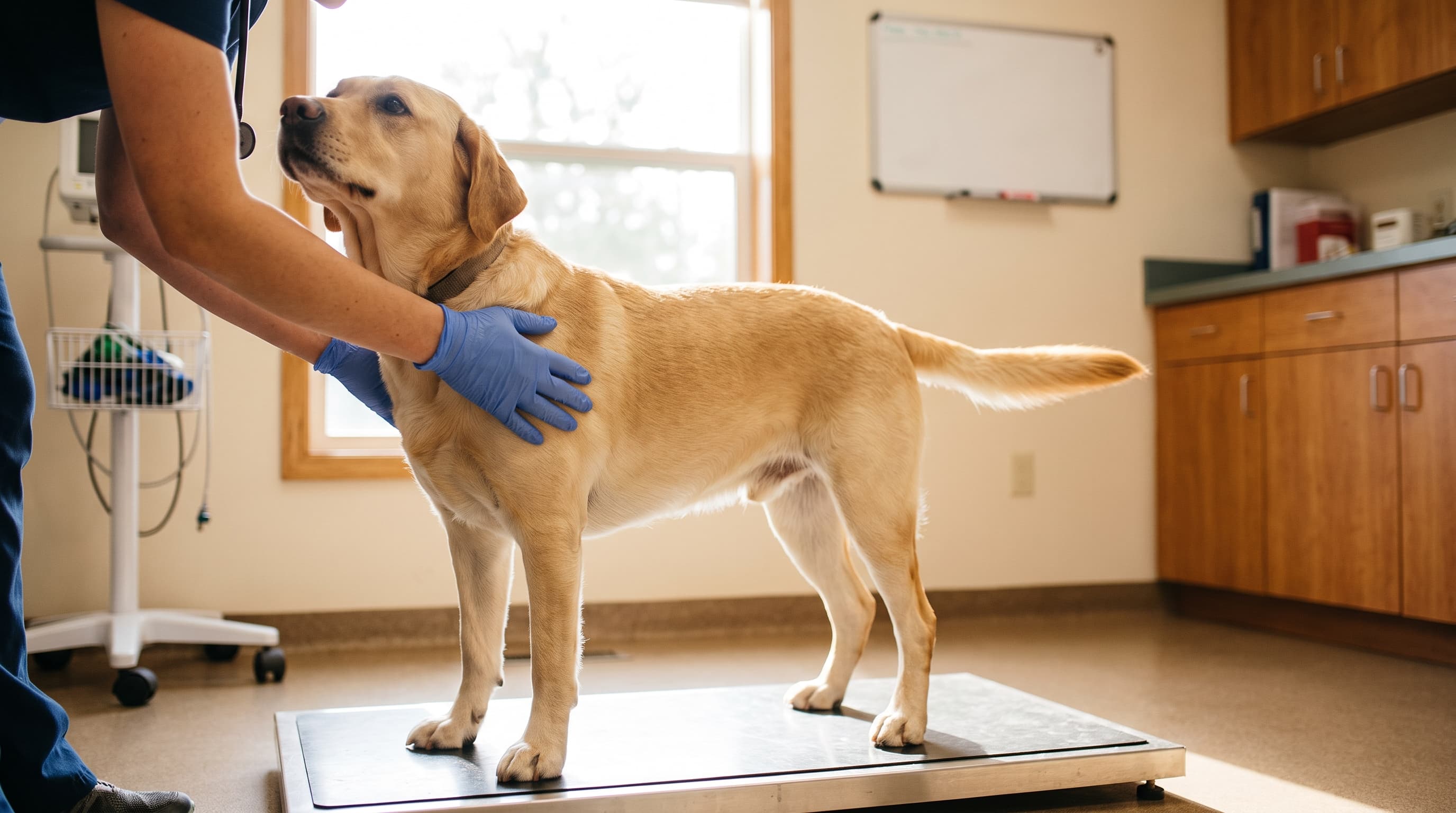
Ask your vet for a body condition score at your next visit and a realistic target weight. If cost is on your mind, you're not alone — 40% of owners told APOP the economy is affecting how they manage their pet's health — so ask about a phased plan.
4. Move the body and the brain
Weight loss is mostly diet, but activity protects muscle and burns restless energy. Mental work counts too: short nose-work and sniffing games can tire a dog out on days the walk runs short.
5. Ask about therapeutic diets if needed
For dogs with a lot to lose, over-the-counter "light" food often isn't enough. Just 22% of dog owners have used a vet-prescribed therapeutic weight-loss diet, which is formulated to keep a dog feeling full while cutting calories safely.
The encouraging part
It works. In APOP's latest survey, one in four dog owners reported getting their pet to a healthy body condition and keeping it there — proof that steady, structured effort pays off. The hardest step is the first one: seeing the dog in front of you clearly instead of the dog you remember.
Use October 14 as your prompt. Pull out a scale, feel for those ribs, and book the vet chat you've been putting off. For more practical, science-backed dog-care guides — and our weekly newsletter full of tips, trivia, and the occasional very good boy — stick with Sidewalk Dog. Your dog's waistline, and those extra years, are worth it.