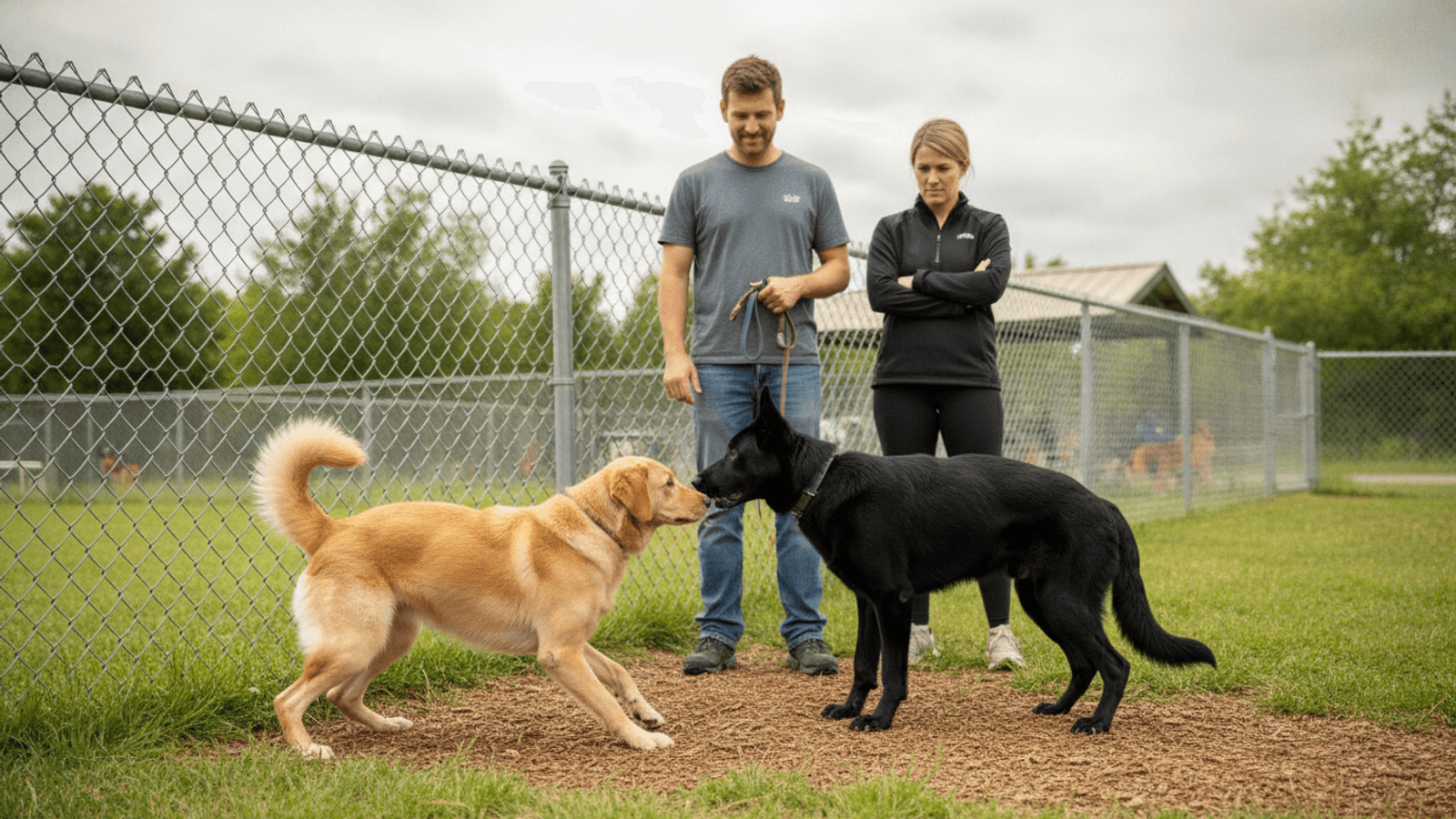

An estimated 4.5 million people are bitten by dogs in the U.S. each year. These incidents carry significant financial and physical consequences for victims and pet owners alike. The number of dog bite liability claims in the U.S. reached a record 22,658 in 2024. The resulting financial severity demands a careful approach to pet ownership.
The communal dog park functions as a complex environment rather than a simple recreation area. Owners often fail to recognize the clear signs of overstimulation until a bite actually occurs. Without proper behavioral awareness, a standard afternoon outing rapidly degrades into a severe liability event.
Understanding the subtle physiological cues of canine fear and pre-aggression is essential for responsible pet ownership. Proactive risk management limits financial exposure and protects both human and canine park visitors. This guide covers behavioral data, environmental stressors, and the practical steps required if a physical incident occurs.
Evaluating Canine Reactivity and Behavioral Metrics in 2026
The 2026 U.S. National Dog Behavior Analysis identifies reactivity as the leading canine training concern nationwide. Owners frequently interpret defensive posturing incorrectly when observing their pets in communal spaces. Real-world behavioral data confirms that these reactions stem from involuntary responses rooted in fear and anxiety. Aggression is rarely driven by an inherent intent to harm.
Environmental stress and communication gaps significantly elevate the risk of a physical incident at off-leash facilities. Dogs require consistent structure and clear leadership to navigate highly stimulating environments safely. Without this baseline communication, an anxious dog will predictably default to defensive reactivity. Managing these variables prevents minor discomfort from escalating into a dangerous physical encounter.
Localized data emphasizes the growing lack of accessible resources for canine behavior and professional training. Denver Animal Protection recorded 995 dog bite reports in 2024, marking a severe seven-year high. Furthermore, the American Pet Products Association estimates that only four percent of dogs in the United States complete a professional training class. This significant training deficit places the burden of observation entirely on individual dog owners.
Visual Indicators of Escalating Tension
Addressing the knowledge gap in behavioral interpretation requires strict attention to physical cues. Owners consistently mistake escalating tension for harmless play during the critical moments before a physical snap. Recognizing these distinct markers dictates immediate intervention and prevents serious injury. The difference between a healthy interaction and a dangerous one relies entirely on body language. (For a broader primer that goes beyond the park, see our guide to dog body language.)
- Prolonged Staring: An unblinking fixation indicating high stress and potential aggression in dogs.
- The Hard Freeze: A sudden pause or immobility in play preceding a calculated lunge.
- Vocalization Shifts: Low, deep growling accompanied by bodily stiffness reflects a clear, active threat.
- Tucked Tails & Stiff Posture: Indicators of fear that frequently precede defensive snapping and severe altercations.
- Incomplete Snaps: A warning signal requesting space; ignoring this guarantees escalation into a full bite.
Analyzing the Impact of External Stimuli at Off-Leash Facilities
Uncontrolled variables compromise safety and compound canine anxiety in off-leash recreational areas. Discarded food, trash, and other substances are easy for dogs to scavenge, and veterinary clinics report toxicity cases following routine park visits. Intoxicated or disoriented dogs present a highly unpredictable risk to surrounding animals.
External stimuli extend beyond discarded substances to include dangerous organic hazards. Raw meat left in parks creates unpredictable canine behavior and sparks resource-guarding incidents. The University of Wisconsin-Madison School of Veterinary Medicine warns that dogs must be protected from rotten food and dead animals on trails. These environmental hazards require constant vigilance from owners navigating shared recreational spaces.
The human element further complicates off-leash facility safety and broad accountability. Owners frequently rely on subjective interpretations, such as claiming a dog has “aggressive energy,” rather than observing objective physical cues. Deflecting blame during minor scuffles prevents accurate risk assessment and escalates park tensions. Clear, data-driven observation remains superior to emotional assessments of dog behavior.
Municipalities continue to face significant challenges regulating these off-leash behaviors effectively. Local police departments have indicated their readiness to issue strict citations to violators of dogs-at-large ordinances. Denver issued 551 off-leash tickets between January 2024 and May 2025 alone. This strict enforcement highlights the growing friction between pet owners and local administrative bodies demanding higher safety standards.
Assessing Canine Interaction Dynamics
Continually auditing your dog’s interactions mitigates the risk of a severe physical altercation. Healthy play remains reciprocal and fluid, while escalating conflict appears rigid and highly one-sided. Owners must objectively evaluate these behavioral metrics to maintain park safety and protect their animals. Tracking movement symmetry and vocal tone provides a reliable framework for risk assessment.
| Behavioral Metric | Healthy Play Profile | Escalating Conflict Profile |
|---|---|---|
| Body Posture | Loose, bouncy movements; relaxed muscles. | Stiff, rigid stance; weight shifted forward. |
| Vocalization | High-pitched, brief barks or play growls. | Low, sustained guttural growls. |
| Interaction Symmetry | Taking turns chasing and being chased. | Relentless pursuit; one dog constantly retreating. |
| Eye Contact | Averted gaze or soft, blinking eye contact. | Hard, unblinking stares locked on the target. |
Applying this table to real-world scenarios ensures owners intervene before a stress response transforms into a severe bite. Consistent behavioral analysis replaces emotional assumptions with actionable safety protocols. The data clearly shows that structured oversight prevents liability.
Quantifying Liability and Managing Post-Incident Exposure
Despite careful observation, canine incidents happen frequently in crowded communal spaces. Owners must take immediate, objective steps to safely separate dogs and exchange information without admitting fault. Quick action mitigates physical damage and establishes a clear timeline of events.
Documenting the altercation thoroughly provides necessary evidence for future administrative or legal proceedings. Reporting the incident to local authorities establishes a formal record required to identify the responsible parties. Establishing accountability remains the primary goal following any off-leash injury. Failure to document the encounter heavily prejudices future damage recovery.
The broader financial landscape surrounding canine altercations presents a significant risk for pet owners. Liability claims for dog bites and other related injuries cost homeowners insurers $1.57 billion in 2024. The average cost per dog bite claim surged 18.3% to $69,272 during that exact timeframe. These metrics highlight the extreme cost of poor park oversight.
Long-term economic data illustrates a distinct upward trajectory in incident severity. From 2015 to 2024, average national claim costs rose 86.1% due to medical inflation and larger settlement sizes. Homeowners and renters insurance policies typically cover these legal expenses up to liability limits, commonly between $100,000 and $300,000. Exceeding these limits exposes owners to devastating personal financial judgments.
Utilizing Data to Navigate Post-Incident Claims
When a misunderstanding escalates into a physical altercation causing injury, the financial and legal aftermath becomes highly complex. Victims face escalating medical expenses, lost wages, and severe emotional distress following a severe attack. Liability often hinges on specific state laws like the “one-bite rule” or established precedents of negligence. Navigating this environment demands objective analysis rather than emotional reaction.
To evaluate individual risk and potential compensation accurately, victims and owners must rely on empirical legal tools. The USA Dog Bite Settlement Calculator, provided by the legal experts at DogBiteLaws.com, serves as a critical asset in these scenarios.
Utilizing a privacy-focused tool empowers individuals to understand their baseline legal standing before entering negotiations with aggressive insurance adjusters. This pragmatic approach, backed by specialized dog bite attorneys, ensures victims are not pressured into accepting inadequate initial offers for their trauma. Precise data evaluation remains essential for securing appropriate financial recovery and enforcing owner accountability.
Strategic Positioning for 2026 Park Outings
Proactive risk management at the dog park relies entirely on consistent and objective observation. Recognizing the physiological markers of reactivity and distinguishing them from healthy play prevents physical escalation. Owners must prioritize these visual assessments during every recreational visit to maintain control. Safety systems fail when owners default to distraction over active monitoring.
An educated owner acts as the first line of defense against the surging frequency and financial severity of canine altercations. With liability claims exceeding $69,000 on average, ignoring canine body language carries a steep financial penalty. Behavioral fluency protects both the dog and the owner’s personal financial assets against catastrophic legal judgments.
Dog owners must consistently audit their dog’s environmental stress levels in communal off-leash spaces. Maintaining an active awareness of legal protections and potential liabilities remains a non-negotiable requirement of modern pet ownership. Apply these analytical principles diligently to guarantee safe, structured, and responsible park outings throughout the 2026 season.