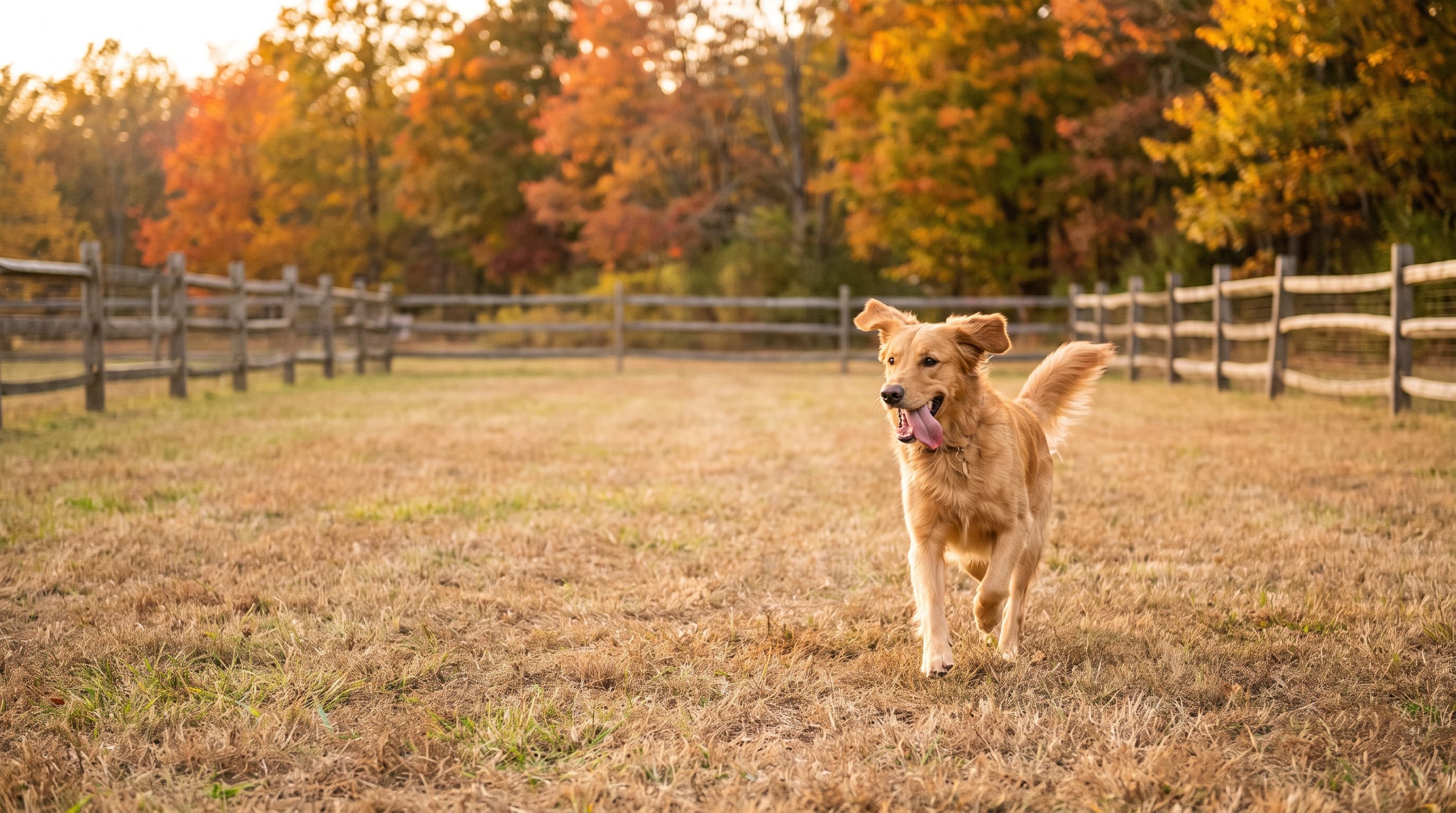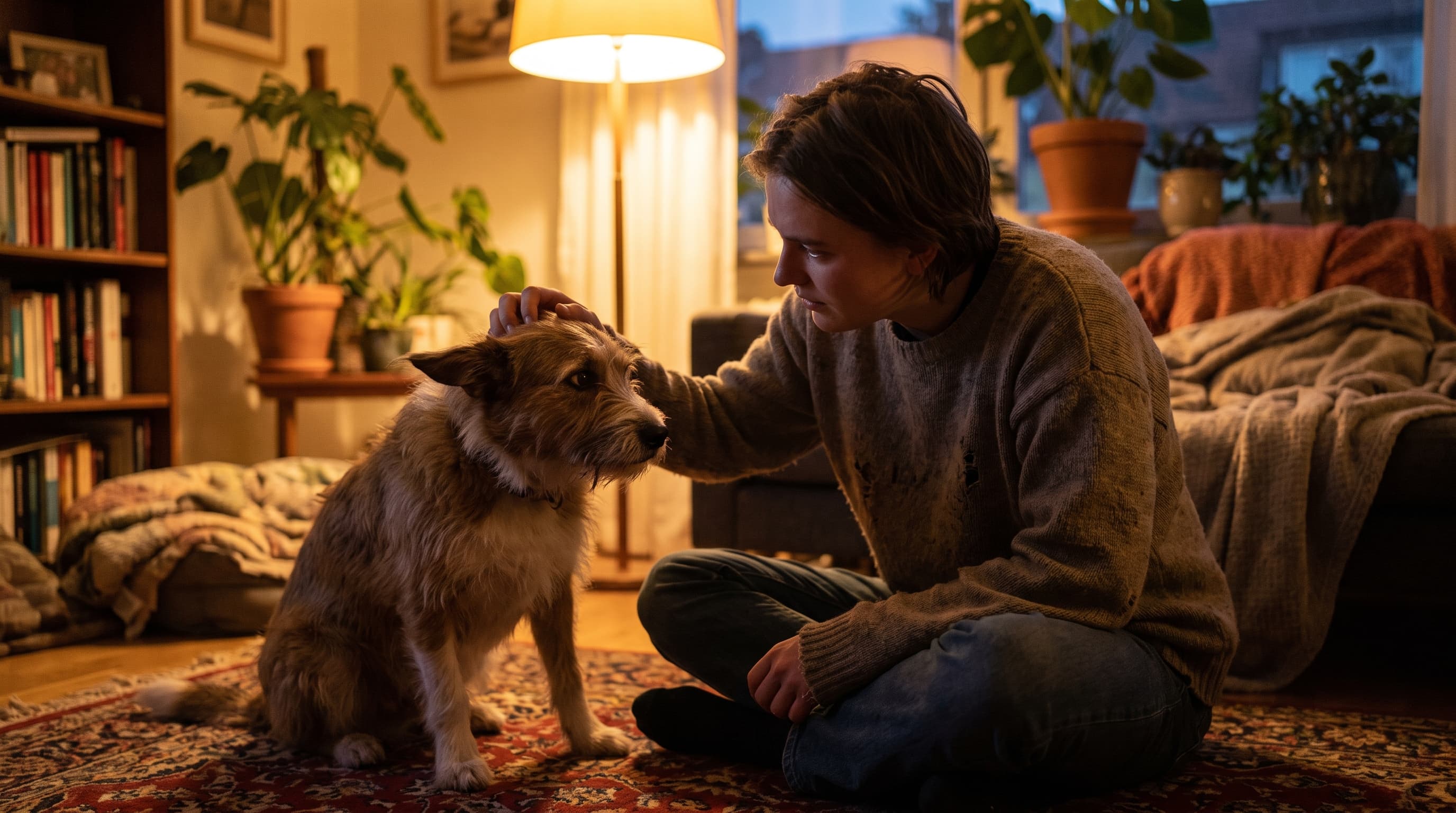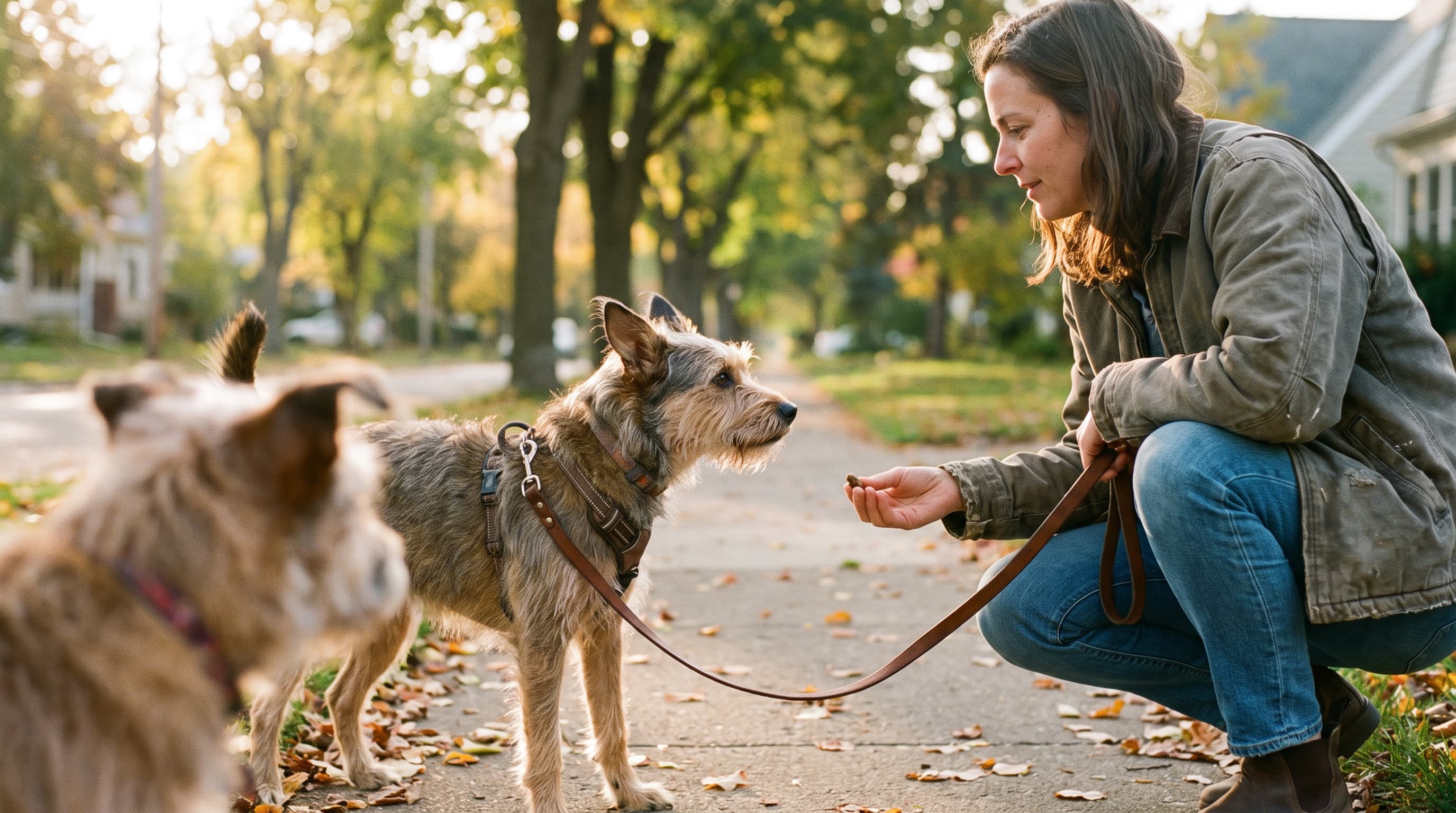

Picture the scene: you round a corner on your evening walk, another dog appears across the street, and your normally sweet pup erupts — barking, lunging, hackles up, straining against the leash like a completely different animal. It looks like aggression. It feels mortifying. And according to the largest snapshot of American dog behavior in years, it is now the single most common problem dog owners are asking for help with — and most of them are misreading what it means.
As the summer heat finally breaks and daily walks come roaring back into our routines, more dogs are hitting the sidewalks at the same crowded hours. That seasonal surge in encounters is exactly when reactivity flares. So if your dog has been putting on a scene lately, you're not alone, and you're almost certainly not dealing with the problem you think you are.
Reactivity just topped the list — here's what the data shows
Bark Busters Home Dog Training recently reviewed nearly 50,000 in-home training consultation requests submitted by owners across the country — one of the broadest looks at what's actually happening in American living rooms and on American sidewalks. The headline finding: reactivity and aggression, taken together, form the single largest category of behavior complaints nationwide, edging out longtime frontrunners like separation anxiety, excessive barking, and leash pulling.
But the more important finding is buried in that "taken together." The vast majority of those cases aren't aggression at all. "Many dogs labeled as aggressive are actually reactive and struggling with emotional regulation," Carl Peterson, CEO of Bark Busters USA, told Newsweek. In other words, the loudest, scariest-looking dog on the block is usually an overwhelmed one — not a dangerous one.
Reactive vs. aggressive: the distinction that changes your whole plan
These two words get used interchangeably, but to a trainer they describe very different dogs — and they call for very different responses. Getting the label right is the first real step toward fixing the behavior.
The American Kennel Club defines reactivity as a dog responding to an ordinary situation with "abnormal and excessive levels of arousal." Aggression, by contrast, is threatening or harmful behavior specifically intended to increase distance from a target or to cause damage. One is a nervous system in overdrive; the other is intent.
The clearest tell in the real world? Timing. "One clear sign that a dog is reactive rather than truly aggressive is that the behavior ties to a specific trigger and stops once that trigger is gone," Peterson explained. The reactive dog that was screaming at a passing skateboarder is wagging and sniffing again thirty seconds later. A genuinely aggressive dog tends to stay locked on, aroused and pursuing.
What reactivity actually looks like
Barking, lunging, spinning, whining, and frantic pulling — either toward the trigger or away from it — are the classic signs. Tellingly, many leash-reactive dogs are perfectly friendly off-leash. The same dog who loses his mind at another dog from twenty feet away on a walk will often happily play with that exact dog in an open yard. The leash itself, and the frustration of being tethered when every instinct says "go check that out," is a huge part of the problem.
When it's genuinely aggression
True aggression — a hard stare that doesn't break, a stiff freeze, a bite or attempted bite, or arousal that lingers long after the trigger leaves — is a smaller subset of cases, but it's real and it deserves professional eyes. If your dog is making contact, or you feel unsafe managing him, skip the DIY phase and book a certified behavior consultant or a veterinary behaviorist. Start with your vet, too, since pain and underlying medical issues can quietly drive a short fuse.
Why so many dogs end up reactive
Reactivity isn't a character flaw, and it usually isn't about breed. The AKC points to a familiar set of roots: fear or anxiety (by far the most common), frustration when a leash or fence blocks a dog from something exciting, gaps in early socialization, and previous scary experiences like being rushed or attacked on a walk. Bark Busters' analysis echoes this — these behaviors "span breeds of all sizes and reputations," the company noted, and are far more closely tied to communication gaps, inconsistent structure, and everyday stress than to any particular breed's temperament.
That's actually good news. Problems built out of fear and habit are problems you can rebuild. As Bark Busters national training director Michelle Willey put it, "Dogs thrive on routine, predictability and consistency" — and those are three things any owner can start delivering today.
A trainer-backed plan that actually works
Certified trainer Rachel Lane, quoted in the AKC's guidance, lays out a three-part approach that mirrors what most modern, force-free trainers recommend. Here's how to put it to work on your next walk.
1. Manage the environment first. Before you train a single thing, stop letting your dog rehearse the meltdown. Walk at quiet hours, cross the street to keep distance, and skip the packed dog park for now. Every reaction your dog practices makes the pattern stronger, so your first job is simply to prevent reps.
2. Change the emotion, not just the behavior. The gold standard is desensitization and counterconditioning: expose your dog to the trigger at a distance low enough that he notices it but doesn't erupt (trainers call this staying "under threshold"), then pair that calm sighting with something wonderful — think chicken, cheese, or hot dogs, not kibble. Over many reps, "scary dog appears" starts to predict "amazing snack," and the emotional response softens. Teaching an incompatible behavior, like turning to look at you the moment a trigger appears, gives your dog a job to do instead of a fight to pick.
3. Learn to read the early signs. Reactivity rarely comes out of nowhere. Lip-licking, a pinned ear, a hard freeze, a closed mouth — these quiet signals come before the explosion. Spot them and you can add distance or ask for focus before your dog goes over the edge. If arousal is so high that learning is impossible, Lane notes, a vet-guided medication plan can sometimes lower the baseline enough for training to stick.
The payoff for that consistency is real and measurable. Bark Busters reports that 78% of owners saw meaningful improvement after just eight weeks of consistent, science-backed, force-free training. This is a solvable problem — most reactive dogs can learn to walk calmly past the very things that used to set them off.
The one thing not to do
Whatever you do, don't punish the reaction. Leash pops, yelling, or prong-and-shock corrections might interrupt the outburst in the moment, but they teach a fearful dog that the appearance of another dog predicts pain — which makes the underlying fear, and the reactivity, worse over time. Every credible modern authority, from veterinary behaviorists to the trainers cited above, points the same direction: build confidence and trust, don't suppress symptoms. Lane's blunt reminder is worth taping to your leash hook: "there are no quick fixes."
A little foundational obedience makes all of this easier. If your dog doesn't yet have a rock-solid focus cue, our guide on how to teach your dog to sit is a great place to build the attention you'll lean on mid-walk. And because reactivity and separation-related stress so often travel together, our two-week separation-anxiety reset pairs perfectly with a reactivity plan this time of year.
The bottom line for this fall
As walks pick back up and your neighborhood fills with dogs, strollers, skateboards, and squirrels again, more owners than ever are about to meet their dog's reactive side. Take a breath: that lunging, barking dog on the end of your leash almost certainly isn't the aggressive monster the moment makes him feel like. He's overwhelmed, he's telling you so in the only way he knows how, and with distance, great treats, and a little patience, he can get better. At Sidewalk Dog, we're all about making the walk the best part of your dog's day — reactivity and all. Grab the high-value treats, pick the quiet route, and start where your dog can succeed.