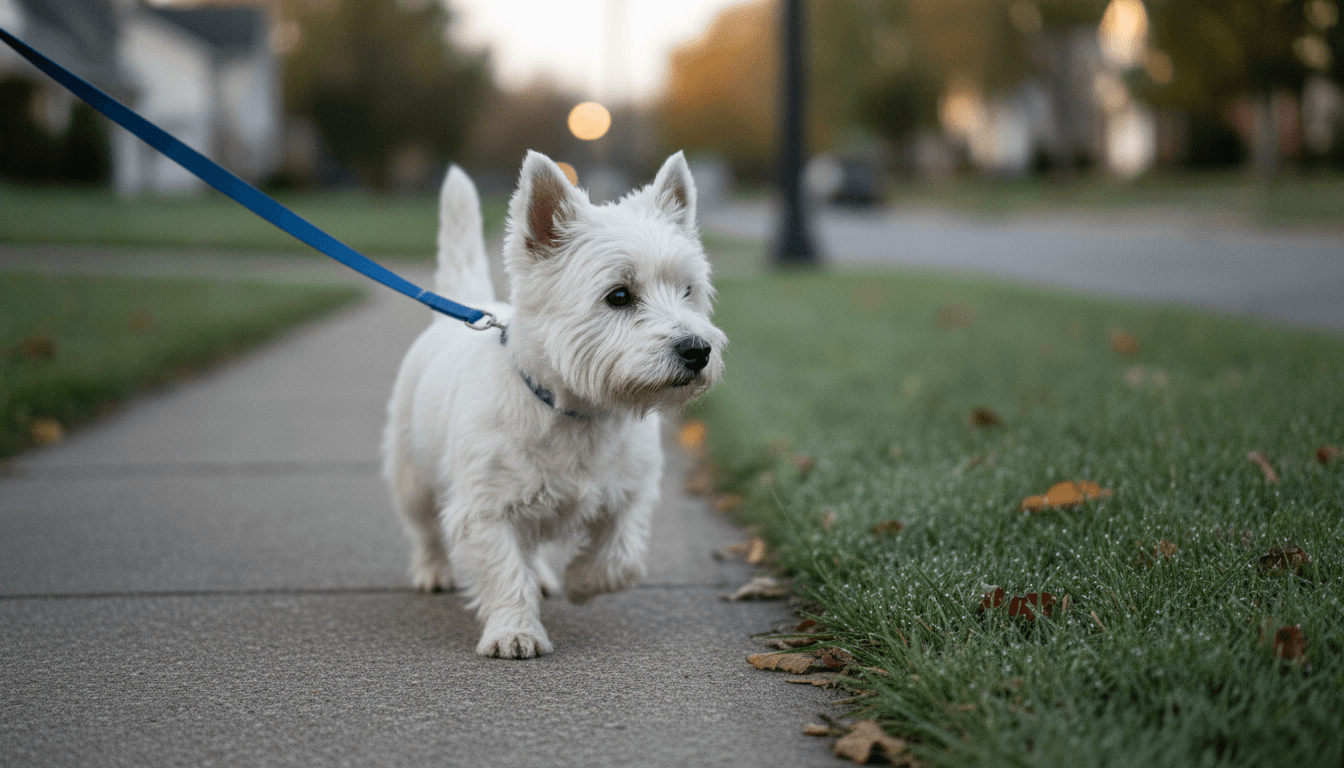

The Westie, formally known as the West Highland White Terrier, is a small, sturdy Scottish terrier with an iconic pure-white double coat, standing 10–11 inches tall and weighing 13–22 pounds. Bred to hunt rats, foxes, and otters in the rocky Scottish Highlands, today's Westie is a confident, family-friendly companion that thrives in apartments and houses alike. They're a strong fit for active owners, retirees, and families with school-age children who want a small dog with a big personality and a manageable shedding profile.
Westie at a Glance
Before going deeper, here are the essentials prospective owners ask about most:
- Other names: West Highland White Terrier, West Highlander, Poltalloch Terrier (historical), Roseneath Terrier (historical)
- Breed group: Terrier Group
- AKC recognition: 1908
- Country of origin: Scotland
- Height: 10–11 inches at the shoulder (males slightly taller than females)
- Weight: 13–22 pounds
- Lifespan: 13–15 years
- Coat: Double coat — coarse 2-inch outer layer, soft dense undercoat
- Color: White only — no other color is accepted in the breed standard
- Shedding: Low — old hair is retained in the undercoat and must be removed by grooming
- Energy level: Medium-high — needs about 1 hour of activity per day
- Good with kids: Yes, especially with children 8 and older who can handle a small dog respectfully
- Good with other pets: Generally yes with other dogs; cautious with small pets due to high prey drive
- Apartment-friendly: Yes — compact size and adaptable temperament make them excellent urban dogs
- Barking: Moderate to high — alert watchdog by nature
- Trainability: Smart but independent; responds best to positive, varied training
Appearance
The Westie is unmistakable: a compact, all-white terrier with dark, watchful eyes, erect pointy ears, and a carrot-shaped tail held proudly upright. The AKC breed standard calls for a "small, game, well-balanced, hearty-looking terrier, exhibiting good showmanship, possessed with no small amount of self-esteem." That self-esteem shows up the moment a Westie walks into the room.
Body: Westies are deep-chested and strongly built for their size. Males stand about 11 inches at the shoulder and females about 10, with most adults weighing between 13 and 22 pounds. The body is slightly longer than tall, with powerful hindquarters built for digging and chasing prey through rocky terrain.
Head and face: The Westie's head is round and the skull is slightly domed, with a shortened muzzle that's still strong enough to grip. Dark almond-shaped eyes, a black nose, and small erect ears set wide apart give the breed its signature alert, almost mischievous expression. The face is often described as "owl-like" because of the way the hair frames it.
Coat: The Westie has a true double coat. The outer layer is straight, coarse, and roughly two inches long; the undercoat is soft, dense, and insulating. This combination is what protected the breed from damp Scottish weather and the bites of vermin while working. The texture matters — a properly maintained coat is harsh to the touch, not soft and fluffy, and that texture sheds dirt and water better.
Color: Pure white, with no exceptions. The breed standard does not allow any other color. Some Westies show very subtle wheaten shading on the ears as puppies, but the adult coat should be solid white.
History
The Westie's history is rooted in the rugged West Highlands of Scotland, where small working terriers were used for centuries to control populations of rats, foxes, otters, and badgers. The modern breed traces directly to the late 1800s and one man: Colonel Edward Donald Malcolm, the 16th Laird of Poltalloch.
According to widely repeated breed lore, Colonel Malcolm developed the white strain after accidentally shooting one of his beloved reddish-brown terriers while hunting — having mistaken the dog for a fox in heavy cover. Determined that it never happen again, he began breeding only white and cream-colored highland terriers, defying a local superstition that white dogs were weaker than darker ones.
The breed had several early names. It was shown as the "Poltalloch Terrier" and the "Roseneath Terrier" (the latter associated with George Campbell, 8th Duke of Argyll, whose estate was called Roseneath). In 1903 Malcolm publicly insisted that the breed not be named after him or his land — he wanted a regional name that wouldn't tie its identity to a single breeder. The name "West Highland White Terrier" stuck and was officially adopted by the Kennel Club in 1907.
The breed crossed the Atlantic quickly. The Westie was first shown in the United States in 1906 and earned full AKC recognition in 1908. By the mid-20th century it had become one of the most popular small terriers in both Britain and America, helped along in the modern era by the iconic Cesar dog food packaging and the long-running Black & White Scotch whisky ads featuring a Westie and a Scottish Terrier side by side.
The Westie shares ancestry with several other small Scottish terriers, including the Cairn Terrier, the Scottish Terrier, the Dandie Dinmont, and the Skye Terrier. For most of the 19th century these breeds were considered regional variations of the same broad working-terrier type rather than separate breeds.
Temperament & Personality
The AKC standard sums up the Westie temperament in five words: "alert, gay, courageous and self-reliant, but friendly." Owners would add a sixth: opinionated. Westies are confident dogs who think highly of themselves and aren't shy about telling you what they want.
With family: Westies bond closely with their people and want to be involved in everything. Unlike some velcro breeds, they don't typically attach to a single person — most Westies happily distribute their affection across the whole household. They're affectionate without being needy, and most are content to nap on the couch as long as someone is in the room.
With children: Westies are good family dogs for households with older children, especially kids 8 and up who understand how to handle a small dog gently. They're sturdier than many toy breeds and tolerate normal kid energy well. With toddlers and young children, supervision is essential — Westies will defend their personal space if grabbed roughly or chased, and a stressed terrier may snap as a warning.
With other pets: Most Westies do well with other dogs, especially when raised together or socialized early. Cats can work if introduced carefully and if the Westie grows up with them; cats introduced to an adult Westie may trigger chase behavior. Hamsters, rabbits, gerbils, and other small mammals are a poor match — the breed was developed specifically to hunt small animals, and that prey drive is hardwired.
Alone time: Westies tolerate moderate alone time better than many companion breeds. Four to six hours is usually fine for an adult Westie with a morning walk and a good chew toy. They're less prone to severe separation anxiety than breeds like the Yorkshire Terrier, but they will get bored and find their own entertainment — usually involving barking, digging in the carpet, or shredding something they shouldn't.
Watchdog ability: Excellent. The Westie's terrier instincts make it a reliable alert barker. They'll announce every visitor, delivery, and squirrel in the yard. This is a feature for owners who want a small dog with watchdog credentials and a drawback for apartment dwellers with thin walls or sound-sensitive neighbors. Training can manage the barking but won't eliminate it entirely.
Health
Westies are generally healthy and long-lived, with a typical lifespan of 13 to 15 years. They do, however, have a handful of breed-specific conditions that prospective owners should understand. Reputable breeders screen for the most serious of these.
- Westie lung disease (canine idiopathic pulmonary fibrosis): Pulmonary fibrosis is so strongly associated with the breed that it's nicknamed "Westie lung disease." The condition causes scar tissue to build up in the lungs, making them stiff and inelastic. Symptoms include exercise intolerance, wheezing, a crackling sound on breathing, and progressive fatigue. Most cases appear in middle-aged to older dogs (6 years and up). There is no cure, and treatment is supportive — steroids, bronchodilators, and oxygen therapy. Long-term prognosis is poor, though early diagnosis can extend comfortable life.
- Atopic dermatitis and skin allergies: Westies have notoriously sensitive skin. Environmental allergies (pollen, dust mites, mold), food allergies, and contact allergies are all common and often present as itching, recurrent ear infections, paw chewing, and a yeasty or musty skin odor. Management usually involves a combination of diet trials, medicated shampoos, omega-3 supplementation, and sometimes prescription medications.
- Craniomandibular osteopathy (CMO): Sometimes called "lion jaw," CMO is an unusual developmental condition that causes abnormal bone growth in the lower jaw and skull of young puppies, typically between 3 and 8 months old. It can make eating painful. The good news is that most affected dogs outgrow it by maturity with supportive care, though some require pain management or surgical intervention.
- Patellar luxation: The kneecap slips out of position, causing a characteristic skipping gait. Mild cases are managed with weight control and joint supplements; severe cases may need surgery.
- Legg-Calvé-Perthes disease: A condition where the head of the femur degenerates, causing hip pain and lameness in young dogs. Surgery is usually curative and most dogs return to normal activity.
- Dental disease: Like most small breeds, Westies are prone to dental crowding, tartar buildup, and gum disease. Daily brushing and annual professional cleanings make a measurable difference in lifespan.
- Eye conditions: Cataracts, dry eye (keratoconjunctivitis sicca), and progressive retinal atrophy occur in the breed. Annual eye exams catch these early.
- Liver shunt (portosystemic shunt): A congenital condition where blood bypasses the liver, leading to toxin buildup. Symptoms in puppies include stunted growth, vomiting, and neurological signs. Often correctable with surgery if caught early.
To minimize risk, buy from a breeder who tests for hip and patella health, eye disease, and liver function, and who is transparent about the prevalence of pulmonary fibrosis in their lines. The Westie Foundation of America funds research into breed-specific conditions and publishes owner-facing resources.
Exercise Needs
Don't let the small size fool you — Westies are working terriers and they need real exercise. Plan for about an hour of activity per day, split across walks, play, and mental enrichment. A bored Westie becomes a destructive Westie.
- Two daily walks of 20–30 minutes at a brisk pace
- Off-leash play in a securely fenced area (more on this below)
- Earthdog activities, lure coursing, or barn hunt — terrier-specific outlets they love
- Fetch, tug, and puzzle toys for indoor enrichment
- Short training sessions — 5 to 10 minutes — to satisfy their brains
A critical safety note on fencing: Westies have an extremely strong prey drive and limited recall when something interesting moves. They should never be off-leash in unfenced areas, even in quiet neighborhoods. A squirrel, a rabbit, or a stray cat will pull them across a road without warning. Invisible fences are also a poor match — most Westies will take the shock to chase prey and then refuse to come back through the boundary.
Despite the energy, Westies make excellent apartment dogs because that hour of activity can be split into smaller chunks throughout the day. They're not high-endurance dogs that need miles of running; they're high-intensity dogs that need varied, engaging activity.
Training
Westies are smart — but they're terrier smart, which is different from retriever smart. They learn quickly and remember everything, but they have an independent streak that comes from generations of working alone underground, making their own decisions about how to handle a cornered rat. The phrase most breeders use is "they'll do what you ask if they can see a reason for it."
What works:
- Short, varied sessions of 5–10 minutes — Westies bore quickly with drilling
- High-value food rewards, especially for puppies and early adolescent dogs
- Consistency across all family members — Westies exploit mixed messages
- Early socialization (8 to 16 weeks) with a wide range of people, dogs, and environments
- Positive reinforcement only; harsh corrections damage the relationship and rarely improve behavior
Common challenges:
- Recall: The hardest skill to teach a terrier. Practice on a long line for the dog's entire life, and never trust off-leash recall in distracting environments.
- Barking: You won't eliminate alert barking — it's part of the breed. You can teach a reliable "quiet" cue and reward calm behavior at the window or front door.
- Digging: Hardwired. If you have a yard, designate a digging zone (a sand pit, a corner of the garden) and praise digging there. Trying to suppress digging entirely usually fails.
- Resource guarding: Westies can guard food, toys, or favorite sleeping spots. Trade-up games from puppyhood prevent escalation.
- Same-sex aggression: Adult Westies can be testy with other dogs of the same sex, especially in multi-dog households. Spaying and neutering reduces but doesn't eliminate this tendency.
Group puppy classes and obedience classes are well worth the investment. They give the dog structured socialization and the owner a coach who can spot terrier-specific behavior patterns early.
Grooming
Grooming is the single biggest topic for Westie owners, and it's where many first-time owners are caught off guard. The Westie's iconic white coat is a job, not a low-maintenance feature.
Understanding the coat: Westies are sometimes labeled "non-shedding" but they do shed — they just shed differently. Dead outer hairs don't fall out the way they do in a Labrador; they get trapped in the dense undercoat. If those dead hairs aren't removed regularly, the coat mats, the skin underneath suffers, and the texture turns soft and cottony instead of harsh and weather-shedding.
Hand stripping vs. clipping: Westies are traditionally hand-stripped, meaning the dead outer hairs are physically plucked out by hand (or with a stripping knife) to make room for the new coat to grow in coarse and properly textured. This is what show dogs require and what produces the "correct" Westie look — bright white, harsh-textured, and weather-resistant.
Clipping is the alternative and is what most pet owners choose. It's faster, doesn't require specialized skill, and works fine for a companion dog. The trade-off is that clipping over time softens the coat (the clipper cuts the hard outer tips off, leaving softer hair behind) and gradually makes the coat appear duller and slightly off-white. Neither is "wrong" for a pet — it's a question of how you want the dog to look and how much time and money you want to spend.
At-home schedule:
- Daily: Quick once-over with a slicker brush — 2 to 3 minutes. Check ears, eyes, paws, and face for debris or staining.
- 2–3 times per week: A more thorough brush and comb-out, working through the undercoat with a metal comb after the slicker. This prevents matting behind the ears, in the armpits, and on the belly.
- Weekly: Trim hair between paw pads if needed, brush teeth a minimum of 2–3 times (daily is ideal), and wipe the face to manage tear staining.
- Every 4–6 weeks: Bath with a gentle, color-brightening shampoo formulated for white coats. Over-bathing strips the protective oils, so don't bathe more often unless the dog is genuinely dirty.
- Every 6–8 weeks: Professional groom — clipping or hand stripping, plus nail trim, ear cleaning, and sanitary trim.
- Every 8 weeks (for stripped coats): Full hand-strip, or one section of the coat per week on an 8-week rotation if you prefer to maintain it yourself.
Plan to budget $60–$100 per professional groom in most US cities, more in major metros. Hand stripping costs significantly more — often $100–$200 per session — and not every groomer offers it, so call ahead.
The face gets special attention. Tear staining around the eyes is common in white-coated breeds; gentle daily wiping with a damp cloth and keeping the hair around the eyes trimmed short helps. Some Westies develop a pinkish or rust-colored tint to the muzzle from saliva or food — stainless steel bowls and a wipe after meals reduce this.
Nutrition
Westies do well on a high-quality small-breed kibble or a vet-approved fresh, raw, or home-cooked diet. Two principles matter most: portion control and ingredient quality.
Portions: Most adult Westies eat between 1/2 and 1 cup of dry food per day, split into two meals. Exact amounts depend on weight, age, activity level, and the calorie density of the food. Westies are prone to weight gain, and even an extra pound or two is a meaningful percentage of their body weight — it puts strain on the knees, spine, and heart. Use a measuring cup, not a guess.
Feeding schedule:
- Puppies (8 weeks to 6 months): 3–4 small meals per day
- Puppies (6–12 months): 2–3 meals per day
- Adults (1–8 years): 2 meals per day
- Seniors (8+): 2 meals per day; switch to a senior formula and watch for weight changes
Ingredient considerations: Because Westies are prone to skin allergies, many owners do well with limited-ingredient diets or novel-protein formulas (duck, lamb, fish) if the dog shows signs of food sensitivity. Chicken and beef are the most common food allergens in the breed. Salmon and other omega-3-rich proteins support coat and skin health.
Foods to avoid: The standard canine no-list applies — chocolate, grapes, raisins, onions, garlic, xylitol, macadamia nuts, alcohol, and cooked bones. Westies' small jaws also make them vulnerable to choking on hard chews like cow hooves and antlers; supervised softer chews are safer.
Always provide fresh water, and talk to your vet before making major diet changes — especially if you're considering raw feeding, which carries handling and balance considerations.
Is the Westie Right for You?
Westies are wonderful dogs for the right owner, but they're not a universal fit. Here's a quick checklist to help you decide.
The Westie is a good match if you:
- Want a small dog with a confident personality and minimal toy-breed fragility
- Are willing to commit to regular professional grooming or learn to groom at home
- Live in an apartment, condo, townhome, or house with a securely fenced yard
- Can provide about an hour of daily activity and mental stimulation
- Have older children (8+) or no children at home
- Are comfortable with a moderately vocal alert dog
- Enjoy training and don't mind a streak of independence
The Westie may not be the right fit if you:
- Want a low-maintenance coat — Westies are high-maintenance
- Have toddlers or very young children
- Have small pets like rabbits, hamsters, or pet rats — prey drive is strong
- Need a silent dog or live with extremely noise-sensitive neighbors
- Want a dog that's reliably off-leash in unfenced areas
- Travel often without bringing the dog along
- Prefer a softer, more biddable temperament — consider a Shorkie or a Miniature Schnauzer for a similar small-dog look with different personality trade-offs
Finding a Westie
Once you've decided a Westie is the right fit, there are three main routes: a reputable breeder, a breed-specific rescue, or a general shelter.
Reputable breeders: Start with the West Highland White Terrier Club of America breeder directory. Good breeders will:
- Show health-testing documentation for hips, patellas, eyes, and (where possible) lung health in their breeding lines
- Be transparent about pulmonary fibrosis cases in their pedigree
- Let you visit and meet the puppy's parents
- Ask you as many questions as you ask them
- Take the dog back at any point in its life if you can't keep it
- Sell puppies no younger than 8 weeks old
Expect to pay $1,500–$3,500 for a well-bred Westie puppy in the United States in 2026, with show prospects costing more. There's almost always a waitlist of several months at a reputable breeder — be skeptical of anyone with puppies "ready now."
Rescue: Westie-specific rescues take in surrendered, abandoned, and stray Westies and Westie mixes. Westie Rescue USA coordinates with regional groups across the country. Most rescues charge adoption fees of $250–$500, which typically cover vetting, vaccinations, microchipping, and spay/neuter.
Red flags to avoid:
- Puppies advertised on classified sites with no health testing mentioned
- Sellers who won't let you visit or meet the mother
- "Teacup" or "miniature" Westies — there's no such recognized variety, and "teacup" labels often hide health problems
- Colored "Westies" (cream, wheaten, brindle) — the breed standard requires solid white, and colored puppies often indicate mixed breeding
- Multiple breeds available from the same seller
- Pressure to pay quickly or send a deposit before meeting the dog
Cost of Ownership
Before bringing home a Westie, run the math. The upfront purchase or adoption price is a small fraction of the total cost over the dog's lifetime.
One-time startup costs (year one):
- Puppy from a breeder: $1,500–$3,500 (or adoption fee of $250–$500)
- Initial vet visits, vaccinations, deworming, microchip: $300–$600
- Spay/neuter (if not already done): $200–$500
- Crate, bed, bowls, leash, collar, harness, ID tag: $150–$300
- Puppy training class: $150–$300
- Initial grooming supplies: $75–$150
Ongoing annual costs:
- Food (premium small-breed): $400–$700
- Professional grooming (every 6–8 weeks): $400–$800; add $200–$600 if you opt for hand stripping
- Routine veterinary care, vaccinations, parasite prevention: $400–$700
- Pet insurance: $300–$600 (highly recommended given the breed's allergy and lung-disease risk)
- Treats, toys, replacement gear: $150–$300
- Boarding or pet sitting during travel: variable, typically $30–$60 per day
Over a 14-year lifespan, plan for total ownership costs in the $25,000–$45,000 range. Skin allergies and dental issues alone can add thousands across the dog's life. Pet insurance enrolled while the dog is young and healthy is one of the best financial decisions a Westie owner can make.
Frequently Asked Questions
Are Westies hypoallergenic?
No dog is truly hypoallergenic, but Westies shed minimally and are often tolerated better by people with mild dog allergies than heavy-shedding breeds. Reactions vary person to person — spend significant time with an adult Westie before committing if anyone in your household has serious allergies.
How long do Westies live?
The typical Westie lifespan is 13 to 15 years, with some dogs living to 16 or 17 with excellent care. Weight management, dental care, and early detection of skin and lung issues are the biggest levers owners control.
Are Westies good apartment dogs?
Yes. Their compact size, moderate exercise needs, and adaptable temperament make them excellent apartment dogs. The main consideration is barking — Westies alert-bark at noise and movement, which can be a problem in buildings with thin walls. Training a "quiet" cue early helps.
Do Westies bark a lot?
Westies are moderate-to-heavy barkers by breed standard. They were bred to alert their owners to vermin, and that instinct shows up as alert barking at doorbells, deliveries, strangers, and small animals. You can manage barking with training but won't eliminate it entirely.
How much does a Westie cost?
A well-bred Westie puppy from a reputable breeder typically costs $1,500–$3,500 in the United States in 2026. Rescue adoption fees usually run $250–$500. Lifetime cost of ownership ranges from $25,000 to $45,000 depending on grooming choices and health expenses.
Are Westies good with kids?
Westies are generally good with older children (about 8 years and up) who understand how to handle a small dog respectfully. They're less ideal for households with toddlers, because they will defend themselves if grabbed, chased, or cornered. Supervision and teaching kids to read dog body language are essential at any age.
How much grooming does a Westie need?
Plan for daily quick brushing, a thorough brush 2–3 times per week, a bath every 4–6 weeks, and a professional groom every 6–8 weeks. Owners who want to maintain the traditional harsh-textured show coat will also need hand stripping every 8 weeks. Grooming is the biggest ongoing time and money commitment for Westie owners.
What is Westie lung disease?
"Westie lung disease" is the common name for canine idiopathic pulmonary fibrosis (CIPF), a condition where scar tissue builds up in the lungs and progressively limits breathing. It most often appears in middle-aged to older Westies (6+ years). There is no cure, and the prognosis is poor, but early diagnosis and supportive care can extend comfortable life. It's one of the most important reasons to buy from a breeder who tracks lung health in their lines.
Can Westies be left alone?
Adult Westies typically tolerate 4–6 hours of alone time well, especially after a morning walk. They're less prone to severe separation anxiety than many companion breeds, but they will get bored and entertain themselves — usually by barking, digging, or chewing. Puzzle toys, chew toys, and a midday dog walker for longer days help.
Are male or female Westies better?
There's no universal answer — individual personality matters more than sex. In general, males tend to be slightly bigger, more outgoing, and more food-motivated; females tend to be slightly smaller and more independent. Same-sex dog aggression can be an issue in multi-Westie households, so most experienced breeders recommend opposite-sex pairs if you want more than one.
Considering other small terrier or terrier-mix options? Read our breed guides on the Cairn Terrier, the Yorkshire Terrier, the Shorkie, and the Miniature Schnauzer to compare temperament, grooming, and lifestyle fit.