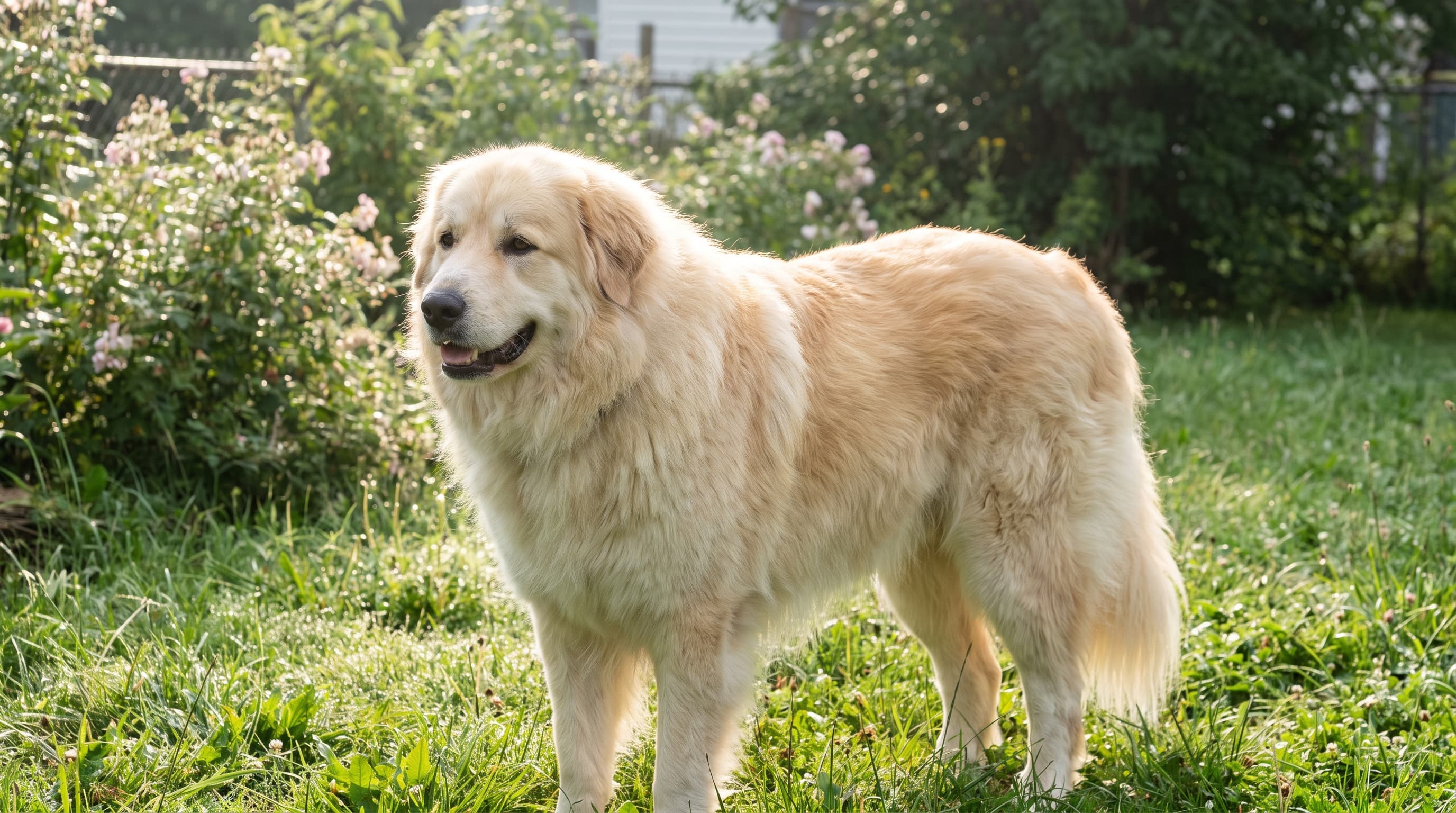

Golden Pyrenees: The Complete Guide to the Golden Retriever Great Pyrenees Mix
nutrition-food

Golden Pyrenees: The Complete Guide to the Golden Retriever Great Pyrenees Mix

The Golden Pyrenees is a large designer crossbreed between a Golden Retriever and a Great Pyrenees, blending the Golden's friendly nature with the Pyrenees' protective, independent streak. Weighing 75–120 pounds, this gentle giant suits families with a house, fenced yard, and time for serious grooming.

Jared
JaredAuthor
June 1, 2023
Updated May 19, 2026
12 min read

The Golden Pyrenees is a large designer crossbreed between a Golden Retriever and a Great Pyrenees, typically weighing 75–120 pounds and standing 24–32 inches tall. Also called the Great Golden Pyrenees or Pyrenees Retriever, this hybrid blends the Golden's friendly, family-oriented temperament with the Pyrenees' protective, independent streak. Golden Pyrenees are best suited for families with a house, a securely fenced yard, and the time and budget to manage a giant dog with a thick double coat and a serious shedding habit.

Golden Pyrenees at a Glance

The fast facts most prospective owners ask about first:

  • Other names: Great Golden Pyrenees, Pyrenees Retriever, Golden Retriever Great Pyrenees mix
  • Parent breeds: Golden Retriever × Great Pyrenees
  • Weight: 75–120 pounds (males larger than females)
  • Height: 24–32 inches at the shoulder
  • Lifespan: 10–13 years
  • Coat: Thick, dense double coat — medium to long, often slightly wavy
  • Shedding: Heavy — among the heaviest-shedding crossbreeds
  • Energy level: Moderate — needs daily exercise but not high-octane
  • Good with kids: Yes, with supervision due to size
  • Good with other pets: Generally yes, especially with early socialization
  • Apartment-friendly: No — needs a house with a securely fenced yard
  • Recognition: Not AKC-recognized; listed by the American Canine Hybrid Club, Designer Breed Registry, and Dog Registry of America

Appearance

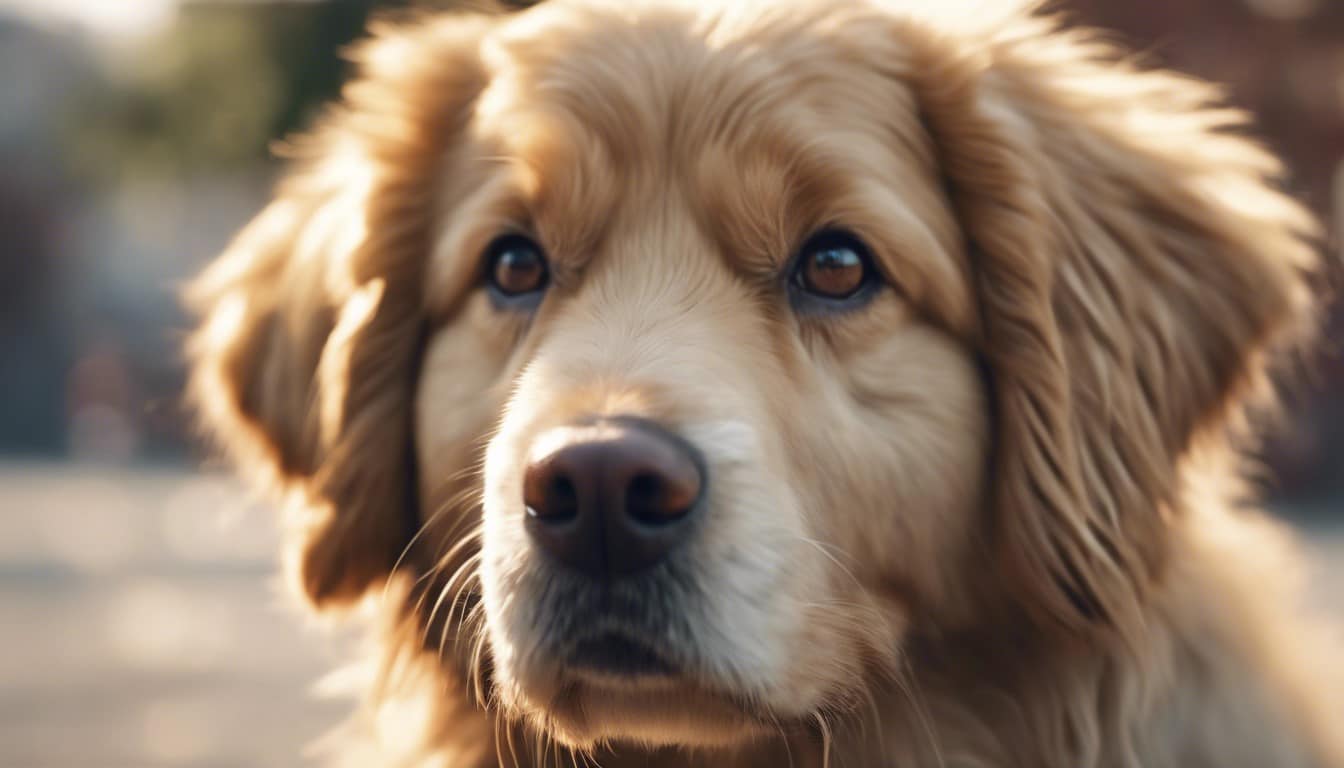
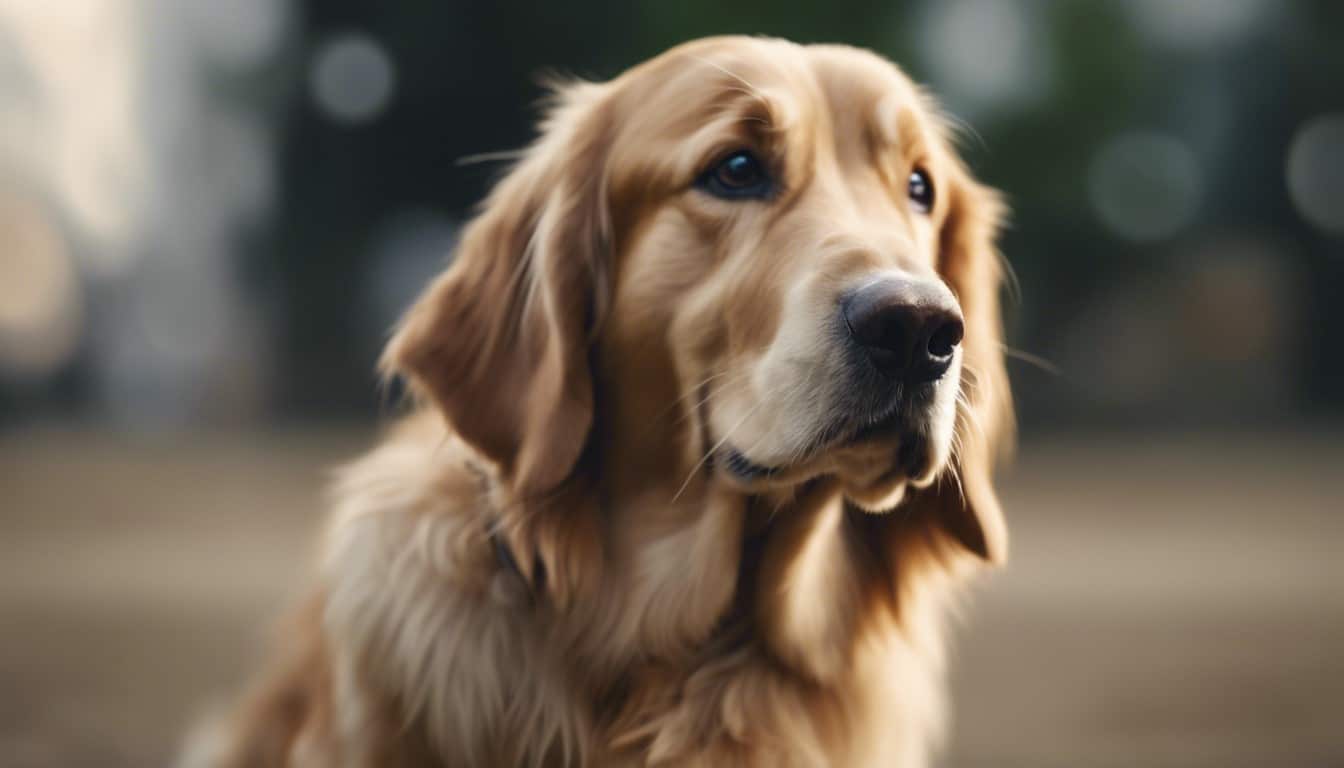
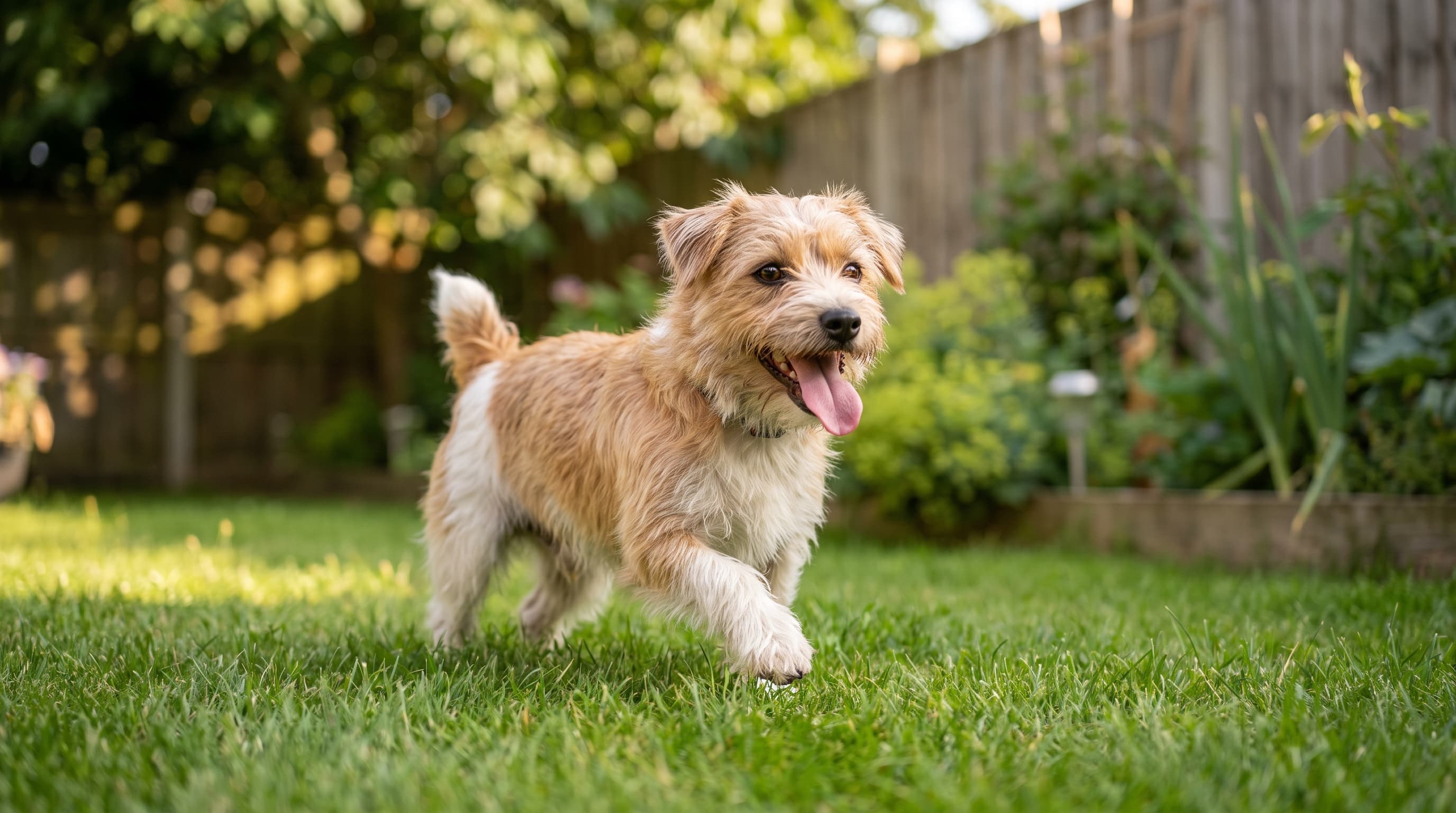
The Golden Pyrenees is a large, powerful dog with a strikingly handsome appearance. Like most first-generation hybrids, individuals vary widely — some lean Golden Retriever with a more slender build, others lean Great Pyrenees with the heavier bone structure and the breed's signature white coat.

Body: Large and well-muscled, with a sturdy frame and deep chest. Most Golden Pyrenees weigh 75–120 pounds at maturity, with males typically at the upper end. The body is moderately long with strong legs built for endurance rather than speed.

Head and face: Expect a broad skull, kind expressive eyes, and a moderate muzzle. Ears typically hang down and are well-feathered. The expression is usually soft and friendly, though Pyrenees-leaning dogs may have a more watchful, dignified look.

Coat: The defining feature. Golden Pyrenees inherit a thick, dense double coat that's medium to long with a slight wave. The undercoat is dense and soft; the outer coat is straight or slightly wavy and weather-resistant. This coat sheds heavily year-round and dramatically during seasonal blow-outs in spring and fall.

Color: Most Golden Pyrenees are white, cream, or golden, often with darker markings on the face, ears, or back. Some are predominantly gold (Golden-leaning), some predominantly white (Pyrenees-leaning), and many are a beautiful blend. Color patterns include solid, parti-color, and badger markings reminiscent of the Pyrenees parent.

History

The Golden Pyrenees is a relatively recent designer breed, emerging in North America in the late 1990s and early 2000s during the surge of intentional crossbreeding that produced the Goldendoodle, Golden Newfie, and other Golden crosses. The intentional pairing aimed to combine the Golden Retriever's famously friendly temperament with the Great Pyrenees' calm, protective nature — producing a large family dog with the Golden's sociability tempered by the Pyrenees' more measured demeanor.

Both parent breeds have working histories. The Golden Retriever was developed in 19th-century Scotland by Lord Tweedmouth as a hunting companion designed to retrieve waterfowl from the Highlands. The Great Pyrenees has a much older lineage — used for thousands of years in the Pyrenees Mountains between France and Spain as a livestock guardian protecting flocks from wolves and bears.

The Golden Pyrenees isn't recognized by major kennel clubs like the AKC, but it's acknowledged by the American Canine Hybrid Club (ACHC), the Designer Breed Registry, and the Dog Registry of America. Prices from reputable breeders typically run $500–$1,500 per puppy.

Temperament & Personality

Golden Pyrenees are affectionate, loyal, and often surprisingly calm given their size. The temperament can vary depending on which parent's genes dominate.

With family: Golden Pyrenees are devoted family dogs that bond closely with everyone in the household. They're generally affectionate without being clingy, and most are content to be near their people without demanding constant attention. They often choose a favorite spot in the house and become a quiet, watchful presence.

With children: Generally excellent. Golden Pyrenees are patient, gentle, and tolerant of typical kid behavior. Their large size means supervision is necessary with very young children, more to prevent the dog accidentally knocking a child over than from any concern about aggression. The Pyrenees side adds a protective streak that's wonderful with the family's own children.

With other pets: Generally good with proper socialization. Golden Pyrenees usually get along well with other dogs and pets they grew up with. The Pyrenees livestock-guardian background means many take it on themselves to watch over smaller animals in the household.

With strangers: Variable. Golden-leaning dogs tend to greet strangers warmly. Pyrenees-leaning dogs are more reserved, watchful, and slow to warm up. Most Golden Pyrenees fall in between — friendly once introduced but more measured than a pure Golden.

Alone time: Better than most crossbreeds, but still companion dogs at heart. Most adult Golden Pyrenees can handle 4–6 hours alone if properly exercised. Longer stretches can lead to barking, destructive chewing, or escape attempts — especially in Pyrenees-leaning dogs that take watchdog duties seriously.

Watchdog ability: Strong. The Pyrenees parent is a centuries-old livestock guardian, and most Golden Pyrenees inherit some degree of alert-barking and territorial awareness. They typically don't bark for no reason but will sound the alarm at anything unusual. Some develop heavy nocturnal barking habits if left outside at night, which is hard-wired into the Pyrenees side.

Health

Golden Pyrenees benefit from hybrid vigor but inherit risks from both parent lines, particularly the orthopedic and cancer issues common in both Goldens and giant breeds. Choosing a reputable breeder who health-tests both parents matters significantly. Common conditions to watch for include:

  • Hip and elbow dysplasia: Common in both parent breeds and particularly serious in a large dog. Reputable breeders test parents with OFA or PennHIP evaluations. Symptoms include stiffness after rest, reluctance to climb stairs, and a swaying gait.
  • Bloat (gastric dilatation-volvulus, GDV): A life-threatening emergency where the stomach twists. Deep-chested large breeds like the Golden Pyrenees are at elevated risk. Feed two smaller meals rather than one large one, avoid heavy exercise around mealtimes, and learn the symptoms (distended abdomen, unproductive retching, restlessness). The AKC's bloat guide is essential reading for any large-breed owner.
  • Cancer: Golden Retrievers have one of the highest cancer rates of any breed, with lymphoma, hemangiosarcoma, and osteosarcoma especially common. The Golden Pyrenees inherits this risk. Regular wellness exams help with early detection.
  • Patellar luxation: Kneecap displacement, more common than expected in giant breeds. Symptoms include intermittent skipping or holding up a back leg.
  • Cruciate ligament injury: Large active dogs are prone to ACL/CCL tears. Watch for sudden limping or reluctance to bear weight. Repair surgery typically runs $3,000–$7,000.
  • Heart conditions: Both parents can develop subaortic stenosis, dilated cardiomyopathy, and other cardiac issues. Annual cardiac monitoring after age 5 is wise.
  • Eye conditions: Cataracts, progressive retinal atrophy, and entropion occur in both parent breeds.
  • Ear infections: The dropped, hairy ears trap moisture and debris. Weekly inspection and cleaning prevents most problems.
  • Skin issues and hot spots: The thick double coat traps moisture against the skin, particularly during hot, humid weather. Regular grooming and prompt drying after swimming reduces risk.
  • Hypothyroidism: Common in both Goldens and Pyrenees. Symptoms include weight gain, lethargy, and skin issues — easily managed with daily medication once diagnosed.

The Golden Pyrenees' typical 10–13 year lifespan assumes good preventive care: annual vet checkups (twice yearly after age 6), weight management (critical for joint health), parasite prevention, dental care, and bloat awareness.

Exercise Needs

Golden Pyrenees are moderate-energy dogs — more than you'd expect from the Pyrenees' calm reputation but less than a pure working Golden. Plan for 60–90 minutes of dedicated activity per day, split into multiple sessions:

  • Two daily walks of 30–45 minutes each
  • Off-leash play in a securely fenced yard or large open space
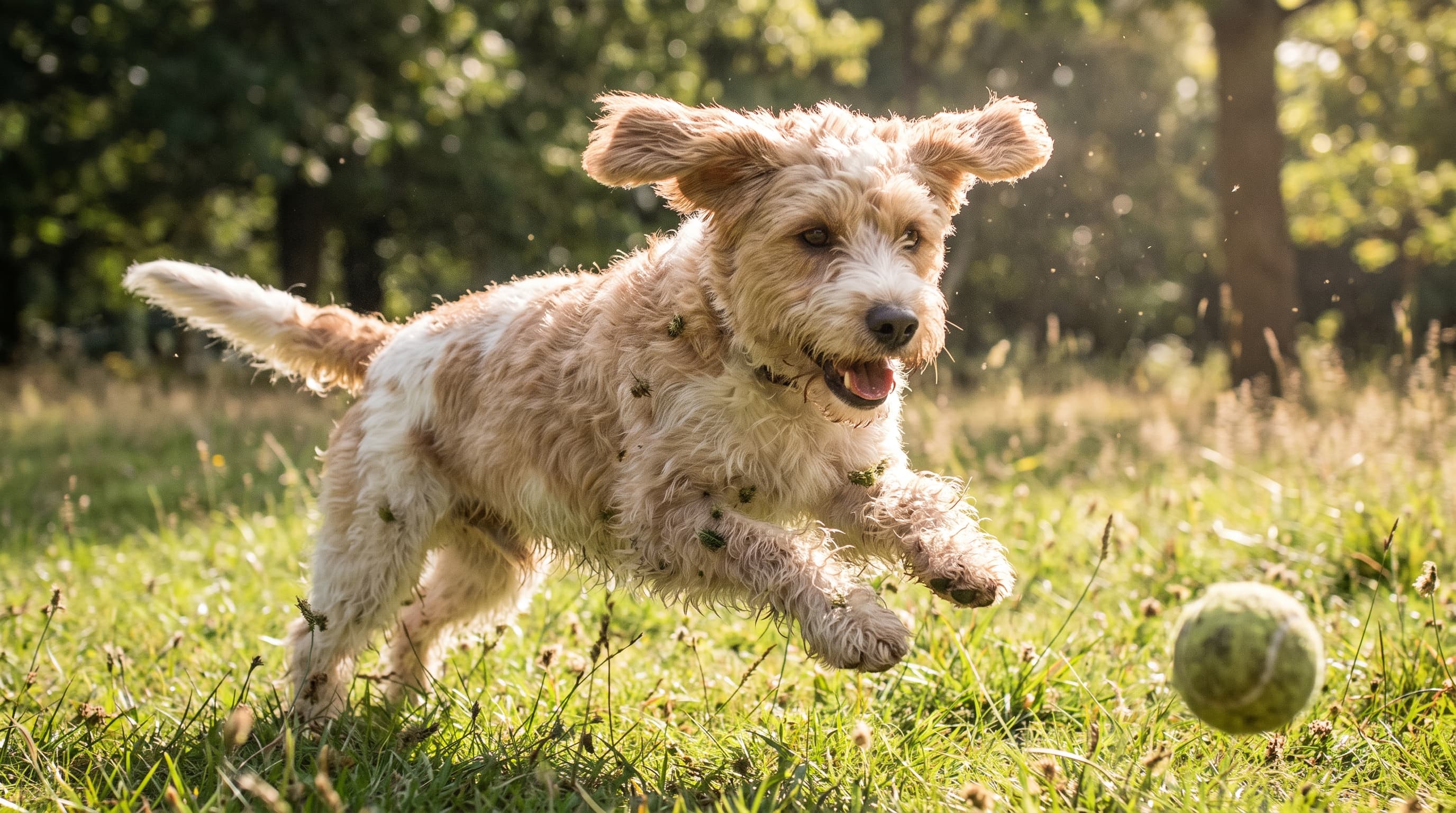
  • Swimming, hiking, or fetch sessions when weather allows
  • Mental enrichment via training, puzzle toys, or scent work

The Golden Pyrenees thrives in cool weather and struggles in heat. The thick double coat that protects them from cold mountain temperatures also traps heat in summer. Walk early or late on hot days, never shave the coat (it disrupts the cooling system), and provide constant access to shade and water.

Puppies need special care to protect developing joints. Avoid jumping, long runs on hard surfaces, and forced exercise until growth plates close around 18–24 months. Free play on grass and short walks are ideal for young dogs.

Apartment living is genuinely not appropriate for this breed. The combination of size, shedding, alert-barking, and exercise needs makes the Golden Pyrenees a poor fit for anything smaller than a house with a yard. A securely fenced yard is non-negotiable — the Pyrenees side gives them an independent streak and a willingness to wander.

Training

Golden Pyrenees training depends heavily on which parent dominates. Golden-leaning dogs are eager-to-please and food-motivated like their famous parent. Pyrenees-leaning dogs are intelligent but independent, with the centuries-old livestock-guardian streak that says "I'll decide whether to listen to you."

What works: Positive-reinforcement methods, high-value treats, short focused sessions, and patience. Both parent breeds respond beautifully to praise. Start training early — by 8 weeks — because a 100-pound dog with bad manners is dangerous, not just annoying.

What doesn't: Harsh corrections, dominance-based training, or physical punishment. Goldens become anxious; Pyrenees become stubborn or defensive. Long repetitive drills also backfire — both breeds get bored and tune out.

Common training challenges:

  • Recall: The Pyrenees' wandering tendency makes off-leash reliability hard-won. A long line and a securely fenced yard are essential while you build recall. Some Pyrenees-leaning dogs never become fully off-leash reliable.
  • Nighttime barking: Pyrenees instincts kick in at night, when they evolved to watch for predators. Bring the dog inside at night and address barking before it becomes habitual.
  • Jumping: Friendly Golden Pyrenees love to greet people with enthusiasm. At 100 pounds, that can knock down a child or an elderly visitor. Teach four-on-the-floor greetings from puppyhood.
  • Leash pulling: A young Golden Pyrenees can easily outpull an adult. Front-clip harness training and loose-leash walking practice are critical investments.
  • Resource guarding: The Pyrenees' guardian instinct can manifest as guarding food, toys, or people. Teach trade-up exercises and "leave it" early.

Early socialization (8–16 weeks) is critical. Expose the puppy to a wide variety of people, dogs, environments, surfaces, and sounds. A poorly socialized Pyrenees-leaning Golden Pyrenees can become overly wary of strangers as an adult.

Grooming

The Golden Pyrenees has demanding grooming needs driven by that thick double coat and prolific shedding.

Daily to several times per week:

  • Brush thoroughly with a slicker brush followed by an undercoat rake
  • During seasonal coat blowouts (spring and fall), expect daily brushing for weeks
  • Brush teeth with dog-safe toothpaste at least 3x per week

Every 6–8 weeks:

  • Professional grooming for a thorough deshedding, ear cleaning, and nail trim (many DIY)
  • Nail trims (or earlier if you hear clicking on hard floors)

Every 4–8 weeks:

  • Full bath with a high-quality dog shampoo — over-bathing strips the protective coat oils
  • Ear check and cleaning — particularly important during humid weather

Never:

  • Shave the double coat. Shaving disrupts the natural insulation, can lead to coat regrowth problems, and increases sunburn risk. The double coat actually keeps these dogs cooler in summer than a shaved coat would.

Budget $600–$1,200 per year for professional grooming if you don't DIY, plus a significant investment in brushes, deshedding tools, and a powerful vacuum.

Nutrition

Golden Pyrenees do best on high-quality large-breed kibble formulated for their size and growth rate. Look for foods with:

  • Real animal protein as the first ingredient (chicken, turkey, lamb, fish)
  • Controlled calcium and phosphorus levels for healthy joint development (especially critical for puppies)
  • Large-breed kibble size
  • Appropriate caloric density for the dog's activity level

Portion guide: A typical adult Golden Pyrenees (90 lbs) eats roughly 4–6 cups of dry food per day, split into two meals. Adjust based on body condition, activity level, and treats. Puppies need a large-breed puppy formula and 3–4 smaller meals daily until 6 months.

Foods to avoid: Grapes, raisins, chocolate, onions, garlic, xylitol (in many human foods including some peanut butters), macadamia nuts, and cooked bones. The ASPCA's full toxic-foods list is worth bookmarking.

Bloat prevention: Feed two or more smaller meals rather than one large one. Use a slow-feeder bowl if your dog inhales food. Avoid vigorous exercise for at least an hour before and after meals. Don't allow large quantities of water at once after eating.

Weight management: Goldens are notorious for obesity, and the Pyrenees side doesn't help. Even an extra 10 pounds dramatically worsens joint problems, heart strain, and shortens lifespan. Use a measuring cup or kitchen scale to portion food and limit treats to 10% of daily calories.

Is the Golden Pyrenees Right for You?

The Golden Pyrenees is a great fit if you:

  • Live in a house with a securely fenced yard
  • Have time for 60–90 minutes of daily exercise plus regular grooming
  • Live in a cool to moderate climate (not hot or humid year-round)
  • Want a large family dog that's protective without being aggressive
  • Are home most of the day or work from home
  • Can budget for large-breed food, vet care, and grooming
  • Don't mind dog hair on everything you own

The Golden Pyrenees is probably not for you if:

  • You live in an apartment, condo, or home without a fenced yard
  • You live in a hot, humid climate
  • You want a low-shedding breed
  • You travel frequently without your dog (boarding a 100-lb dog is expensive)
  • You're a first-time dog owner without large-dog experience
  • You prefer a quiet dog (Pyrenees-leaning dogs bark a lot)
  • You're on a tight budget — large-dog ownership is expensive

Finding a Golden Pyrenees

Reputable breeders: Look for breeders who provide OFA or PennHIP hip and elbow certifications, eye exams, cardiac screening, and ideally cancer history of grandparents. Reputable breeders raise puppies in their home, let you meet at least the mother, and provide a written health guarantee. Avoid breeders who have multiple breeds available year-round, ship puppies sight-unseen, or won't share parent health records.

Rescue: Golden Pyrenees and similar large mixes show up in shelters and breed-specific rescues, especially as they grow larger than their adopters expected. Search Petfinder for "Golden Retriever mix" and "Great Pyrenees mix" in your area, and contact regional Golden Retriever Club rescues and Great Pyrenees rescues — they often take in crosses. Adult Golden Pyrenees from rescue come with established temperaments and known size, which can be a big advantage for first-time large-dog owners.

Red flags to avoid: Suspiciously low prices, sellers who can't or won't provide health testing documentation, anyone marketing "miniature" sizes as premium products (genuine size variation does exist, but be skeptical of marketing claims), and breeders who claim their dogs "don't shed." Pyrenees and Golden parents both shed heavily; there's no version of this mix that doesn't. The Humane Society's puppy mill guide is a good reference for spotting warning signs.

Cost of Ownership

Initial costs:

  • Puppy from a reputable breeder: $500–$1,500
  • Rescue adoption: $200–$500
  • Initial vet visit + vaccinations: $200–$400
  • Spay/neuter: $300–$700 (more expensive for large dogs)
  • Supplies (large crate, bed, bowls, leash, harness, toys, grooming basics): $500–$1,000

Annual ongoing costs:

  • Food: $600–$1,000 (large-breed kibble in significant quantities)
  • Routine vet care: $400–$700
  • Professional grooming: $600–$1,200
  • Pet insurance: $500–$1,000 (strongly recommended given cancer and orthopedic risks)
  • Dental cleanings: $400–$800 (annual professional cleaning recommended)
  • Treats, toys, miscellaneous: $300–$500

Plan for roughly $3,000–$5,500 in year one and $2,800–$5,000 per year ongoing. Emergency vet bills for bloat surgery ($5,000–$10,000), cancer treatment ($5,000–$15,000+), or orthopedic surgery ($3,000–$7,000) can add significant costs — pet insurance is genuinely worth pricing out before symptoms appear.

Frequently Asked Questions

How long does a Golden Pyrenees live?

Golden Pyrenees typically live 10–13 years, which is typical for a giant-breed mix. Lifespan depends heavily on weight management, cardiac and orthopedic health, and early detection of the cancers both parent breeds are prone to.

How big do Golden Pyrenees get?

Adult Golden Pyrenees typically weigh 75–120 pounds and stand 24–32 inches tall. Males are larger than females, and Pyrenees-leaning dogs are bigger than Golden-leaning dogs. Some individuals reach 130+ pounds.

Do Golden Pyrenees shed a lot?

Yes — Golden Pyrenees are heavy shedders year-round, with two major seasonal coat blowouts in spring and fall. Plan for daily brushing during shedding seasons, weekly brushing the rest of the year, and a powerful vacuum. This is not a breed for people who want a tidy home with no dog hair.

Are Golden Pyrenees good with kids?

Yes — Golden Pyrenees are typically patient, gentle, and tolerant of kids. Their size means supervision is important with young children, mainly to prevent accidental knocking-over. The Pyrenees side adds a protective streak that's wonderful with the family's own children.

Can Golden Pyrenees live in an apartment?

No. The combination of giant size, heavy shedding, exercise needs, and Pyrenees-style alert barking makes apartment living a poor fit. This breed needs a house with a securely fenced yard and access to cool spaces in warm weather.

How much does a Golden Pyrenees cost?

Expect $500–$1,500 from a reputable breeder, or $200–$500 through rescue. Annual ongoing costs run roughly $2,800–$5,000 including food, vet care, grooming, and insurance. Pet insurance is strongly recommended given the breed's significant cancer and orthopedic risks.

Are Golden Pyrenees aggressive?

Generally no — but they have a protective, watchful side from the Pyrenees parent. Most Golden Pyrenees are friendly with family and properly introduced strangers, but they may be reserved or alert-barking with unfamiliar people approaching their home or family. Early socialization is essential to prevent excessive wariness.

Golden Pyrenees vs Goldendoodle vs Golden Newfie — which is right for me?

All three are large Golden Retriever crosses. The Golden Pyrenees is the most independent and protective, with the heaviest coat and biggest size variation. The Goldendoodle is the most trainable and lowest-shedding, popular with first-time owners and allergy sufferers. The Golden Newfie is the calmest and largest, with strong swimming and water-rescue instincts. If you want a protective family dog with a yard, pick Golden Pyrenees; if you want trainable and low-shedding, Goldendoodle; if you want a gentle giant and love water, Golden Newfie.

If the Golden Pyrenees isn't quite the right fit, consider the Goldendoodle, Golden Newfie, or browse the Golden Retriever and Great Pyrenees parent-breed guides for more on what your Golden Pyrenees might inherit.

Jared

About the Author

Jared

Owner / Editor

Jared founded Sidewalk Dog in 2022 after one too many 'sorry, no dogs allowed.' He's the owner, editor, and final approver on every article published on the site — and the dog owner who tests most of the patios, parks, and pet-friendly hotels that end up in our directories.

Recommended Articles