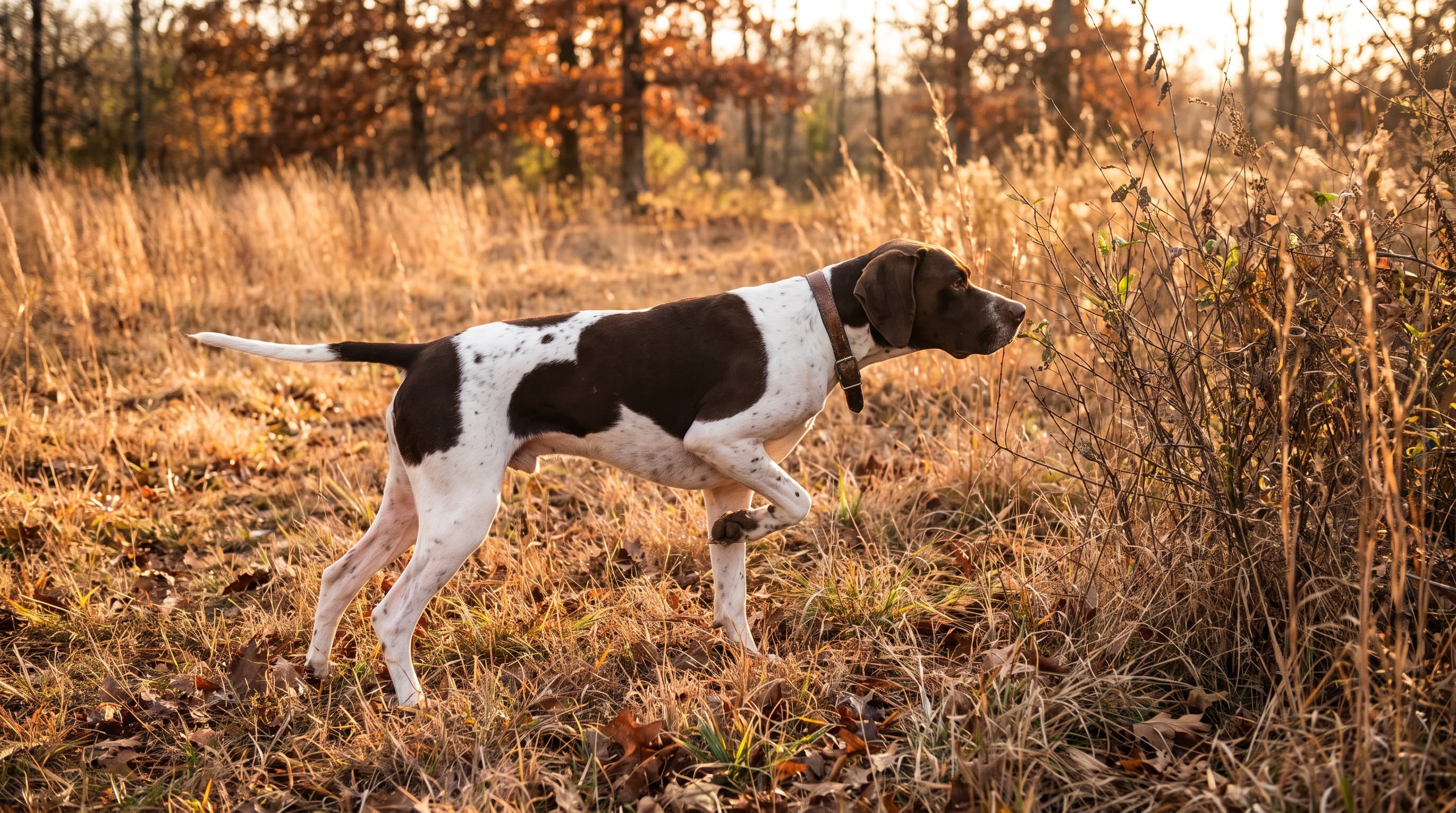

English Pointer: Complete Breed Guide to the Ultimate Bird Dog
The English Pointer — usually just called the Pointer — is a large, athletic gundog bred for centuries to locate game birds and freeze in a dramatic "point." Standing 23–28 inches and weighing 45–75 pounds, Pointers are even-tempered, affectionate, and extraordinarily high-energy. They make devoted family companions for very active homes but need serious daily exercise, making them a poor fit for apartment or sedentary life.
If you're drawn to the Pointer's clean lines, boundless stamina, and gentle temperament, this guide covers everything you need: history, appearance, personality, exercise demands, training, grooming, health, and the questions prospective owners ask most. Consider it your starting point for deciding whether this classic bird dog belongs in your life.
English Pointer at a Glance
- Height: 25–28 inches (males), 23–26 inches (females).
- Weight: 55–75 pounds (males), 45–65 pounds (females).
- Lifespan: roughly 12–15 years — long-lived for a large breed.
- Coat: short, smooth, low-maintenance; liver, black, orange, or lemon, usually with white.
- Energy: very high — a true athlete built for all-day fieldwork.
- Temperament: even-tempered, loyal, friendly, independent, and eager to run.
The American Kennel Club sums the breed up neatly: "The Pointer is the ultimate expression of canine power and grace... an excellent runner's companion." That last part is the key to happy ownership — this is a dog that wants to move.
History and Origin
The Pointer's roots reach back to 17th- and early-18th-century England. According to breed historians, the modern Pointer likely descends from Old Spanish Pointers imported around 1713, then refined by crossing with local setters, bloodhounds, and foxhounds. A later infusion of Greyhound blood gave the breed the finer build, speed, and agility it's known for today.
Originally, Pointers worked alongside hunters who used nets and, later, firearms. The dog's job was to range across open country, find game birds by scent, and hold a rigid point — nose aimed at the hidden bird — so the hunter could move in. As firearms improved, so did demand for a fast, stylish, reliable pointing dog, and the English Pointer became the benchmark. Centuries of selective breeding for this single task explain both the breed's athleticism and its hardwired instinct to point, which many puppies display before they're even weeks old.
Appearance
The Pointer is the picture of a streamlined athlete: deep-chested, clean-lined, and built for efficient, ground-covering movement. The head is noble with a slightly dished muzzle, the ears hang neatly, and the tail tapers to a lively point. When a Pointer locks onto a scent, the whole body becomes a living arrow — one of the most recognizable stances in the dog world.
The coat is short, dense, and smooth, requiring almost no grooming. Common color patterns include liver and white, black and white, orange and white, and lemon and white, along with occasional solid colors. The clean white base historically helped hunters spot their dog at a distance across fields.
Temperament and Personality
Away from the field, Pointers are surprisingly mellow, affectionate housemates. They're generally described as even-tempered, adaptable, and devoted to their families. They tend to be good with children and other dogs when properly socialized, and their friendly nature means they usually make poor guard dogs — they're more likely to greet a stranger than warn you about one.
That said, the Pointer carries a streak of independence inherited from its sighthound ancestry. These dogs were bred to work at a distance and make decisions on their own, so they can be a touch aloof or single-minded, especially when a scent captures their attention. They thrive on companionship and do not do well left alone for long stretches; a bored, under-exercised Pointer can become restless, vocal, or destructive. This is a dog that wants to be with you — ideally while doing something active.
Exercise Needs
This is the single most important thing to understand before bringing home a Pointer: their exercise needs are enormous. Bred to gallop across fields for hours, they need far more than a walk around the block. Plan on at least 60–90 minutes of vigorous daily activity — running, off-leash time in secure areas, fetch, hiking, or dog sports — plus mental stimulation to keep that busy mind engaged.
Pointers make outstanding companions for runners, cyclists, and trail lovers; in fact, they're a fixture on lists of the best dog breeds for runners. If you're an active outdoors person, gear up with our guide to the best dog hiking gear and you'll have a tireless partner. But if your idea of a big day is a stroll and a nap, this is not your breed. An adequately exercised Pointer is calm and gracious indoors; a under-exercised one is a whirlwind.
Training
Pointers are intelligent and generally eager to please, which makes them trainable — but their independence and high drive mean consistency matters. Start socialization and basic obedience early, keep sessions upbeat, and use positive, reward-based methods; harsh corrections tend to backfire with this sensitive breed. Many owners find clicker training especially effective for shaping precise behaviors.
Because of their powerful prey drive and tendency to follow their nose, a rock-solid recall is essential, and off-leash freedom should be reserved for fenced or truly safe areas. If you plan to hunt with your Pointer, their natural pointing instinct gives you a huge head start, but formal field training will polish it. Even as pure companions, Pointers benefit enormously from having a "job," whether that's agility, scent work, or structured games.
Grooming and Care
Grooming is delightfully easy. The short, smooth coat needs only a weekly once-over with a rubber curry brush or grooming mitt to remove loose hair and keep it gleaming; shedding is modest. Bathe only as needed. As with any dog, keep up with nail trims, dental care, and regular ear checks — the drop ears can trap moisture, so dry them after swimming or wet fieldwork.
One practical note: Pointers have thin coats and low body fat, so they feel the cold. In chilly climates, a warm coat for winter outings keeps them comfortable, and they appreciate a cozy indoor bed to recharge after a hard run.
Health and Lifespan
The English Pointer is considered a generally healthy, hardy breed, with a typical lifespan of around 12–15 years — excellent for a dog of its size. Still, prospective owners should be aware of a few conditions seen in the breed:
- Hip and elbow dysplasia: Heritable joint malformations that can lead to arthritis. Per VCA Hospitals, keeping dogs lean during growth and choosing screened breeding stock are the best safeguards.
- Eye conditions: Including progressive retinal atrophy (PRA), an inherited, gradual retinal degeneration with no cure, plus cataracts and entropion. Responsible breeders screen for eye disease.
- Bloat (GDV): As a deep-chested breed, Pointers face some risk of gastric dilatation-volvulus, a sudden, life-threatening emergency. VCA recommends feeding smaller, multiple meals and avoiding vigorous exercise right after eating.
Buy from a breeder who health-tests hips, elbows, and eyes, and keep up with routine veterinary care. This is general information, not veterinary advice — always consult your vet about screening and care for your individual dog.
Is the English Pointer Right for You?
Choose a Pointer if you're an active person or family who wants a gentle, handsome, affectionate dog to share long runs, hikes, hunts, or dog sports. They reward the right home with years of devotion and athletic partnership. Skip the breed if you have a sedentary lifestyle, limited space, or long workdays that leave a dog alone for hours — a Pointer's energy needs a genuine outlet, not just good intentions.
Frequently Asked Questions
Are English Pointers good family dogs?
Yes, in active households. They're affectionate, even-tempered, and typically good with children and other dogs when socialized. Their high energy makes them best for families who can commit to a lot of daily exercise and togetherness.
How much exercise does an English Pointer need?
A lot — at least 60 to 90 minutes of vigorous activity per day, ideally including running or off-leash time in a safe area, plus mental stimulation. They're built for endurance and become restless without a real outlet.
Do English Pointers shed?
They shed modestly. The short, smooth coat is very low-maintenance and needs only weekly brushing to stay clean and reduce loose hair around the house.
Are English Pointers easy to train?
They're intelligent and eager to please, which helps, but their independent streak and strong prey drive call for early, consistent, positive training — especially on recall. A reliable "come" is essential given how readily they follow a scent.
What's the difference between an English Pointer and a German Shorthaired Pointer?
They're separate breeds. The English Pointer specializes in pointing and has a short single coat, while the German Shorthaired Pointer is a versatile hunting dog that also retrieves and works water, with a slightly denser coat. Both are high-energy gundogs.
The Bottom Line
The English Pointer is a centuries-old masterpiece of form and function: an elegant, tireless bird dog with a sweet, easygoing heart. Give one the exercise, companionship, and purpose it craves, and you'll have a graceful, loyal athlete for well over a decade.
Curious about other athletic gundogs? Meet the versatile German Shorthaired Pointer and the affectionate, velcro-close Vizsla, two of the Pointer's closest cousins in energy and drive. Love active, adventurous breeds? Subscribe to the Daily Wag newsletter for breed deep-dives, training tips, and outdoor guides delivered to your inbox.