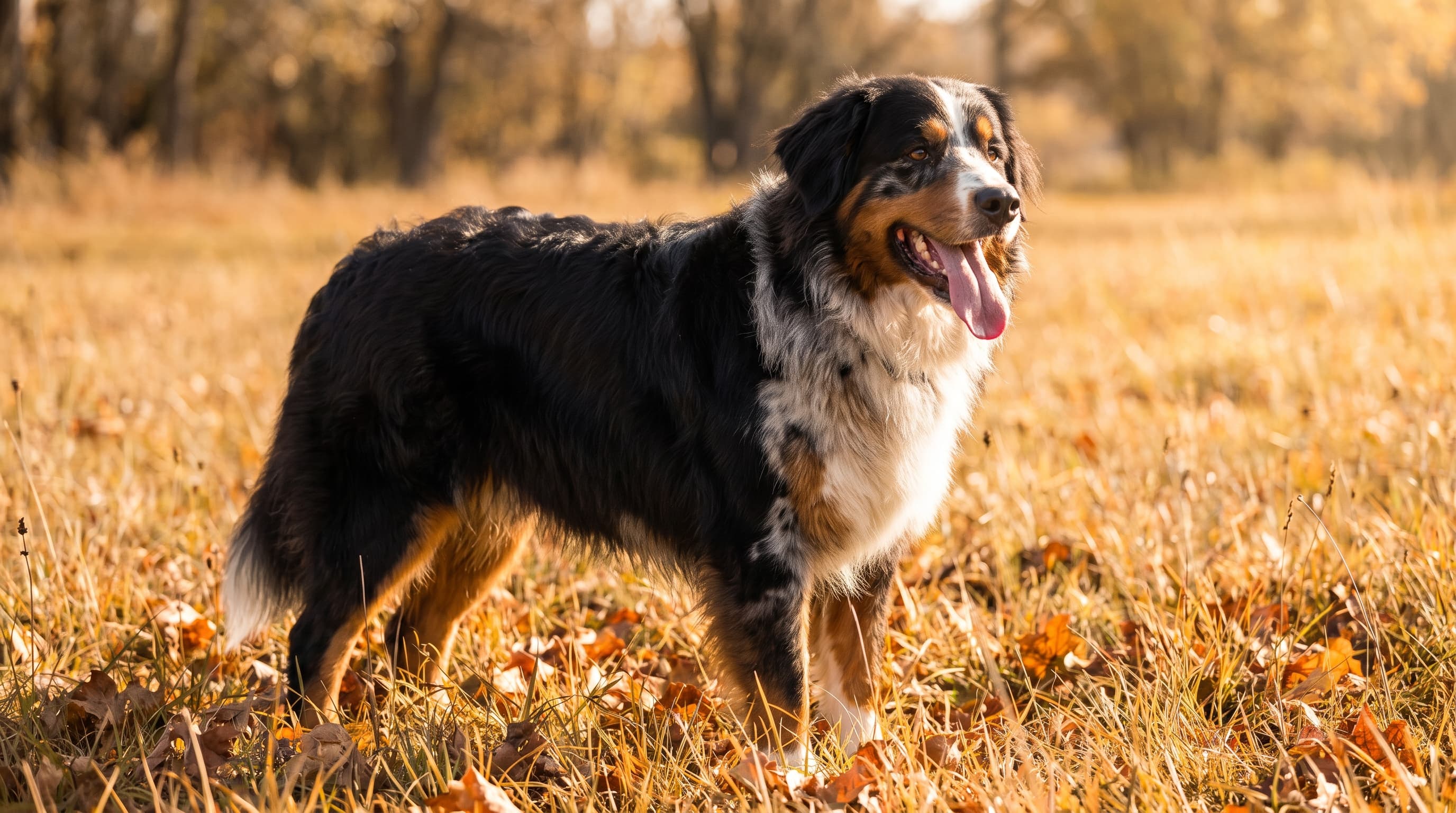

The Australian Shepherd Bernese Mountain Dog mix—often called the Bernaussie or Australian Mountain Dog—is a large, affectionate, highly intelligent hybrid that blends the Bernese's calm, family-first nature with the Aussie's drive and brains. Expect a 60–100 pound dog with a thick tricolor double coat, heavy shedding, a 10–14 year lifespan, and a real need for daily exercise and mental work. It suits active families with room to roam.
What is a Bernaussie? Meet the Australian Mountain Dog
The Bernaussie is a designer crossbreed created by pairing a purebred Bernese Mountain Dog with a purebred Australian Shepherd. Because it is a hybrid rather than a recognized breed, you will see it under several names: Bernaussie, Aussie Bernese, and Australian Mountain Dog (AlphaPaw).
Like all first-generation crosses, individual puppies vary. Some lean toward the Bernese—bigger, mellower, with that signature rust-black-and-white tricolor coat—while others favor the Aussie's leaner build, merle patterning, and go-all-day energy. Understanding both parent breeds is the best way to predict what you are signing up for.
Parent breeds: Bernese Mountain Dog and Australian Shepherd
The Bernese Mountain Dog is a big, powerful Swiss working breed that is nonetheless famous for a sweet, affectionate, people-pleasing temperament. Berners are generally placid companions who live to be near their families (American Kennel Club).
The Australian Shepherd, despite the name, is an American ranch dog—lean, tough, and among the most intelligent and energetic herding breeds. Aussies are quick learners who need a job to stay happy (American Kennel Club).
Cross the two and you get a dog that is often described as combining "the superior intelligence of the Australian Shepherd with the calmer, even disposition of the Bernese Mountain Dog"—while still being highly energetic and needing consistent activity (AlphaPaw).
Size, appearance, and coat
The Bernaussie is a large dog. Males generally weigh roughly 55–100 pounds and stand about 20–25 inches at the shoulder, with females typically a bit smaller (AlphaPaw). Individual size depends heavily on which parent a puppy takes after.
The coat is a thick, medium-to-long double coat inherited from both parents. Colors range widely: many wear the Bernese tricolor of black, white, and rust, while others show blue or red merle, red tricolor, sable, or solid black or red patterning. That gorgeous coat comes with a cost—heavy seasonal shedding.
Temperament: what a Bernaussie is like to live with
Bernaussies are typically affectionate, loyal, intelligent, and eager to please, with a protective streak that makes them naturally watchful without being aggressive when well socialized (AlphaPaw). They tend to bond closely with their people and can be sensitive to being left alone for long stretches.
Both parent breeds are working dogs, so this mix thrives when it has a role: a hiking partner, a canine sports teammate, or simply a household with structure and daily engagement. Without enough activity and mental stimulation, a bored Bernaussie can turn to barking, digging, or chewing.
Exercise and training needs
Plan on substantial daily exercise—long walks, hikes, fetch, and off-leash running where it is safe—plus mental work like puzzle feeders, scent games, or obedience practice. This is not an apartment-friendly, low-key breed; it is happiest with active owners and space to move.
On the training front, the Aussie half brings sharp intelligence and the Bernese half brings a willingness to please, which makes the Bernaussie very trainable. Use positive-reinforcement methods and start early socialization, since some dogs inherit an Aussie-style independent streak that can read as stubbornness (AlphaPaw). Herding heritage also means some Bernaussies try to herd children or other pets—early guidance channels that instinct appropriately.
Grooming and shedding
That double coat needs regular upkeep. Brush at least two to three times a week—daily during heavy seasonal sheds—to prevent mats and manage the fur that will end up on your floors and furniture (AlphaPaw). Add routine baths, nail trims, ear checks, and paw-hair maintenance. Prospective owners hoping for a low-shedding "doodle" style coat should look at intentionally hypoallergenic crosses instead, such as the Bernedoodle or Aussiedoodle.
Health and lifespan
The Bernaussie typically lives about 10–14 years (AlphaPaw). Hybrids can benefit from "hybrid vigor," but they can also inherit health issues common to either parent, so responsible breeding and screening matter. Key concerns to know about:
- Hip and elbow dysplasia. Large breeds are prone to these joint conditions, in which the joint develops abnormally and grinds rather than gliding, leading to pain and arthritis (American Kennel Club). Reputable breeders screen parent dogs and share Orthopedic Foundation for Animals (OFA) hip evaluations, which grade hips from Excellent down to Severe (Orthopedic Foundation for Animals).
- Bloat (GDV). Deep-chested large dogs carry a meaningful lifetime risk of gastric dilatation-volvulus, a life-threatening stomach emergency; dogs over 100 pounds have roughly a 20% lifetime risk, and a preventive gastropexy is the most effective safeguard for high-risk dogs (VCA Animal Hospitals).
- Eye conditions. Both Aussies and Berners can pass on hereditary eye problems, so ask about ophthalmology screening (AlphaPaw).
- Cancer. The Bernese Mountain Dog line is associated with higher cancer rates, something to discuss with a breeder and monitor throughout life.
One important note for Aussie-line dogs: some carry the MDR1 gene mutation that affects how they process certain medications, so ask your veterinarian about MDR1 testing before any new drug.
Is the Bernaussie right for you?
This mix shines with active families who have space, time, and enthusiasm for an outdoorsy, velcro companion. It is good with children and other dogs when properly socialized and makes an affectionate, loyal family member (AlphaPaw). It is a poor match for apartment dwellers, people away from home all day, or anyone who cannot commit to serious grooming and exercise. If you love the temperament but want a comparison, our guide to Border Collie vs. Australian Shepherd and the profile of the Great Bernese are worth a look.
Frequently asked questions
What is an Australian Shepherd Bernese Mountain Dog mix called?
It goes by several names, most commonly Bernaussie, Aussie Bernese, and Australian Mountain Dog. All refer to the same cross between a Bernese Mountain Dog and an Australian Shepherd.
How big does a Bernaussie get?
It is a large dog, typically around 55–100 pounds and 20–25 inches tall, though size varies by which parent the individual dog favors.
Do Bernaussies shed a lot?
Yes. Both parent breeds have heavy double coats, so this mix sheds significantly and needs brushing several times a week, with daily brushing during seasonal sheds. It is not hypoallergenic.
Are Bernaussies good family dogs?
Generally yes. They are affectionate, loyal, and typically good with children and other pets when socialized early. They do best in active households that can meet their exercise and companionship needs.
How long do Bernaussies live?
Most live about 10–14 years. Keeping them at a healthy weight, providing regular veterinary care, and buying from a breeder who screens for hip, eye, and other conditions all support a long, comfortable life.
Are Bernaussies easy to train?
They are intelligent and eager to please, which makes training rewarding, but some inherit an independent streak. Consistent, positive-reinforcement training and early socialization bring out their best.
The bottom line
The Australian Shepherd Bernese Mountain Dog mix is a big-hearted, brainy, athletic companion for the right home—affectionate and trainable, but demanding in exercise, grooming, and togetherness. Give a Bernaussie a job, a brush, and a family that is home a lot, and you will have a devoted friend for a decade or more.
Thinking about a big fluffy mixed breed? Dig into the parent breeds first with our profiles of the Australian Shepherd and the Bernese Mountain Dog, then subscribe to the Daily Wag newsletter for breed guides, training tips, and a daily dose of dog in your inbox.