
Auggie Dog: The Complete Guide to the Aussie-Corgi Mix
The Auggie dog is a cross between the Miniature (or standard) Australian Shepherd and the Pembroke Welsh Corgi. This small-to-medium herding mix stands about 10–15 inches tall, weighs 20–35 pounds, and lives 12–15 years. Auggies are smart, high-energy, affectionate family dogs with strong herding instincts, a tendency to bark, and a double coat that sheds year-round.
Part cattle-herding athlete, part low-riding charmer, the Auggie packs an outsized personality into a compact frame. It is a designer crossbreed rather than a purebred, so no two Auggies look exactly alike — but they share a reputation for being clever, devoted, and endlessly busy. Here is everything a prospective owner needs to know before bringing one home.
What Is an Auggie Dog?
The Auggie (sometimes spelled "Augie") is a first-generation hybrid of two beloved herding breeds: the Australian Shepherd and the Pembroke Welsh Corgi. Many breeders use a Miniature Australian Shepherd to keep the size down, producing a dog with the Aussie's brains and drive on the Corgi's short, sturdy legs. Like most designer dogs, its exact origins are hard to pin down, but it rose in popularity alongside other "-oodle" and mixed-herding crosses over the past couple of decades.
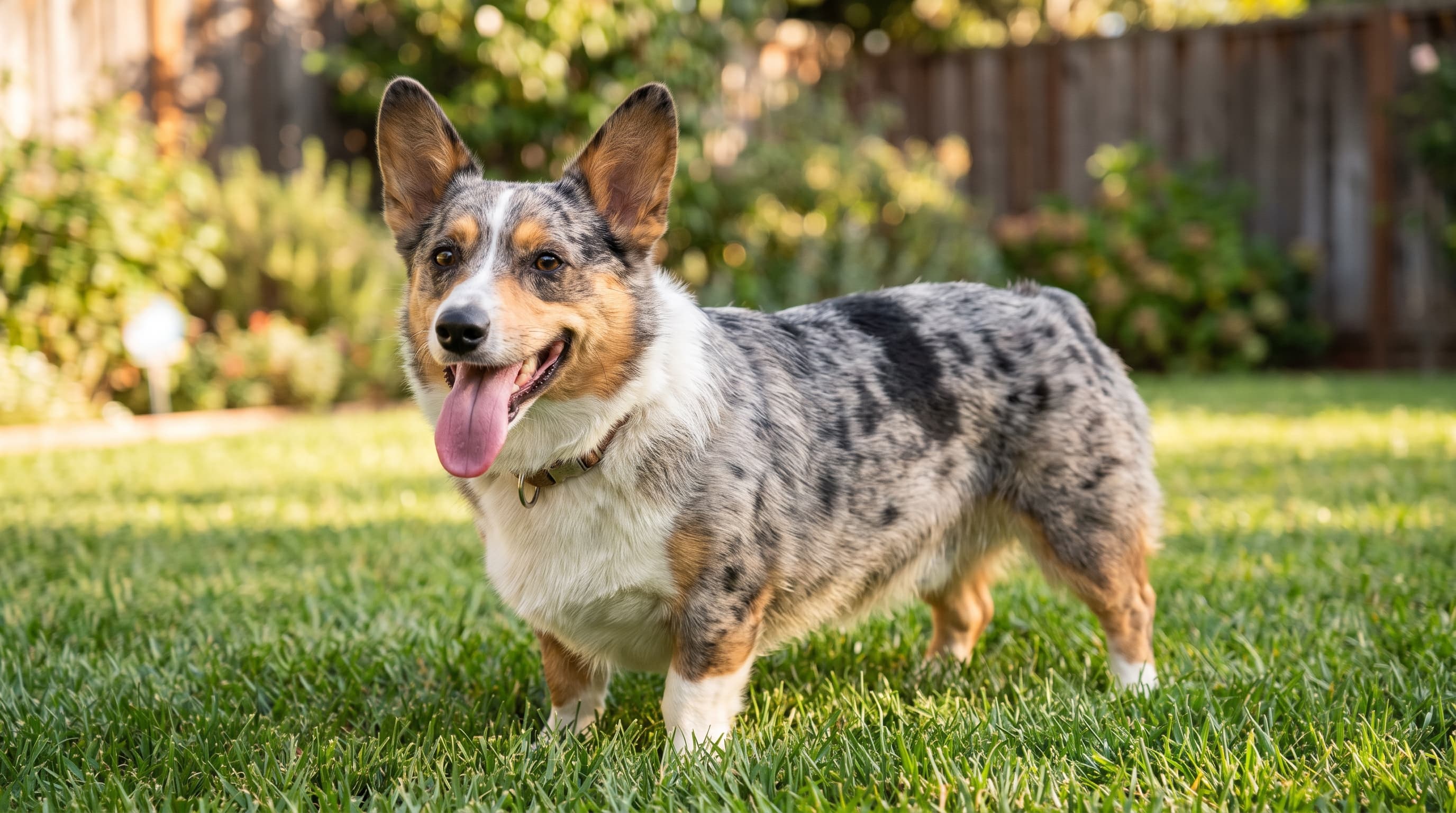
Because it is a mix, an Auggie can favor either parent. Some inherit the Aussie's longer muzzle and merle coat; others get the Corgi's foxy face and low-slung body. If you would like to see the closely related standardized version, our profile on the Aussie-Corgi covers the same cross in more depth.
Auggie Size, Appearance, and Coat
Auggies are compact but solidly built. Most stand 10–15 inches at the shoulder and weigh 20–35 pounds, with males typically at the larger end. They often inherit the Corgi's elongated back and short legs, giving them that distinctive "big dog on tiny legs" silhouette — which is adorable but also has health implications we cover below.
Their coat is a medium-length double coat that can appear in a wide range of colors: black, tan, brown, and white combinations, plus striking blue merle and red merle patterns from the Aussie side. Some Auggies are born with a natural bob tail, while others have a full tail like the Corgi. If tail variation interests you, our article on the Corgi with a tail explains why it happens.
Auggie Temperament and Personality
Auggies are affectionate, playful, and fiercely loyal to their families. They are people-oriented dogs that want to be involved in everything you do, and they bond closely with their humans. That devotion comes with two herding-breed quirks: a strong instinct to gather and control movement (which can look like nipping at heels or "herding" children), and a natural wariness that makes them alert watchdogs.
They are also highly intelligent and eager to please, which makes training rewarding — but that same intelligence means a bored Auggie will invent its own entertainment, usually in the form of barking, digging, or chewing. Early socialization is essential to channel their alertness into good manners rather than reactivity. If you want a similarly smart, smaller Aussie-type dog, compare the Auggie with the Toy Aussie.
Exercise and Training Needs
This is not a low-maintenance lap dog. Auggies need roughly 45–60 minutes of vigorous daily exercise plus mental stimulation to stay happy and out of trouble. Herding breeds thrive when they have a job, so puzzle toys, fetch, tug, scent games, and canine sports like agility or obedience are ideal outlets. A brisk walk alone usually isn't enough for this crew.
On the training front, Auggies are quick studies that respond best to positive, reward-based methods. Keep sessions short, upbeat, and consistent, and start early — their occasional stubborn streak is easiest to manage when good habits are set in puppyhood. Because they can be barky and prone to heel-nipping, teaching a solid "quiet" cue and redirecting the herding instinct onto toys pays off enormously.
Auggie Health and Lifespan
Auggies typically live 12–15 years. As a mix of two breeds, they can inherit health conditions from either parent, and prospective owners should be aware of a few in particular. The Corgi's long back and short legs predispose the Auggie to intervertebral disc disease (IVDD), a spinal condition that can cause pain or mobility problems, so it is wise to discourage repeated jumping on and off furniture. From the Aussie side, they may be prone to progressive retinal atrophy (PRA) and other eye issues, while hip dysplasia, obesity, and deafness are also reported in the mix.
Merle-to-merle breeding can produce serious vision and hearing problems, which is one reason to work only with responsible breeders who health-test their stock. None of this is a diagnosis or a reason to panic — many Auggies are robustly healthy — but you should keep weight in check and schedule regular checkups. Always consult your veterinarian for guidance specific to your individual dog.
Grooming and Shedding
That handsome double coat sheds moderately to heavily year-round, with bigger "coat blows" in spring and fall. Plan to brush two to three times a week (daily during shedding season) to remove loose undercoat and prevent matting, and bathe every six to eight weeks or as needed. Round out the routine with weekly ear checks, regular nail trims, and dental care. Auggies are not hypoallergenic, so they are a poor match for allergy-sensitive households.
Is an Auggie Right for You?
An Auggie is an outstanding companion for active individuals or families who want a small-package dog with big-dog brains and drive. They shine in homes with a yard, a job to do, and owners who enjoy training and outdoor activity. They are less ideal for people seeking a calm, low-exercise pet or for those who cannot tolerate barking and shedding. Expect to pay somewhere in the range of $800–$2,000 for a puppy from a reputable breeder, though you may also find Auggies and Auggie-types through breed-specific rescues.
Frequently Asked Questions
What is an Auggie dog a mix of?
An Auggie is a cross between an Australian Shepherd (often a Miniature Australian Shepherd) and a Pembroke Welsh Corgi. It combines the Aussie's intelligence and herding drive with the Corgi's compact, short-legged build.
How big do Auggies get?
Most Auggies stand 10–15 inches tall and weigh 20–35 pounds when fully grown, making them a small-to-medium dog. Size varies depending on whether a miniature or standard Australian Shepherd was used in the cross.
Do Auggies bark a lot?
Yes, Auggies tend to be vocal. They inherit alert, watchdog tendencies and the Corgi's talkative streak, so they may bark at movement, strangers, or boredom. Early training and plenty of exercise help keep barking manageable.
Are Auggies good family dogs?
Auggies are affectionate, playful, and loyal, which makes them great family companions. Because of their herding instinct they may try to "herd" young children by nipping at heels, so supervision and early socialization are recommended.
How long do Auggie dogs live?
Auggies generally live 12–15 years. Keeping them at a healthy weight, protecting their back from excessive jumping, and staying current on veterinary care all support a long, healthy life.
Do Auggies shed a lot?
Yes. Auggies have a double coat that sheds moderately to heavily year-round, with heavier seasonal shedding in spring and fall. Regular brushing is a must, and they are not considered hypoallergenic.
The Bottom Line
The Auggie is a big personality in a small, short-legged body — smart, loving, energetic, and endlessly entertaining for the right owner. If you can meet their needs for exercise, training, and grooming, you'll get a devoted, clever companion that stays playful well into its senior years. Just go in with your eyes open about the barking, the shedding, and the herding-breed drive.
Curious about the Auggie's parent breeds? Read our full guides to the Australian Shepherd and the Pembroke Welsh Corgi, and subscribe to the Daily Wag newsletter for more breed profiles, training tips, and very good dogs in your inbox.