
Blue Merle Border Collie: Coat, Genetics, Health and Care Guide
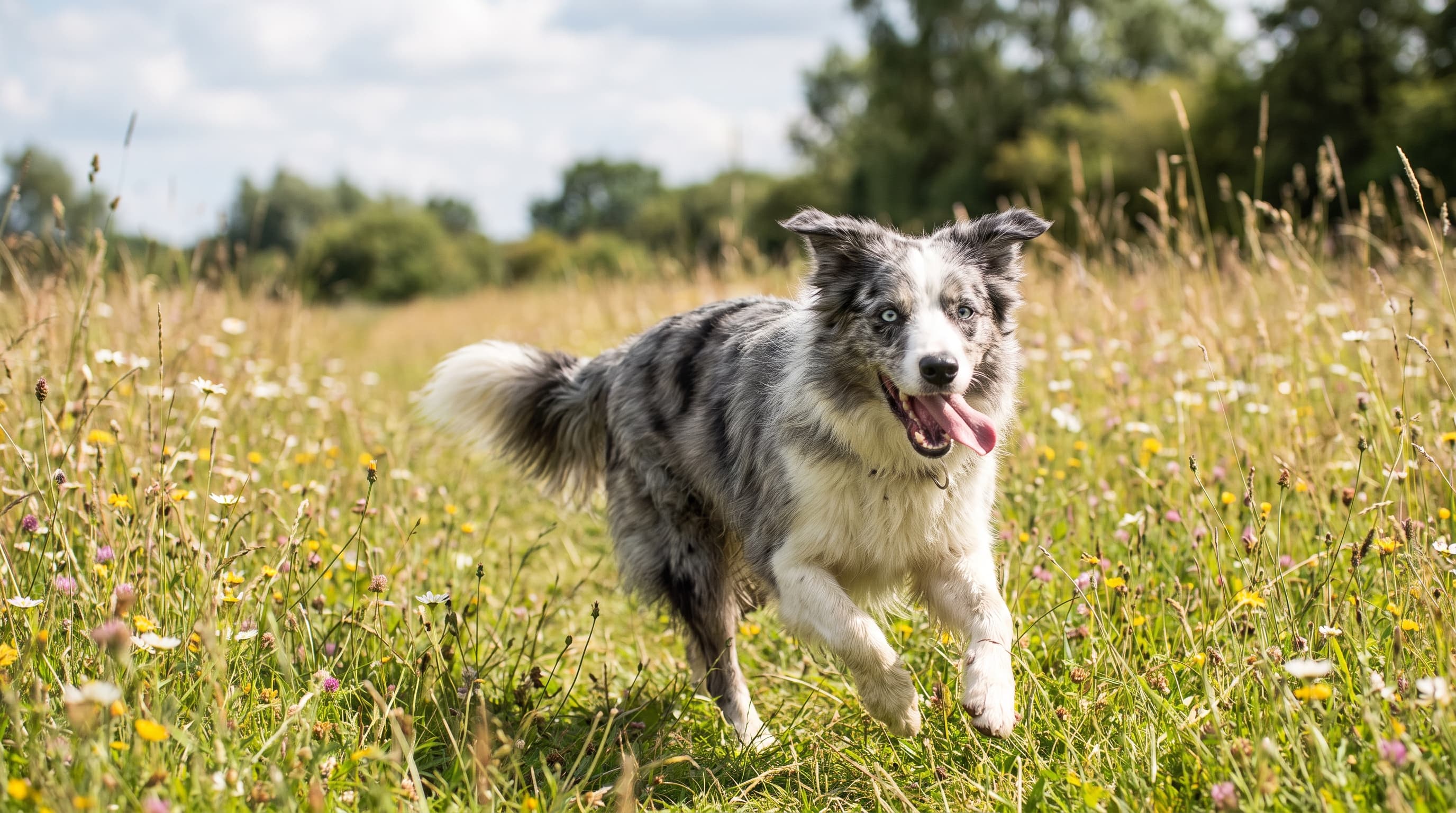
A blue merle border collie is a border collie with a marbled coat of black and blue-gray patches over a lighter base, created by the merle gene. These striking dogs often have pale blue, green or amber eyes — sometimes one of each. They are exactly as brilliant, energetic and work-driven as any other border collie, but the merle gene carries real health considerations every owner should understand before falling for that gorgeous coat.
This guide breaks down how the merle pattern works, why "double merle" breeding is dangerous, what health screening to insist on, and how to care for one of the smartest, most demanding dog breeds on earth.
What Is a Blue Merle Border Collie?
Blue merle is a coat pattern, not a separate breed. A blue merle border collie is simply a standard border collie whose base black coat has been "diluted" in random patches by the merle gene, producing a mottled mix of black and blue-gray, usually over white markings on the chest, legs and face. According to Dogster, blue merle is one of several accepted border collie colors alongside black, red, gold and sable.
The look is unmistakable: silvery-gray patches, inky black spots, white accents, and frequently unusual eye color. Many blue merles have pale blue, light green or faded amber eyes, and heterochromia — two different-colored eyes — is common, sometimes appearing as one brown and one blue eye.
How Merle Genetics Work
The merle pattern is caused by a dominant gene that dilutes random sections of an otherwise dark coat. As breed genetics resources explain, when the merle gene combines with a dominant base color it lightens parts of that color, creating the distinctive marbled effect. A dog needs only one copy of the merle gene (a single merle parent) to display the pattern.
Crucially, merle is incompletely dominant, which is why the amount of dilution varies so much from dog to dog — some blue merles are mostly gray, others mostly black with just a few merle patches. The gene also affects pigment in the eyes and, importantly, in the inner ear, which is where the health risks begin.
The Double Merle Warning Every Buyer Must Know
The single most important thing to understand about merle dogs is the danger of "double merle" breeding. If two merle dogs are bred together, roughly 25% of the litter can inherit two copies of the merle gene. With no dark pigment left to dilute, these puppies are often largely white — and they face dramatically elevated risks of blindness and deafness.
As Hepper's breed resource notes, breeding two merle-coated dogs increases the puppies' chances of inheriting blindness and deafness and raises the risk of skin cancer. Responsible breeders never pair two merles. When you buy a blue merle border collie, insist that at least one parent is a solid (non-merle) color — this is the simplest safeguard against double-merle defects.
Blue Merle Border Collie Health
Even single-merle dogs deserve careful health screening. The link between pigment genes and hearing is well documented: the veterinary deafness research maintained at Louisiana State University confirms that the merle gene is associated with congenital deafness, though scientists have not yet pinned down the exact mechanism connecting pigmentation to hearing loss. Merle dogs, blue-eyed dogs and dogs with white on the head carry higher deafness risk.
Beyond merle-specific concerns, blue merles share the same breed health profile as all border collies. The American Kennel Club and breed clubs flag conditions including hip dysplasia, epilepsy, Collie Eye Anomaly (CEA) and progressive retinal atrophy (PRA). Reputable breeders test parent dogs for these hereditary conditions and can show you the results. This is general information only — for any concerns about your dog's eyes, ears or joints, consult your veterinarian, who can recommend appropriate screening and care.
Temperament: A Brilliant, High-Energy Workaholic
Coat color has zero effect on personality, and the border collie personality is intense. The AKC calls the border collie "a remarkably bright workaholic" — widely considered the most intelligent dog breed in the world. That intelligence is a gift and a challenge: without a job to do, a bored border collie will invent one, often involving your furniture, your yard, or the neighbor's sheep.
Blue merle border collies are affectionate, deeply bonded to their people, and endlessly trainable, excelling at herding, agility, obedience and flyball. They need vigorous daily exercise plus mental stimulation — puzzle toys, training games, scent work. They can be reserved with strangers and may try to "herd" running children or other pets. For active owners who love training, few dogs are more rewarding; for sedentary households, few are less suitable. Their smarts land them near the top of every ranking of intelligent dog breeds.
Grooming and Exercise Needs
Blue merle border collies have a weather-resistant double coat that sheds seasonally. Brush once or twice a week most of the year — and daily during spring and fall "coat blow" — to distribute skin oils, reduce loose hair and prevent matting behind the ears and on the trousers. Bathe only as needed, keep nails trimmed, and check ears regularly, especially since some merles have reduced hearing.
Exercise is non-negotiable. Plan for at least one to two hours of hard activity daily: running, fetch, hiking, or dog sports. Border collies bred from working lines have even higher drive. If you want a similar look with a different energy profile, compare our guides to the border collie vs. Australian shepherd and the versatile border collie mix.
Frequently Asked Questions About Blue Merle Border Collies
Are blue merle border collies rare?
Blue merle is less common than the classic black-and-white border collie, which makes merle puppies more sought-after and often more expensive. However, the pattern is fully recognized within the breed and not a separate or "designer" type.
Do blue merle border collies have more health problems?
Single-merle dogs are generally healthy but carry a somewhat higher risk of congenital deafness and eye issues linked to the merle gene. The serious problems arise in "double merle" dogs from two merle parents, which is why responsible breeding avoids merle-to-merle pairings.
Why do blue merle border collies have blue eyes?
The merle gene reduces pigment not only in the coat but also in the eyes, which is why many blue merles have pale blue, green or amber eyes, or heterochromia (one blue and one brown eye). Blue eyes themselves are not harmful, but they can accompany higher deafness risk.
How much does a blue merle border collie cost?
Prices vary by region, pedigree and breeder reputation, but merle coloring typically commands a premium over standard black-and-white. Prioritize breeders who health-test parents and avoid double-merle litters over those simply charging more for a "rare" color.
Are blue merle border collies good family dogs?
They can be excellent family companions for active households that provide heavy daily exercise and mental work. Their strong herding instinct means they may chase or nip at running children and pets, so early socialization and training are essential.
What is a double merle border collie?
A double merle inherits two copies of the merle gene, usually from two merle parents. These dogs are often mostly white and face significantly higher rates of blindness and deafness. Ethical breeders never intentionally produce double merles.
Is a Blue Merle Border Collie Right for You?
The blue merle border collie pairs a jaw-dropping marbled coat with one of the sharpest canine minds in existence. Choose one only if you can meet its enormous exercise and enrichment needs — and only from a breeder who tests for hereditary conditions and refuses double-merle pairings. Get both right, and you'll share your life with a dazzling, devoted, endlessly capable partner.
Want to explore the breed further? Read our full border collie breed guide and our profile of the closely related Australian shepherd, then subscribe to the Daily Wag newsletter for breed spotlights, training tips and dog-friendly adventures.
Sources: American Kennel Club — Border Collie, Dogster — Blue Merle Border Collie, Hepper — Blue Merle Border Collie, LSU Deafness in Dogs Research, and PupVine — Merle Border Collie.