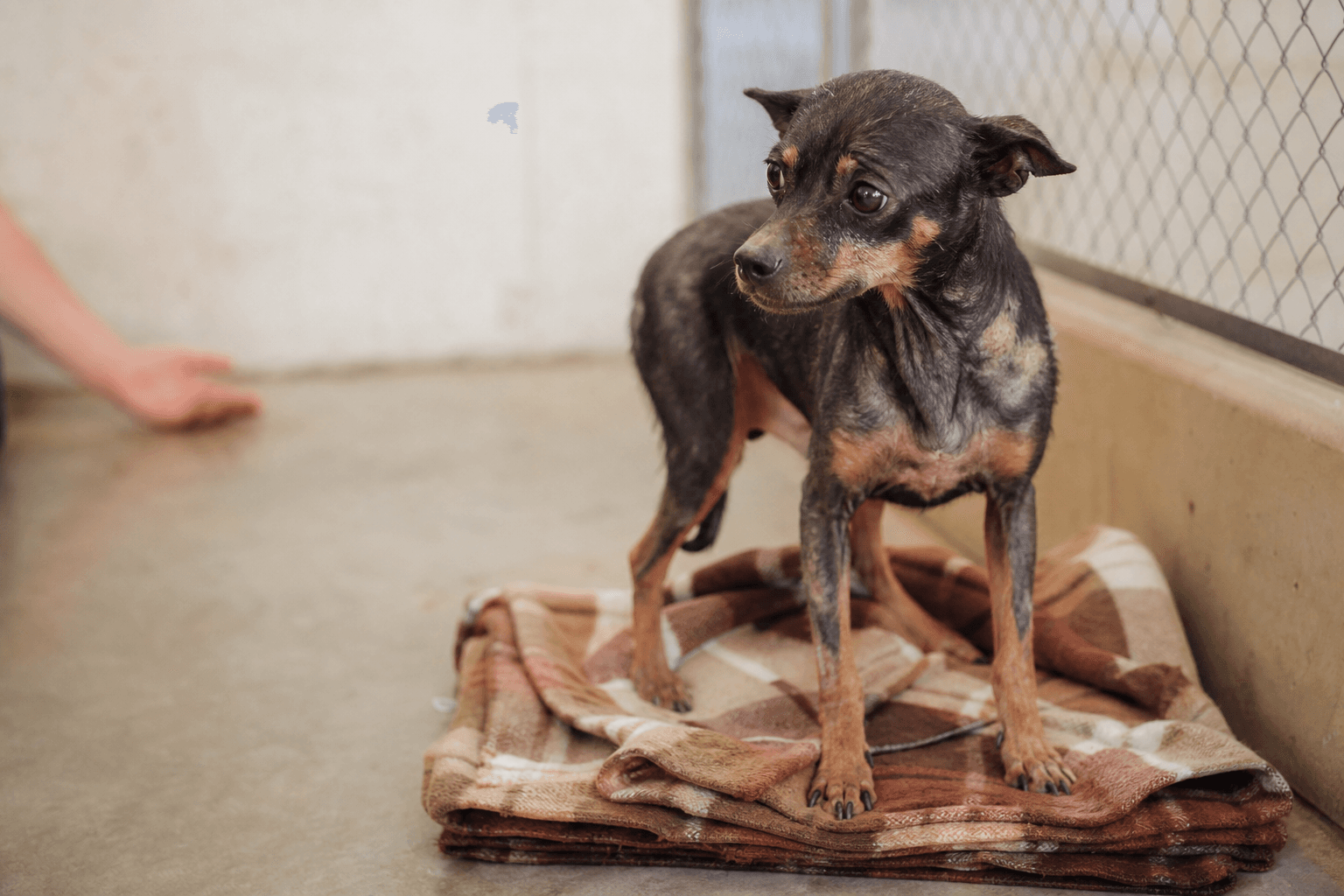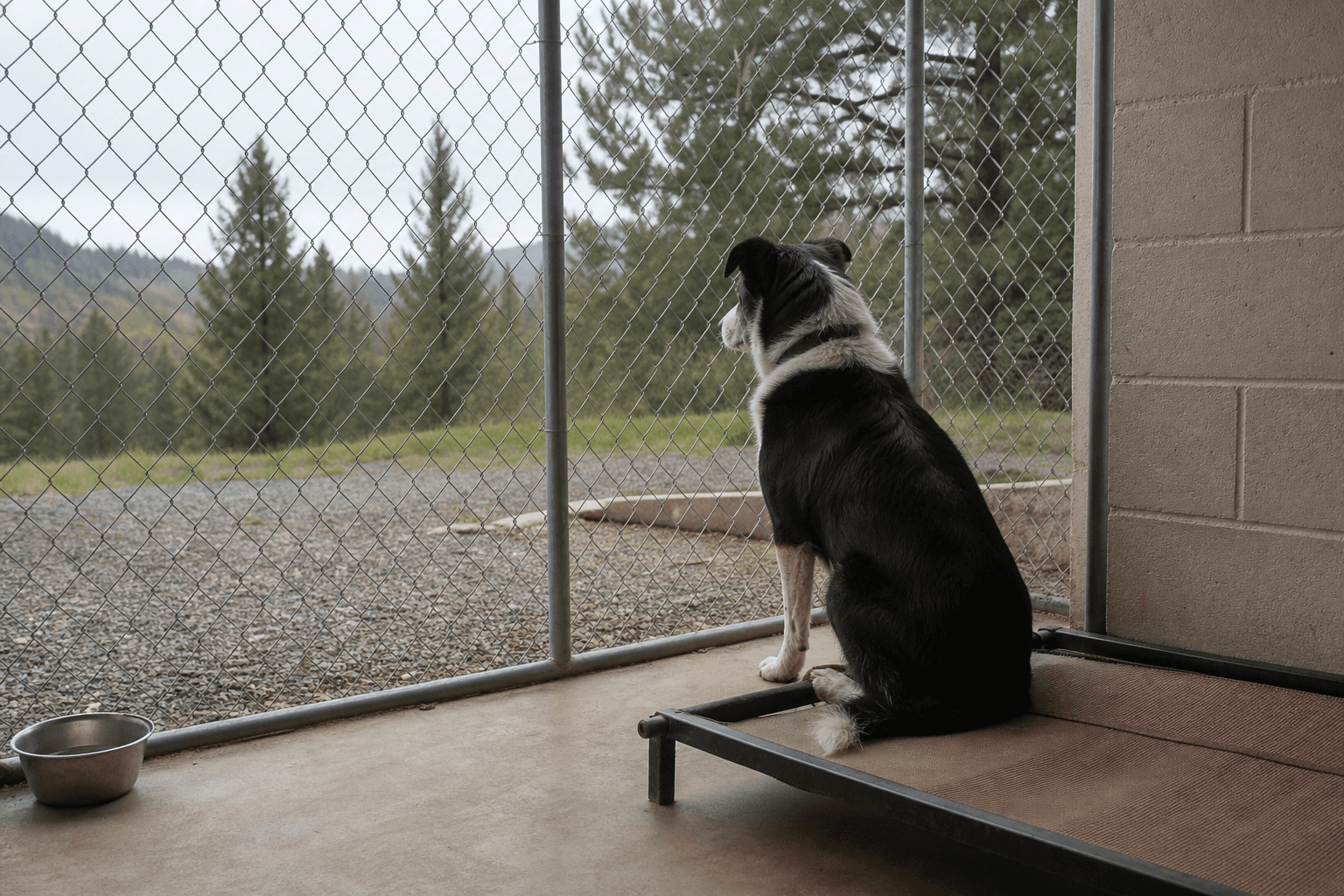

For more than two decades, Miranda's Rescue in Fortuna, California, billed itself as a "no-kill rescue, adoption & sanctuary facility." Bay Area shelters that ran out of space and time paid it roughly $500 a dog to give animals a second chance up north. Families who could no longer keep their dogs handed them over believing they were buying a soft landing.
In June, investigators from the Humboldt County Sheriff's Office, the FBI and other federal agencies excavated a dirt field on the property. They recovered 117 intact dog carcasses, 21 skulls and hundreds of loose bones — many of the remains containing bullet fragments. In a barn nearby, deputies found roughly 600 dog collars.
On August 3, a San Francisco Chronicle investigation laid out what may be the most uncomfortable part of the story: the warning signs were there for decades, and almost nobody with authority acted on them.
If you have ever surrendered a dog, donated to a rescue, or shared a "urgent — this dog needs a sanctuary" post, this case is worth understanding. Not to scare you off rescue — the overwhelming majority of rescues are run by exhausted, underpaid people doing genuinely good work — but because there is currently almost nothing standing between a good rescue and a bad one except your own homework.
What investigators say happened
According to a second search warrant affidavit filed in June, Humboldt County sheriff's Sgt. Shane Steele wrote that Shannon Miranda, 55, was making "a very bare minimum $250,000 a year" by taking in dogs "and killing them to allow him to keep the dogs coming in and the cash flowing."
The scale is what makes the math impossible to ignore:
- Oakland Animal Services sent 827 dogs to Miranda's since 2020, paying the nonprofit about $376,000, according to the shelter's own accounting. Director Joe DeVries told NBC Bay Area that transfers to Miranda's represented roughly 13% of all the dogs his shelter moved out — "because they had good numbers."
- Volunteers who filed dozens of public records requests with California cities and counties documented nearly 2,000 dogs transferred to Miranda's since 2023, per KQED.
- The property was zoned to house about 60 dogs.
- When investigators combed the sanctuary's paperwork, they reportedly found a single adoption record.
Microchips told the rest of the story. The Lost Coast Outpost reported that chips recovered from the exhumed carcasses traced back to 38 unique registered owners — six of them shelters or rescue organizations elsewhere in California. Oakland confirmed one of its dogs, Zora, among animals found shot and buried, even though the rescue had reported her adopted. DeVries said that of a dozen dogs he asked about, Miranda claimed five were euthanized — and four of those five had already been reported to his transfer coordinator as adopted.
Miranda has not been charged as of this writing, and has given investigators shifting accounts of how and why dogs were euthanized. The only legal action so far is a civil suit filed July 27 in Humboldt County Superior Court by Rocket Dog Rescue in Oakland, alleging cruelty and fraud in the deaths of three dogs.
Humboldt County Sheriff William Honsal noted a detail that surprises most dog owners: in California, it is not automatically illegal to shoot a dog. "You just can't do it in a malicious manner," he said. Prosecutors will have to prove someone "tortured, wounded or killed" an animal unlawfully.
The gap this exposes: nobody is watching
Here is the structural problem, and it is not unique to California. There is no state agency responsible for regulating or overseeing animal shelters and rescues. Animal welfare and animal control live in a patchwork of city and county jurisdictions, which means no one holds the full picture — and a rescue can report whatever outcomes it likes.
Assemblymember Alex Lee has said he is in talks with legislative leadership to revive AB 631, a bill that would have required rescues and shelters to keep and publicly share data on what actually happens to the animals they take in. It received no opposing votes in the Legislature last session but died in Senate Appropriations. Some rescue groups argued reporting requirements shouldn't apply to them because of "logistical constraints."
It is also worth naming the incentive that made this possible. California's 1998 Hayden Act pushed shelters to prioritize adoption over euthanasia and to use nonprofit rescues as an alternative to putting animals down — a genuinely good law. But "live release rate" became the number shelters are judged on, and a dog transferred out counts as saved. A rescue willing to take truckloads of hard-to-place dogs, no questions asked, makes everyone's spreadsheet look better.
How to vet a rescue before you trust it with a dog
Whether you are surrendering a dog, donating, or adopting, these are the checks that would have caught this one. None take more than an evening.
1. Ask for outcome numbers — in writing
Ask: how many dogs did you take in last year, how many were adopted, how many transferred, how many died or were euthanized, and what is your average length of stay? A healthy organization has these numbers ready. A vague answer, or a promise that "we never euthanize," is the answer. A legitimate no-kill designation means a 90%-or-better live release rate — a measurable figure, not a slogan.
2. Read the Form 990
Every registered 501(c)(3) files one, and it is public. Look at what the money buys: boarding, medical care, food and vaccines, versus salaries and overhead. Charity Navigator flags organizations spending less than 70% of expenses on programs. You can pull 990s from the IRS, ProPublica's Nonprofit Explorer, Candid (formerly GuideStar), CharityWatch, or the group's own site. If a rescue won't hand you its 990, that is information.
One caution: a Candid "Platinum Seal" measures self-reported transparency, not financial health. Read the seals and the ratings together, never one instead of the other.
3. Visit in person, unannounced-ish
Ask to tour where the dogs actually live — not the lobby, not the adoption yard. Count dogs against the capacity the facility is permitted for. Overcrowding relative to permits was the single loudest signal at Miranda's, and it was visible from the driveway.
4. Register the microchip in your own name — and keep it
The microchip is what ultimately proved this case. If you surrender or rehome a dog, keep your contact information on the chip registry as a secondary contact where the registry allows it, and record the chip number before the dog leaves your hands. It costs nothing and it is the only durable thread back to your dog.
5. Ask the boring reference questions
Which veterinary clinic do you use? Can I speak to a foster? What happens to a dog here that turns out to be aggressive or terminally ill? Who makes that call, and is a veterinarian involved? An organization with nothing to hide will find these questions tedious but reasonable.
6. Rehome privately when you can
If you must give up a dog, a vetted adopter you have met, a breed-specific rescue with an established foster network, or a return to the breeder or rescue you originally got the dog from all beat a long-distance "sanctuary" you have only seen online. Ask your own vet for referrals — clinics know which local groups actually pay their bills and follow through.
What to do if you think your dog went to Miranda's
The Humboldt County Sheriff's Office is still working through necropsies and microchip data, and has been identifying registered owners as it goes. If you surrendered or transferred a dog there, contact HCSO with your dog's microchip number and dates. If you donated, your state attorney general's charitable trusts division is the right place for fraud complaints about a nonprofit.
And if you want the law to change, AB 631-style outcome reporting is the specific ask: rescues and shelters publishing what happened to every animal they took in. That is a short email to your state legislator, and this is the month people are paying attention.
The part worth holding onto
This case did not break because a regulator caught it. It broke because two women drove up to Fortuna at night to document what was happening, because a shelter volunteer filed dozens of public records requests, and because rescuers who had been dismissed for years finally compared notes. Joe DeVries put the whiplash plainly: Miranda "represented hope, and to have that hope dashed and to see that he was actually making money, taking more and more dogs and killing them, it's just sadness and anger."
The lesson is not that rescue is a scam. It is that transparency is the whole product. The rescues doing this right will happily show you their numbers, their vet, their kennels and their books — and the five minutes it takes to ask is the best protection your dog has right now.
At Sidewalk Dog, we spend our days on the good side of this world — the patios, trails, and shops that welcome your dog, and the local rescues actually placing dogs in homes. Find dog-friendly spots and rescue-adjacent events near you in our city guides.