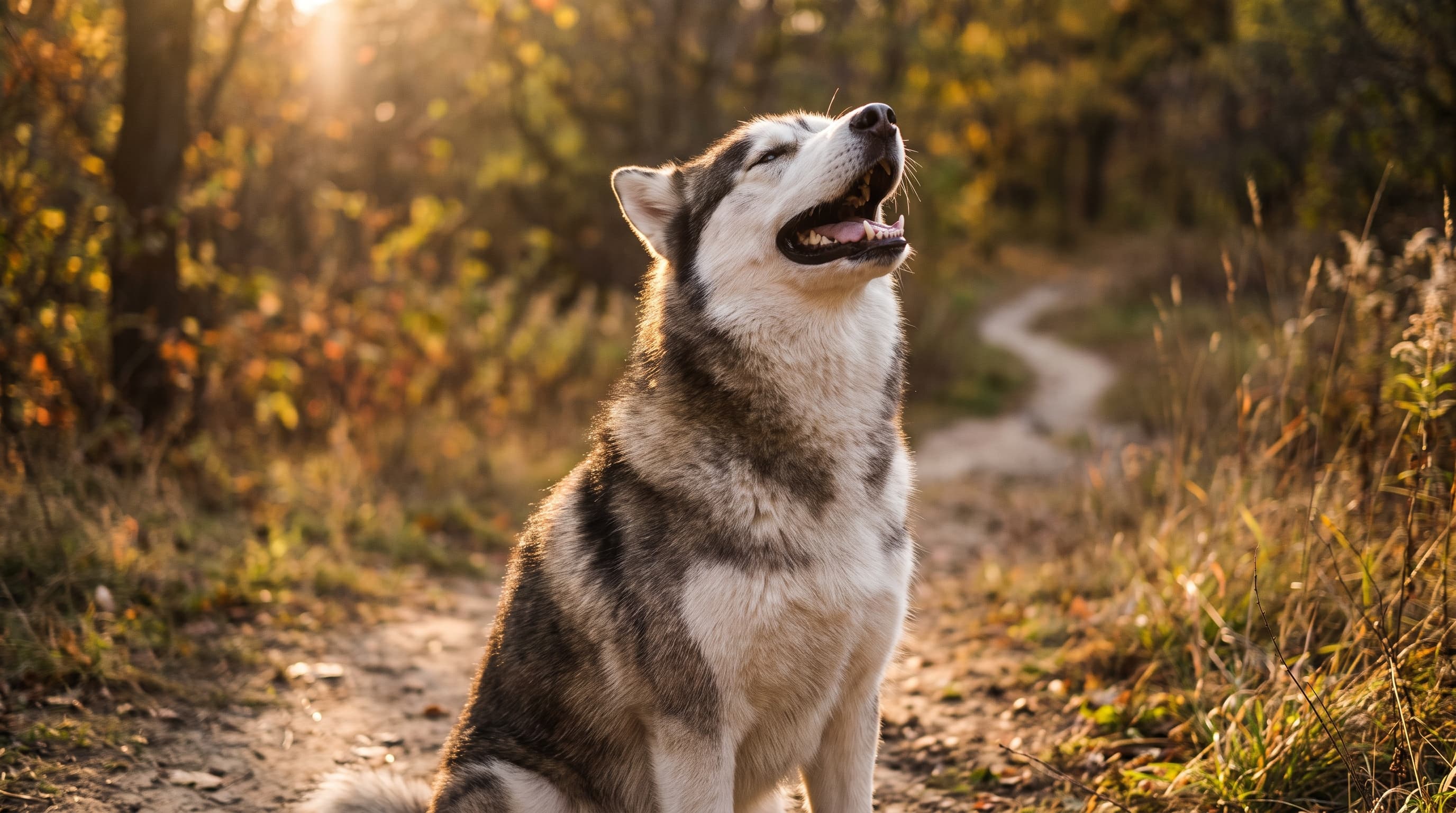
Why Do Dogs Howl? 8 Reasons Behind the Sound
Dogs howl to communicate—it's an instinct inherited from wolves. The most common reasons are to signal their location to their "pack," to respond to triggering sounds like sirens or music, to seek attention, to mark and defend territory, and to express emotions such as loneliness, excitement, or anxiety. Occasionally, a new or excessive howl can signal pain or illness, so a sudden change in your dog's vocal habits is worth a vet check.
Few dog sounds are as haunting—or as misunderstood—as a full-throated howl. One dog starts, a neighbor's dog answers, and suddenly the whole block is singing. Howling isn't random noise or a sign that something is wrong; it's one of the oldest forms of canine communication. Here's what your dog is actually trying to say, why some breeds howl far more than others, and when a howl is worth paying closer attention to.
Howling Starts With Wolves
To understand howling, look at the dog's closest wild relative. Wolves howl to coordinate the pack across long distances—to regroup after a hunt, to warn rival packs away from their territory, and to reinforce social bonds. Domestic dogs share the vast majority of their DNA with wolves and inherited the same vocal hardware and instincts. As the American Kennel Club explains, howling is essentially long-distance communication: a sound engineered to carry for miles across open country.
So when your dog throws its head back and howls, it's tapping into an ancient behavior that once helped its ancestors survive. The message has simply shifted from "regroup for the hunt" to "where did my family go?"
1. To Signal Their Location
The most fundamental reason dogs howl is to announce, "Here I am—where are you?" A dog left alone may howl to reconnect with absent family members, and dogs that hear a distant dog howling will often answer to signal their own position. This location-beacon function is the direct descendant of wolf pack coordination and explains why howling tends to travel through a neighborhood like a relay.
2. In Response to Sirens, Music, and High Notes
Ambulance sirens, fire trucks, harmonicas, violins, and certain sustained musical notes reliably set some dogs off. According to PetMD, dogs likely interpret these high-pitched, sustained sounds as another animal howling, and they instinctively answer the "call." It's not distress—it's a social reflex. Your dog hears what sounds like a fellow howler and joins the chorus. This is also why a single siren can trigger every dog within earshot.
3. To Get Your Attention
Dogs are quick learners, and many discover that howling reliably makes their humans appear. If howling has ever earned your dog a treat, a walk, or even a frustrated "quiet!", it may have learned that the behavior works. Attention-seeking howls are common in smart, social breeds and can become a habit if inadvertently rewarded. The fix is consistency: reward calm, quiet behavior and avoid reacting to demand-howling.
4. To Guard Territory and Warn Intruders
Howling can serve the same purpose as a "no trespassing" sign. Dogs may howl to announce their presence to an approaching person or animal and to alert their family that something has entered their space. Paired with barking, this territorial howl is your dog broadcasting that the area is claimed and defended. It's especially common when an unfamiliar dog moves into the neighborhood or a stranger approaches the property.
5. To Express Loneliness, Anxiety, or Separation Distress
Howling is also emotional. Lonely or bored dogs may howl to request company, and dogs with separation anxiety frequently howl when left alone—sometimes for long stretches. As VCA Animal Hospitals notes, persistent howling that only happens when a dog is by itself, often alongside pacing, destruction, or accidents, can be a hallmark of separation anxiety. If that pattern sounds familiar, our guide to easing canine anxiety offers approaches that also help with separation-related stress, and a vet or veterinary behaviorist can help with more serious cases.
6. To Celebrate and Show Excitement
Not every howl is sad. Many dogs howl out of pure joy—when you come home, when they catch an exciting scent on a walk, or when they've treed a squirrel. Hunting breeds in particular were bred to "bay" and howl to announce a find to their handler. In these moments, the howl is loose, wiggly, and paired with a wagging tail rather than a tense, drawn-out cry. Context and body language tell you whether a howl is celebration or distress.
7. Because Howling Is Contagious
As the San Francisco SPCA points out, howling is socially contagious—one dog's howl often triggers others nearby to join in, much like yawning spreads among people. This "chorus howling" reinforces group bonds and is why apartment buildings and dense neighborhoods can erupt in a collective serenade the moment one dog starts. It's a group activity written deep into canine social wiring.
8. As a Possible Sign of Pain or Illness
Occasionally, howling is a red flag. A normally quiet dog that suddenly begins howling—or an older dog that starts vocalizing at night—may be trying to communicate discomfort, disorientation, or pain. As Hill's Pet advises, any sudden or unexplained change in vocalization is worth a conversation with your veterinarian to rule out underlying medical issues, including cognitive decline in senior dogs. Howling itself isn't a disease, but a change in the pattern can be an early clue that something needs attention.
Which Dog Breeds Howl the Most?
Howling frequency varies enormously by breed. Ancient and northern breeds—those closest to their wolf ancestry—tend to be the most enthusiastic howlers, while many modern breeds bark far more than they howl. Notable vocalists include the Siberian Husky and Alaskan Malamute, both famous for "talking" and singing, along with scent hounds like the Beagle, Basset Hound, and Bluetick Coonhound, which were bred to bay on the trail. If you own one of these breeds, some howling simply comes with the territory. Breeds like Bulldogs and Boxers, by contrast, may rarely howl at all.
Should You Stop Your Dog From Howling?
It depends on why they're doing it. Occasional howling—answering a siren, greeting you at the door, joining a neighborhood chorus—is normal, healthy communication and nothing to correct. Problematic howling is the kind that's excessive, disruptive, or rooted in distress. For attention-seeking howls, avoid rewarding the behavior and reinforce quiet instead. For anxiety-driven howling, address the underlying stress rather than just the sound, ideally with help from a professional. And for any new or dramatic change in howling, start with a vet visit. Because howling and barking often go hand in hand, our guide to managing excessive barking pairs well with these strategies. To better read what your dog is telling you overall, explore how dogs understand human communication.
Frequently Asked Questions
Why do dogs howl at sirens?
Dogs likely mistake the high-pitched, sustained sound of a siren for another dog howling and instinctively answer it. It's a social reflex inherited from wolves rather than a sign of pain or fear, which is why one siren can set off every dog in the area.
Why does my dog howl when I leave the house?
Howling that happens only when your dog is alone—especially with pacing, destruction, or accidents—can indicate separation anxiety or loneliness. Your dog is calling out to reconnect with you. Gradual desensitization, enrichment, and, in serious cases, help from a vet or behaviorist can reduce it.
Do all dogs howl?
No. Howling is instinctive but varies by breed and individual. Northern breeds like Huskies and Malamutes and scent hounds like Beagles howl readily, while some dogs rarely or never howl. A dog that doesn't howl is completely normal.
Is howling a sign my dog is in pain?
Usually not, but it can be. Most howling is normal communication. However, a sudden change—a quiet dog that starts howling or a senior dog howling at night—may signal pain, illness, or cognitive decline and warrants a veterinary check.
Why do dogs howl at music or singing?
Certain instruments and sustained high notes mimic the pitch of a howl, prompting dogs to "sing along." It's a natural, social response to a sound they interpret as another dog calling, not a reaction to the music being good or bad.
How do I stop my dog from excessive howling?
Identify the cause first. Don't reward attention-seeking howls; reinforce calm, quiet behavior instead. Address anxiety-driven howling by reducing the underlying stress, and rule out medical issues with your vet for any sudden change. Consistency and patience are key.
The Bottom Line
Howling is your dog speaking an ancient language—announcing its location, answering a call, guarding its turf, or simply sharing a feeling. Most of the time it's perfectly normal, and understanding the trigger is the key to knowing whether to appreciate the song or gently redirect it. Pay attention to context and body language, and treat any sudden change in howling as a cue to check in with your vet.
Want to decode more of your dog's behavior? Subscribe to the Daily Wag newsletter for weekly, science-backed insights into what your dog is really trying to tell you.