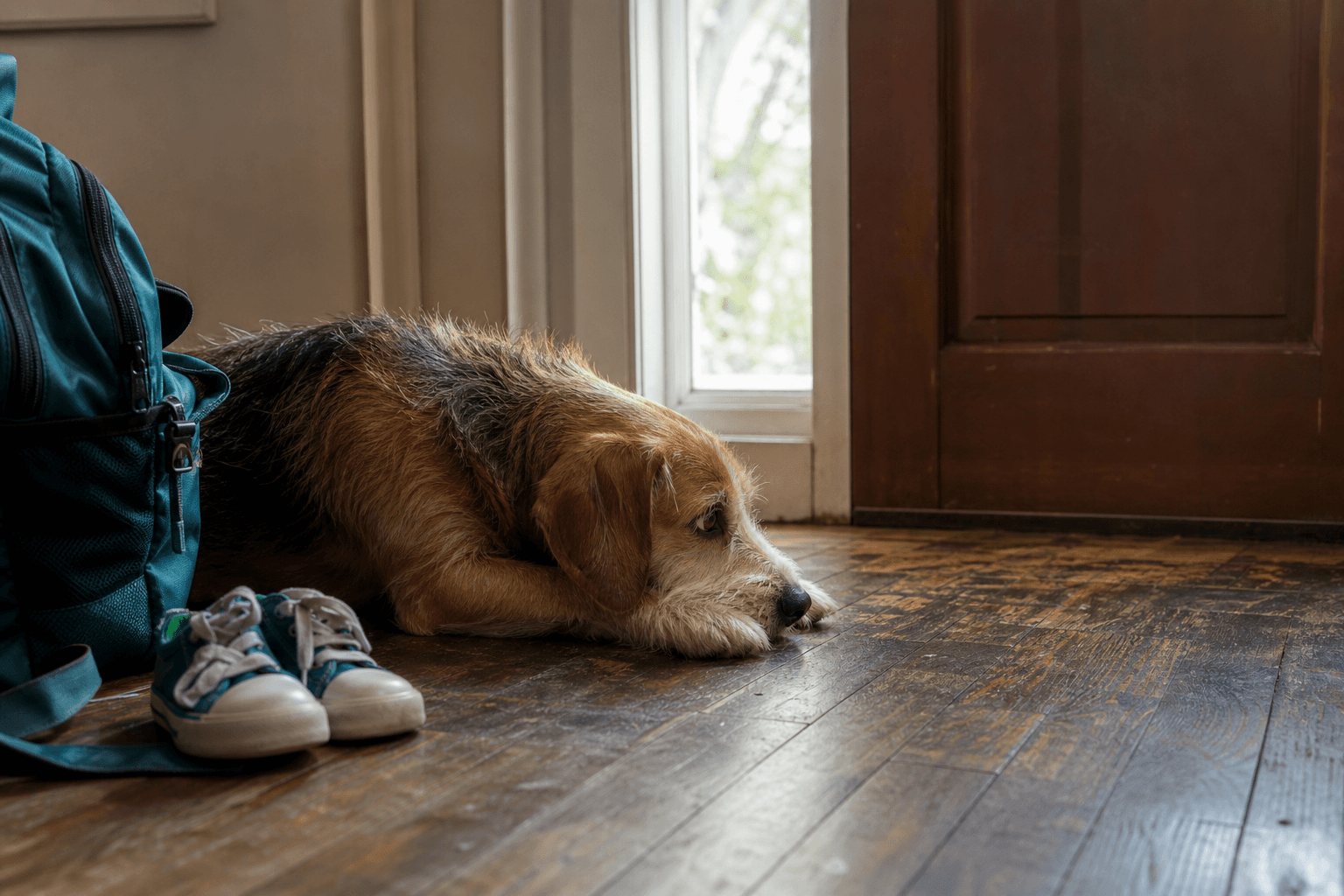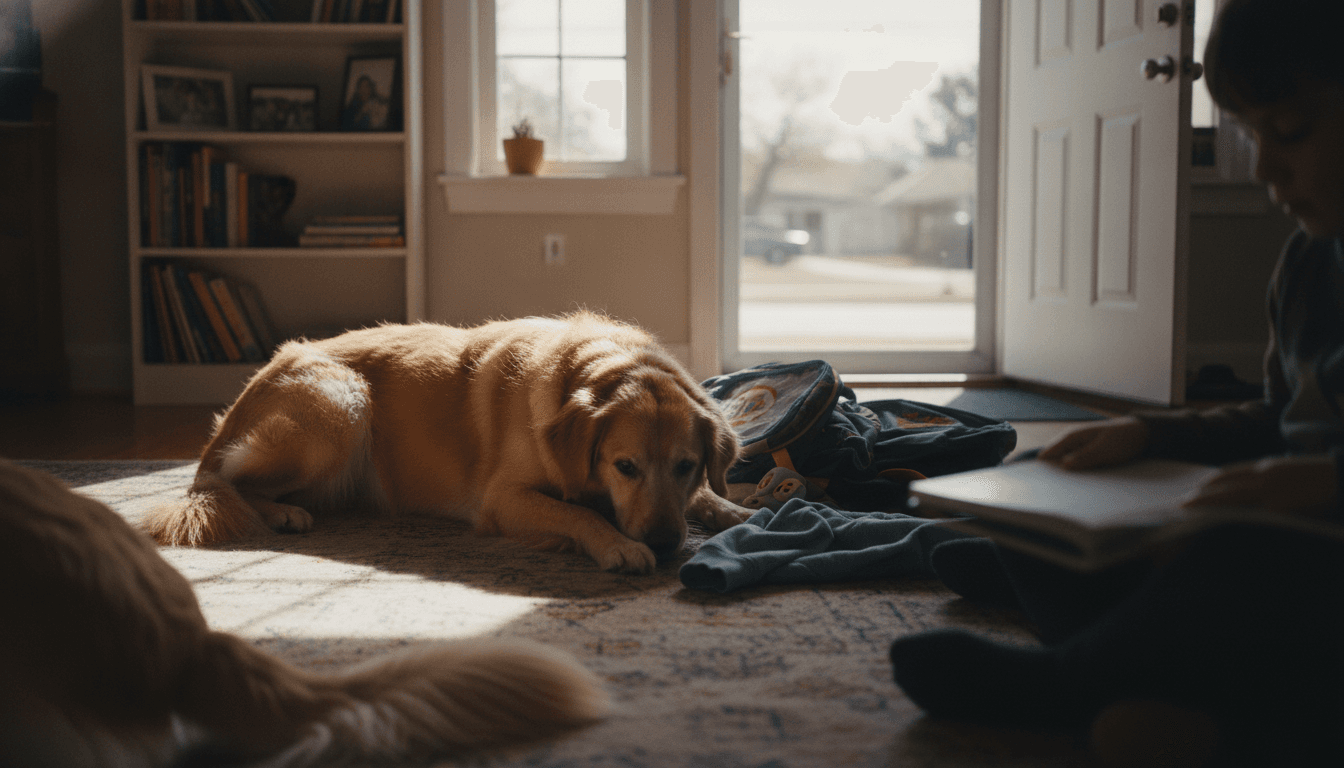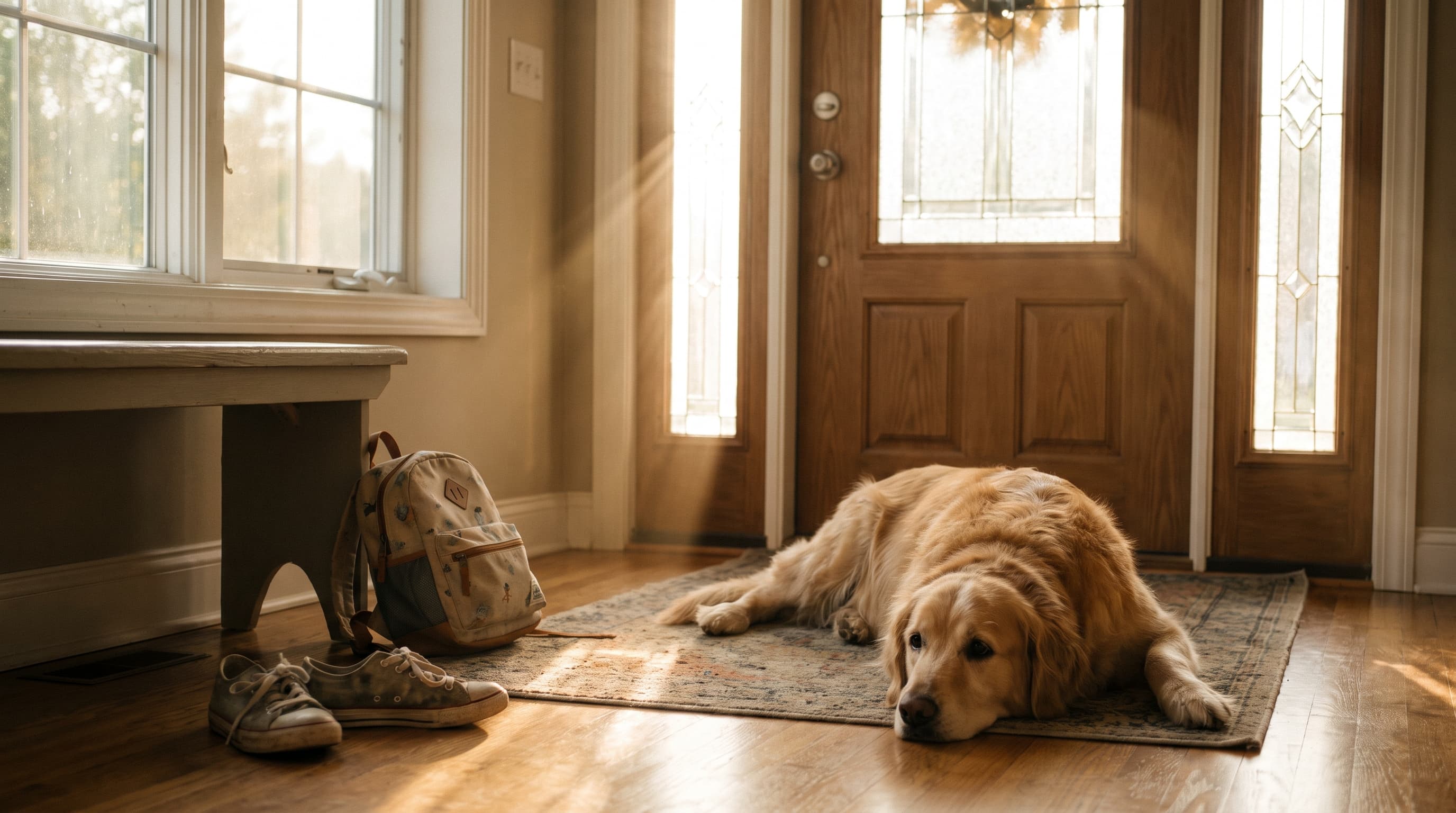

For three months, your dog had a full house. Kids sprawled on the floor for morning cartoons, someone was always heading to the kitchen, and the backyard door swung open a dozen times a day. Then, almost overnight, the school bus pulls away and the house goes silent for six or seven hours straight. For a lot of dogs, that abrupt drop from constant company to a long, quiet stretch alone is the single most stressful change of the year — and the first 15 minutes after the door closes are usually the hardest.
Late August and early September are peak season for a spike in calls to veterinary behaviorists about barking, chewing, and indoor accidents. If your once-settled dog has suddenly started pacing by the window or greeting you like you've returned from war, you're not imagining it. Here's what's actually happening, how to tell everyday boredom from true distress, and the vet-backed steps that calm the transition faster than you'd expect.
Why back-to-school hits dogs so hard
Dogs don't understand calendars or clock time — they understand routine. A predictable rhythm of meals, walks, and human presence is how they build a sense of safety. When summer ends, that rhythm collapses in a single morning. According to back-to-school guidance from PetWorks, dogs "build their sense of security around routine," and the sudden shift from a bustling household to an empty one leaves many of them genuinely unmoored.
The scale of canine anxiety is easy to underestimate. In one large owner survey, researchers found that 91% of dogs received at least a mild-to-moderate rating on some form of fear or anxiety. Separation-related distress is one of the most disruptive forms because it shows up when no one is home to soothe it — which is exactly why so many owners only discover the problem through chewed door frames and complaints from the neighbors.
Boredom or true separation anxiety? How to tell the difference
Not every dog that's a little restless when you leave has separation anxiety, and the distinction matters because the fixes are different. The ASPCA defines separation anxiety as distress "triggered when dogs become upset because of separation from their guardians, the people they're attached to." The telltale sign isn't the behavior itself — it's the panic behind it.
Signs that point to real anxiety
- Pre-departure dread. Anxious dogs start to unravel before you even leave — pacing, panting, whining, or shadowing you from room to room as you pick up your keys.
- Distress that starts fast. The first 15 to 30 minutes after everyone leaves are typically the worst. A truly anxious dog doesn't settle; the stress runs the whole time you're gone.
- Destruction aimed at exits. Chewing and scratching concentrated at doors and windows — sometimes to the point of self-injury — signals escape panic, not idle chewing.
- Accidents in a housetrained dog. Sudden indoor urination or defecation from a dog who normally holds it is a classic red flag. (If that's your dog, our guide to why a housetrained dog starts peeing inside walks through the medical and behavioral causes worth ruling out.)
- Excessive drooling, trembling, or refusing food. Physical stress signals that a bored dog simply won't show.
A bored dog, by contrast, "doesn't appear anxious," per the ASPCA — it chews the couch cushion because it's fun, not because it's frightened, and it happily naps once the novelty wears off. Boredom responds to more exercise and better toys. Genuine anxiety needs a structured plan.
The vet-backed plan to ease the transition
The good news: most back-to-school separation stress is preventable, and even established cases improve with consistency. Here's the approach veterinary behaviorists actually recommend.
1. Rehearse alone time before the routine changes
The biggest mistake is going from all-day company to a seven-hour absence with nothing in between. Instead, practice. PetWorks advises "leaving for five or ten minutes at a time" in the final weeks of summer so a dog relearns that alone time is temporary and predictable. If school has already started, it's not too late — use weekends and evenings to build the same short, successful departures.
2. Break the meaning of your departure cues
Your dog has learned that keys, shoes, and a certain jacket predict abandonment, and the dread builds before you reach the door. VCA Animal Hospitals recommends defusing those triggers: pick up your keys, put on your shoes, walk to the door — then sit back down and stay home. Repeat until the cues stop predicting anything. Only once your dog stays relaxed through the routine do you graduate to brief real absences, extending the time only when they remain calm throughout.
3. Make the first 15 minutes worth looking forward to
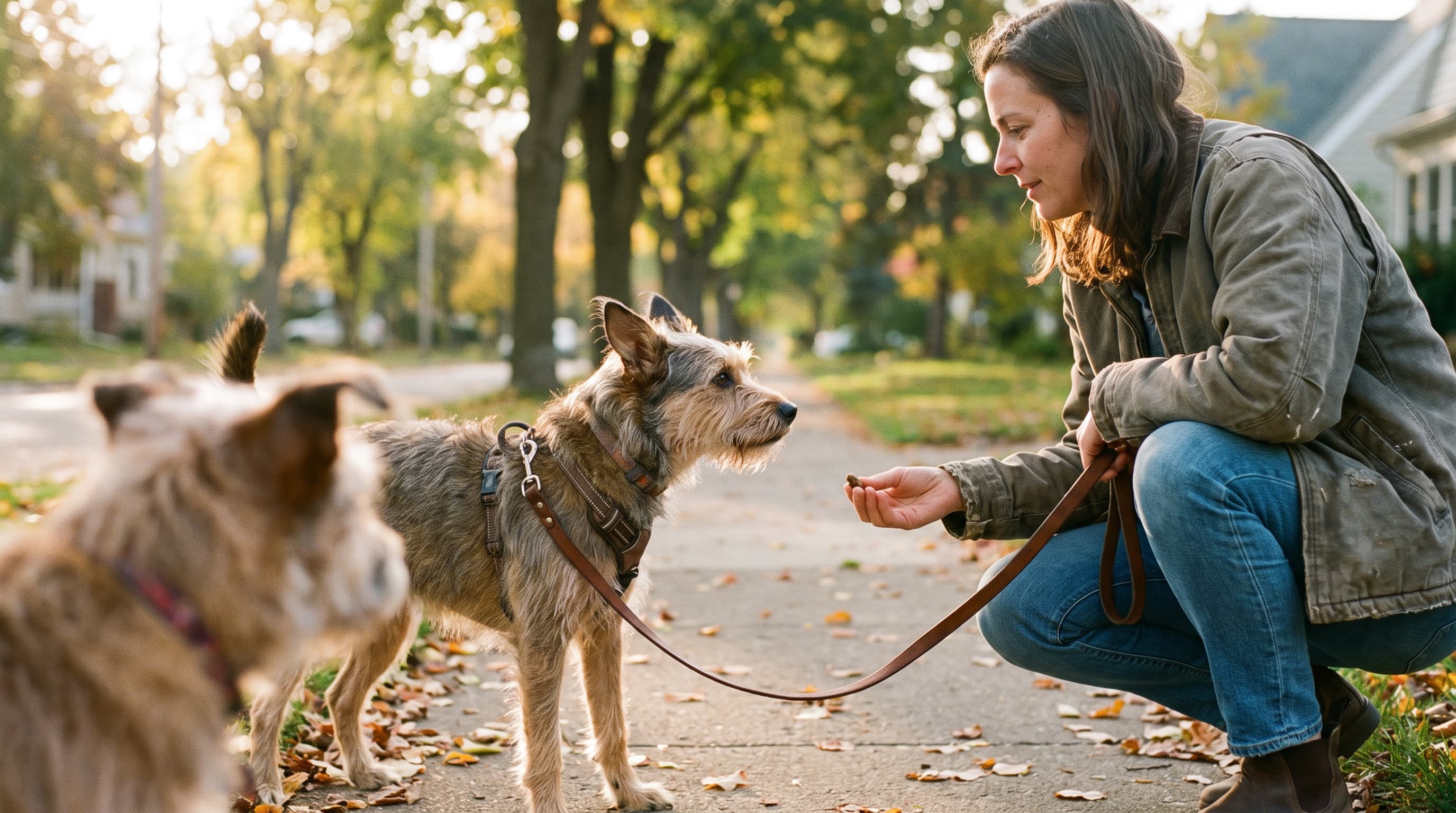
Because the opening stretch of alone time is the hardest, give your dog something better to do than worry. A frozen, food-stuffed toy delivered only at departure turns your exit into the start of the best part of the day — a technique called counterconditioning. Smear a rubber toy with peanut butter or wet food, freeze it overnight, and hand it over as you leave. The freezing stretches the activity out and covers exactly the window when panic would otherwise peak.
4. Drain the tank first
A tired dog is a calmer dog. A brisk 20-to-30-minute walk or a vigorous play session before you leave burns off the nervous energy that fuels barking and pacing, and sets your dog up for a long midday nap. Morning enrichment matters more than an equivalent amount in the evening, precisely because it lands right before the stressful stretch.
5. Keep departures and reunions boring
Big, emotional goodbyes and ecstatic hellos teach your dog that your comings and goings are a huge deal. Keep both low-key. Ignore attention-seeking for a minute or two after you walk in, then greet calmly once your dog has four paws on the floor. Rewarding settled, independent behavior — rather than clinginess — is a cornerstone of the routine VCA lays out.
6. Bridge the gap with help
Seven hours is a long time for any social animal. Even two or three days a week of a midday dog walker or a few mornings at daycare can shrink the alone-time stretch enough to take the edge off. It's often the difference between a dog who copes and a dog who spirals.
When to call a professional
If your dog is injuring itself trying to escape, refusing to eat all day, or showing no improvement after a few weeks of consistent work, it's time to loop in your veterinarian. Severe separation anxiety is a legitimate medical condition, and the ASPCA notes that anti-anxiety medication — always paired with behavior modification, never as a standalone fix — can help dogs who are too distressed to learn otherwise. A certified veterinary behaviorist can build a desensitization plan tailored to your dog and rule out underlying issues masquerading as anxiety.
One rule threads through every expert recommendation: try not to leave a truly anxious dog alone for long stretches while you're still working the plan, because every panicked afternoon reinforces the fear. Daycare, a sitter, or a friend's house during the retraining weeks keeps the training from unraveling.
The bottom line
Back-to-school separation anxiety is real, common, and — for the vast majority of dogs — very fixable. Start with short practice absences, strip the dread out of your departure cues, load up that first quiet stretch with something delicious, and lean on a walker or daycare when the day runs long. Consistency beats intensity every time.
Building a confident, independent dog is a year-round project, and it starts with the basics. If you're looking for a foundation to build calm behavior on, our step-by-step guide to teaching your dog to sit is a great place to begin. For more owner-tested training and behavior advice — plus dog-friendly guides to wherever life takes you — keep it locked on Sidewalk Dog. Your pup will thank you when the house goes quiet.