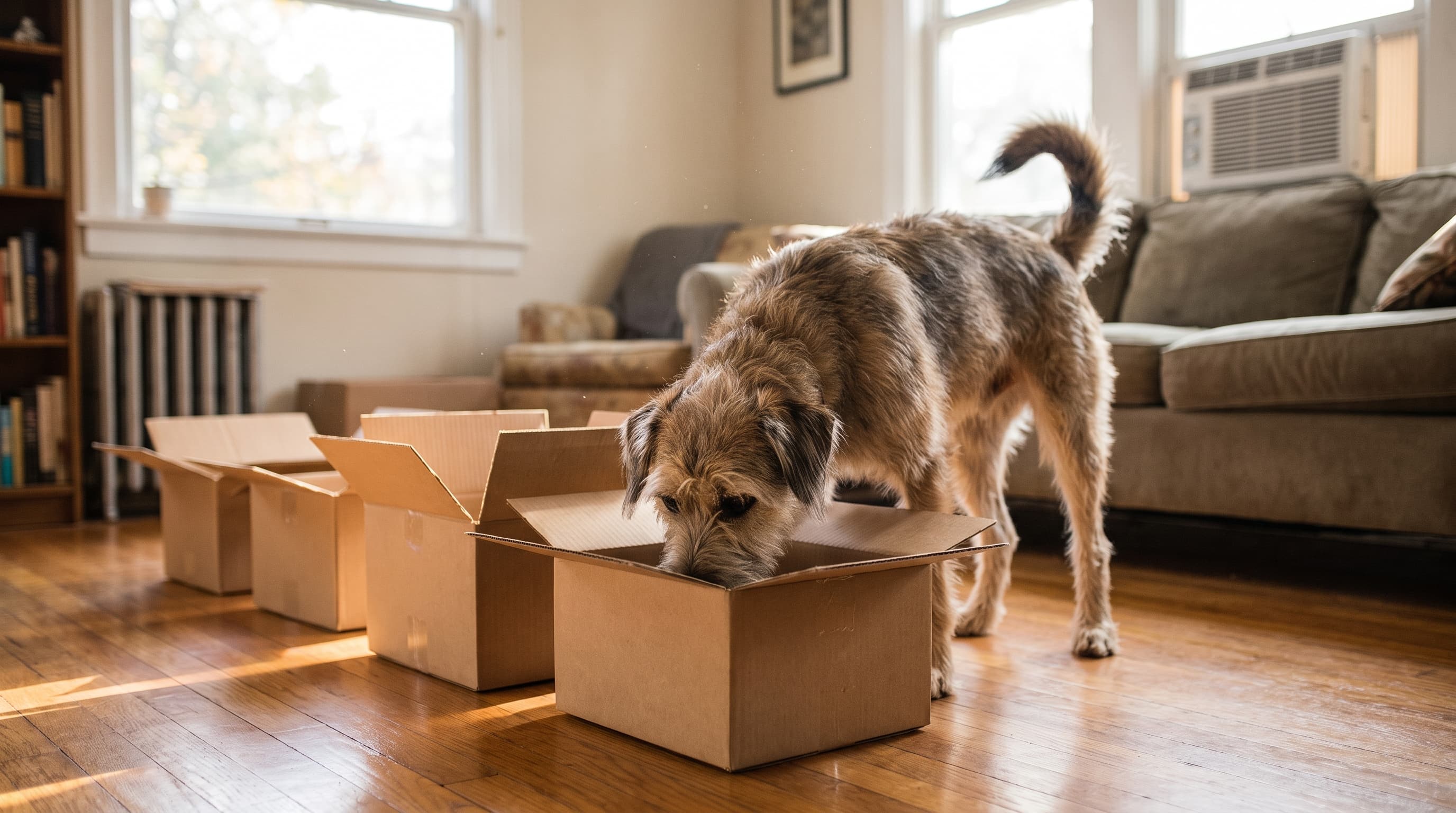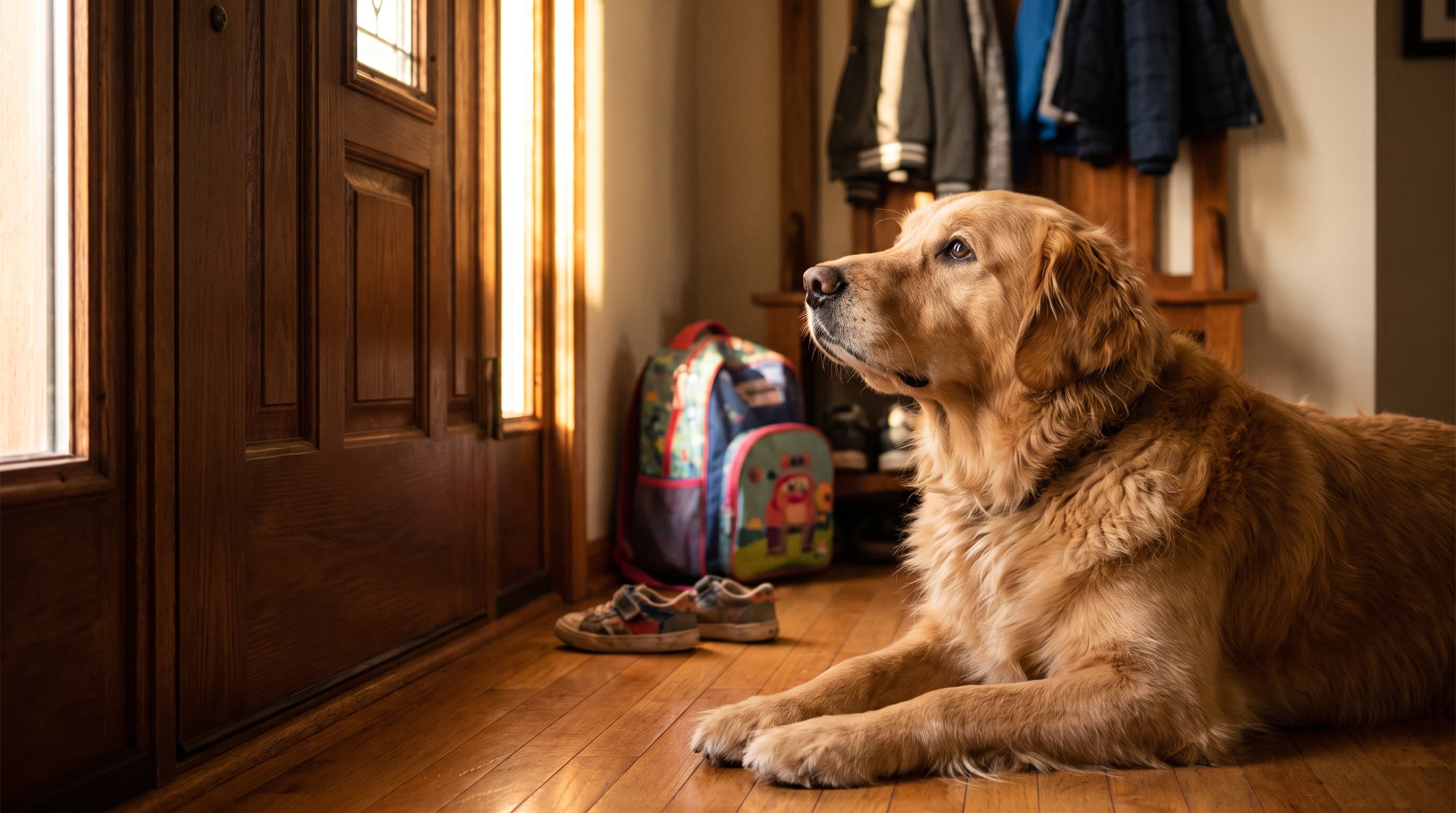

The house has been loud all summer — kids underfoot, snacks on demand, a warm body on the couch at 2 p.m. Then one Monday the door clicks shut, the school bus pulls away, and your dog is suddenly staring at an empty living room for the first time in ten weeks. Across the country this week, that quiet is landing hard. In one Maryland county alone, more than 140,000 students are heading back to class, leaving thousands of dogs home alone for six to eight hours a day for the first time since June.
If your dog has started barking at the window, shredding the throw pillows, or leaving you a puddle by the front door, you're not imagining it — and you're not alone. The good news: the back-to-school slump is one of the most predictable stress triggers on the calendar, which means it's also one of the most preventable. Here's what's really going on behind that anxious face, and a calm, vet-informed two-week reset you can start tonight.
Why the back-to-school switch hits dogs so hard
All summer, your dog's day had a rhythm: someone was almost always home, walks happened on a whim, and attention was constant. When school resumes, that rhythm collapses overnight. Dogs are creatures of routine, and an abrupt swing from "never alone" to "alone all day" is exactly the kind of change that tips ordinary nerves into genuine distress.
It's more common than most owners realize. Veterinary references put the clinical prevalence of separation-related problems somewhere in the 13–28% range, while broader owner surveys run far higher — roughly a third of pet parents believe their own dog struggles when left behind. Among the youngest dogs the numbers are starker still: nearly 47% of puppies show separation-related behaviors by six months of age, which is why the pandemic-era "quaranteam" of dogs who never learned to be alone are now hitting their first real back-to-school test.
But here's the reframe that changes everything about how you treat it. A landmark study of more than 2,700 dogs led by behavior researcher Daniel Mills at the University of Lincoln found that "separation anxiety" isn't a single diagnosis at all — it's an umbrella for several different frustrations. Some dogs are desperate to escape something inside the home, others are straining to reach something outside, some react to noises while alone, and some are simply bored. Mills's takeaway: the panic is largely about a dog's anticipation of being left and the frustration that follows — not a character flaw or a sign your dog "loves you too much." That matters, because the fix depends on which frustration you're actually dealing with.
The warning signs worth catching early
Separation distress rarely announces itself politely. Most owners find out from a neighbor's text about the barking, or from the wreckage by the door. The tell-tale signs of a dog who isn't coping with alone time include:
- Excessive barking, howling, or whining that starts minutes after you leave
- Destructive chewing or scratching aimed at doors, windowsills, and exits
- Pacing, panting, drooling, or trembling
- House-training lapses in an otherwise reliable dog — if your housetrained dog is suddenly peeing inside, stress is a leading suspect
- Refusing food or treats while you're gone
- Frantic escape attempts, sometimes to the point of injured paws or a broken nail
One clue that separates true separation distress from simple boredom: the behavior fires almost immediately after departure and clusters tightly around your exit routine — grabbing keys, putting on shoes, picking up a bag. If your dog starts to unravel while you're still tying your laces, that's your signal.
Your calm two-week reset plan
You can't reverse ten weeks of togetherness in an afternoon, but two focused weeks make a real difference. The goal isn't to toughen your dog up — it's to rebuild the boring, predictable rhythm of everyday alone time so that a closed door stops meaning "abandoned."
Week one: shift the schedule and defuse the door
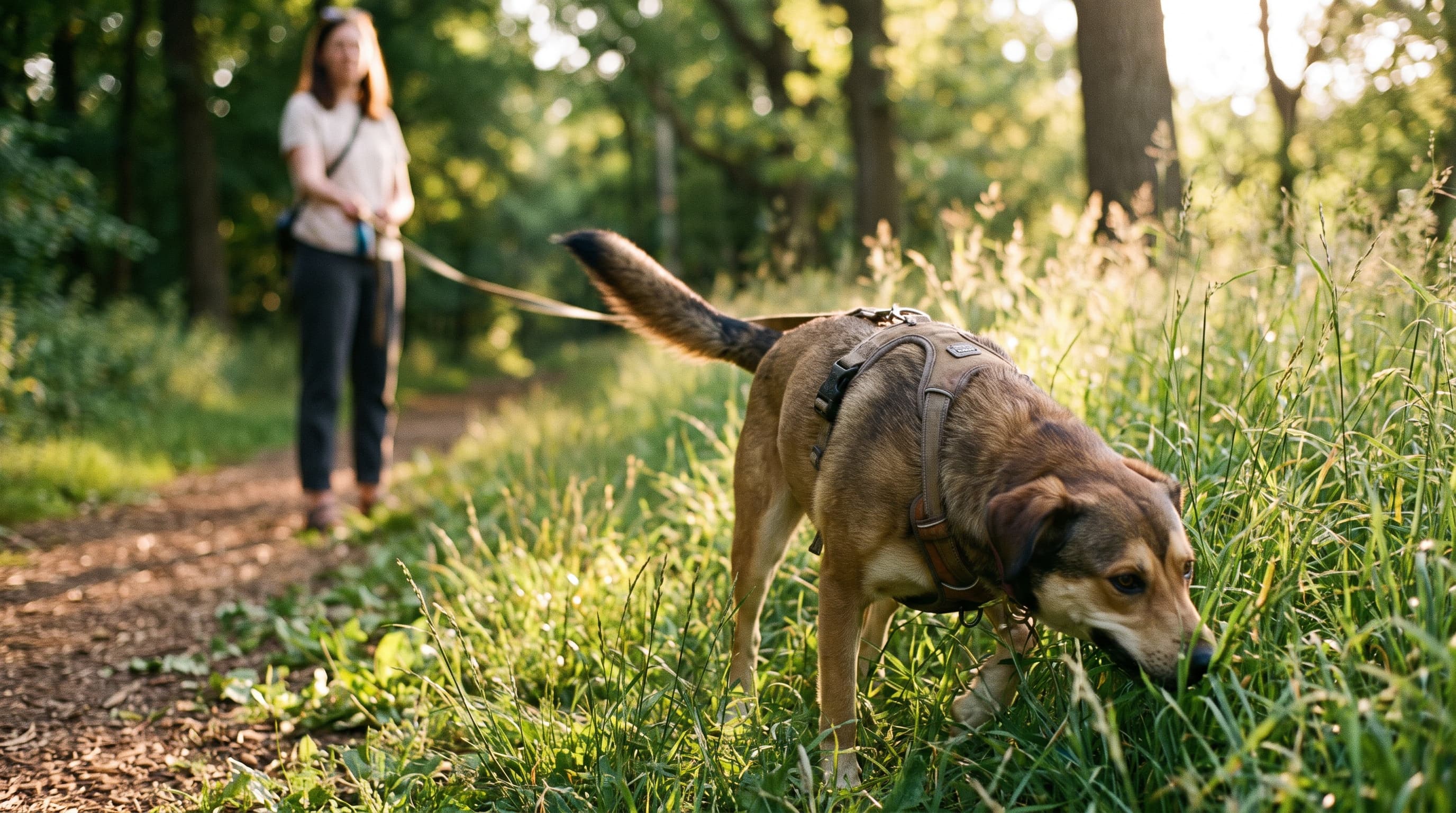
Start by moving your dog's day toward the school-year clock now. Feed, walk, and settle at the times they'll actually happen once everyone's out the door, so the schedule isn't a second shock layered on top of the empty house. Then front-load calm: a brisk 15–20 minute walk or a game of fetch before any departure burns off the nervous energy that fuels barking and pacing.
Next, take the drama out of your comings and goings. Skip the tearful "I'll miss you so much" goodbye and the ecstatic reunion; both teach your dog that departures and arrivals are huge emotional events. Keep them boringly neutral instead. Work on your exit cues, too — the ASPCA recommends picking up your keys or slipping on your coat several times a day without actually leaving, until those cues stop predicting anything scary.
Week two: stretch the absences, feed the brain
Once your dog is shrugging off the pre-departure cues, begin graduated absences. The ASPCA's approach starts almost absurdly small — step outside for just one to two seconds, then return before your dog has time to panic — and slowly extends from there, always staying under the threshold that triggers distress. A rough progression looks like seconds, then a minute, then five, then longer chunks once your dog is reliably calm. If a step spikes anxiety, you've moved too fast; drop back to the last easy duration and build again.
Pair every real departure with something genuinely good. A frozen stuffed toy, a puzzle feeder, a snuffle mat, or a long-lasting chew turns "you left" into "the best thing of the day appears." Rotate the toys so novelty doesn't wear off. And set up a consistent safe space — a quiet corner or crate with comfortable bedding, water, and low sensory noise — so your dog has a den to decompress in rather than a window to guard. For families with kids, hand this job to the children as part of the morning routine; a calm, matter-of-fact send-off from the whole household beats a frantic one every time. (The same low-drama energy helps at hello, too — dogs read our excitement, which is part of what your dog is really telling you at the door.)
When once or twice a week isn't enough at home
If your schedule means eight-hour stretches with no midday relief, build in backup: a dog walker, a trusted neighbor, or a day or two of daycare each week can bridge the gap while training takes hold. Structure and midday movement matter especially for senior dogs, who feel routine changes acutely and may need gentler, shorter absences.
When it's more than back-to-school nerves
Most dogs settle within a couple of weeks of consistent practice. Some don't — and pushing a truly panicked dog through absences alone can make things worse. If your dog is injuring themselves trying to escape, refusing to eat for hours, or showing no improvement after two weeks of steady work, it's time to bring in a professional. The ASPCA is blunt on this point: serious desensitization and counterconditioning "require the guidance of a trained and experienced professional." Look for a Certified Applied Animal Behaviorist (CAAB or ACAAB) or a board-certified veterinary behaviorist (Dip ACVB), and talk to your vet — in some cases, short-term anti-anxiety medication paired with training gives a dog the breathing room to actually learn that being alone is safe.
Above all, resist the urge to scold. The barking, the chewing, the accidents — none of it is spite, and punishment only adds fear to a dog who's already frightened. What your dog needs this September is exactly what the calendar took away: a predictable rhythm, a soft place to land, and the quiet confidence that the door always opens again.
Chasing down more ways to keep your dog happy through the seasonal shuffle? Sidewalk Dog covers the training, behavior, and everyday dog-parent questions that actually come up — fetch a few more reads before the school bus rolls around tomorrow.