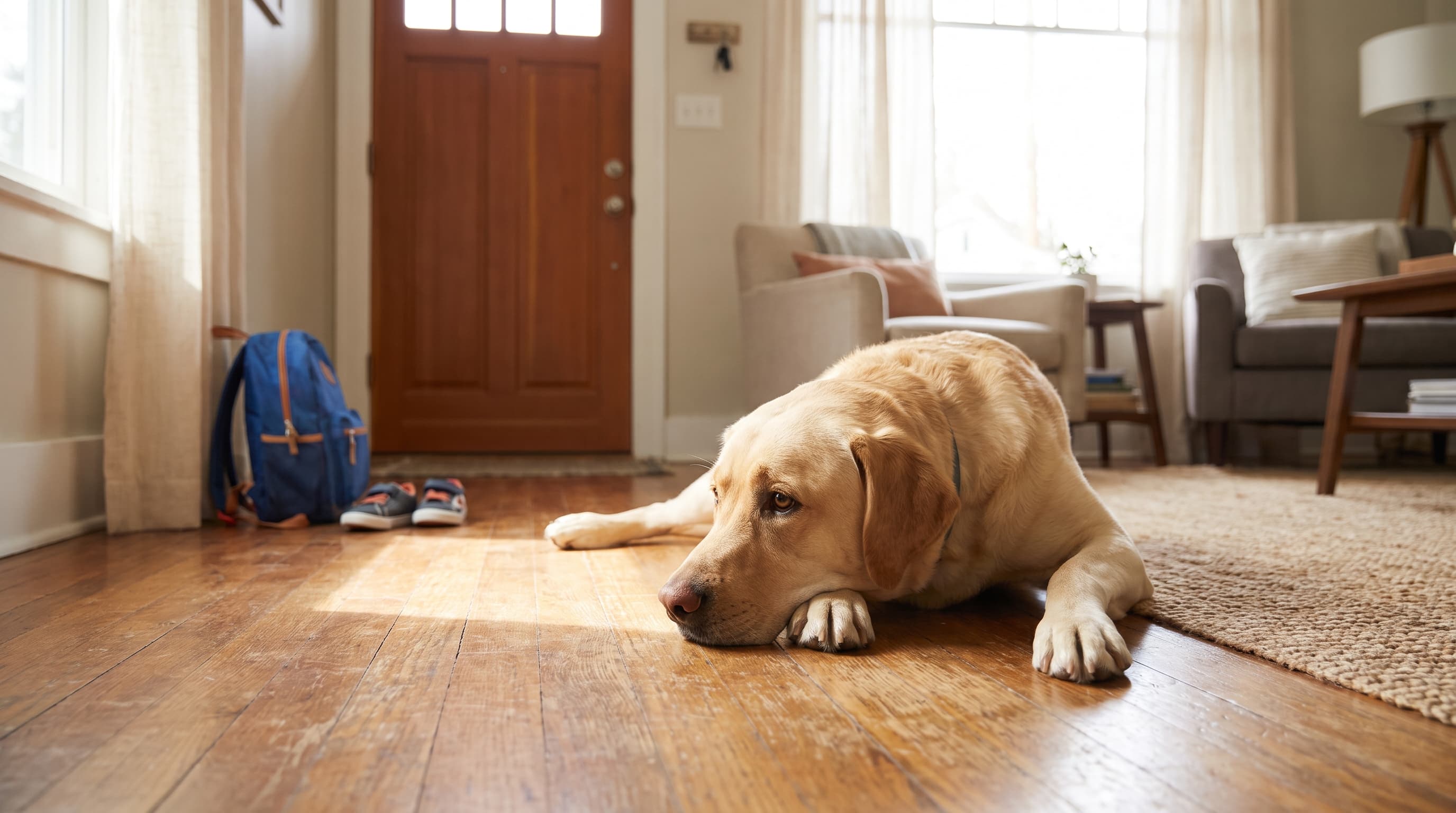

Somewhere in Texas this week, a kid grabbed a backpack, hugged the family Labrador, and walked out the door for the first day of the new school year — and the dog has no idea when that little human is coming back. If your house just went from a summer full of noise, snacks, and belly rubs to eight quiet hours of nobody home, your dog feels the drop. Vets have a name for the destruction, howling, and puddles that follow: separation anxiety. The good news is that it's fixable, and the fix is a simple, vet-backed desensitization routine you can start in the next 20 minutes and run over about three weeks.
Timing matters here. Many Southern and Texas districts return the first or second week of August, with California and much of the Midwest following between mid- and late August. Which means for millions of American dogs, the loneliest stretch of the year is starting right now.
Why Back-to-School Hits Dogs Harder Than the Return to the Office
Plenty of dogs handle adults leaving for work just fine — that rhythm is predictable. What throws them is kids. Children provide constant, physical, high-energy attention of a kind that adults simply don't: floor wrestling, backyard sprints, snacks dropped at dog-eye level, and a warm body to nap against all afternoon. When summer break ends, that firehose of companionship shuts off overnight, and the contrast is jarring.
How many dogs are affected depends entirely on how you count. A large study of 13,700 Finnish pet dogs found that only about 5% showed frequent separation-related behavior under strict clinical criteria — but that same research flagged anxiety traits as widespread, with 32% of dogs highly fearful of at least one everyday noise. Broader owner-reported surveys put the number far higher, in the 14–20% range, and roughly a third of owners believe their own dog struggles when left alone. Whatever the exact figure, this is not a rare, one-in-a-hundred problem. It's one of the most common behavior complaints vets see.
It's Panic, Not Misbehavior
The single most important thing to understand: separation anxiety is not spite, stubbornness, or a training failure. It's closer to a panic attack than a bad habit. A dog who shreds the couch cushions the moment you leave isn't "getting revenge" — its nervous system is genuinely overwhelmed by being alone.
According to the ASPCA, telltale signs include destructiveness (especially around doors and windows), nonstop barking or howling, house-soiling in an otherwise reliably house-trained dog, drooling, and pacing. Many dogs start to unravel before you even leave — during the "departure cues" of grabbing keys, putting on shoes, or picking up a bag. The American Kennel Club's list of anxiety symptoms runs even longer: panting, restlessness, depression, and repetitive or compulsive behaviors.
One quick gut-check: if your dog's accidents started the same week school did, you're likely looking at stress, not a housetraining relapse. (We break down the difference in our guide to why a housetrained dog suddenly pees inside.)
The 3-Week Fix: A Vet-Backed Desensitization Plan
The core treatment vets and behaviorists rely on is a pair of techniques called desensitization and counterconditioning. Desensitization means exposing your dog to alone-time in tiny, non-scary doses and slowly building up. Counterconditioning, as the ASPCA puts it, "changes an animal's fearful, anxious or aggressive reaction to a pleasant, relaxed one instead" — usually by teaching your dog that your departure predicts something great. Here's how to phase it in over three weeks.
Week 1: Break the Departure Cues
Your dog has learned that keys and shoes mean abandonment. Defuse those triggers. Several times a day, pick up your keys and then sit down on the couch. Put your shoes on and go make coffee. Do it until grabbing the keys stops meaning anything. In parallel, start "micro-absences": step outside, close the door, count to 10, and come back in — calm and boring, no dramatic hellos. Repeat, gradually stretching to a minute or two. The goal of week one is simply proving that the door opening and closing is a non-event.
Week 2: Stretch the Alone Time
Now extend those absences from minutes toward 15, 20, and 30 minutes, always staying under the threshold where your dog starts to panic. This is the golden rule: never push so far that your dog rehearses the anxiety. Every departure should end before the whining starts. Pair each exit with a high-value "only when I leave" reward — a food puzzle or a frozen stuffed toy your dog gets exclusively at departure time. Done right, your dog starts to look forward to you leaving because that's when the good stuff appears.
Week 3: Bridge to the Full School Day
By the third week, most mildly anxious dogs can handle longer, real-world absences. Build toward the full workday by leaving for an hour, then two, then a half-day, layering in the tools below. Dogs with moderate to severe anxiety will need a slower ramp — the ASPCA notes that serious cases require "many short separations" built up "over many weeks of daily sessions," not days. Don't rush a genuinely panicked dog to hit a calendar deadline; go at the pace your dog can actually tolerate.
Daily Habits That Make the Plan Stick
- Exercise before the empty house. A brisk morning walk or a hard play session before the kids leave burns off nervous energy, so a long nap can fill the quiet hours.
- Feed the brain, not just the belly. Puzzle feeders, snuffle mats, and stuffed toys turn "alone" into "busy." A dog working a frozen treat isn't watching the door.
- Keep goodbyes and hellos boring. Emotional send-offs and frantic reunions tell your dog that your absence is a big deal. Aim for calm, matter-of-fact comings and goings.
- Leave the house lived-in. Background TV or radio, a worn t-shirt that smells like you, and a comfortable spot can take the edge off the silence.
- Loop the kids in. Have children spend 10 focused minutes with the dog before school and after homework, so the relationship stays strong even as the schedule tightens.
When to Call in a Professional
If your dog is injuring itself trying to escape, breaking teeth or nails on crates and doors, or panicking so hard that no amount of gradual practice helps, it's time for backup. The AKC's blunt advice on serious anxiety is worth repeating: "The best way to treat anxiety is to talk with your veterinarian." A vet can rule out medical causes, and for tougher cases a board-certified veterinary behaviorist or certified applied animal behaviorist can build a customized plan — sometimes paired with anti-anxiety medication that makes the training possible in the first place. Reaching for professional help isn't failure; for a truly panicked dog, it's the kindest and fastest route to relief.
The Bottom Line
The back-to-school shift is one of the most predictable stressors on a dog's calendar — which is exactly why it's one of the easiest to get ahead of. Start the departure-cue drills today, keep every absence just short of your dog's panic point, and make your leaving the moment the best treat of the day appears. Three weeks of small, boring, consistent reps will do more than any single dramatic fix. Your dog can't understand why the house got quiet in August. But you can make sure it learns that quiet doesn't mean scary — it just means the good chew comes out.
For more calm-dog strategies, positive-reinforcement basics, and seasonal survival guides, keep it locked on Sidewalk Dog — we're chasing the stories that keep your best friend happy, healthy, and by your side.