
Can Dogs Eat Smoked Salmon? What Vets Want You to Know
Dogs should not eat smoked salmon. While plain, fully cooked salmon is one of the healthiest fish you can feed a dog, the smoking and curing process loads the fish with salt and often garlic or onion seasoning, and it may leave harmful parasites alive. A stolen scrap rarely causes an emergency, but smoked salmon should never be a food you offer on purpose.
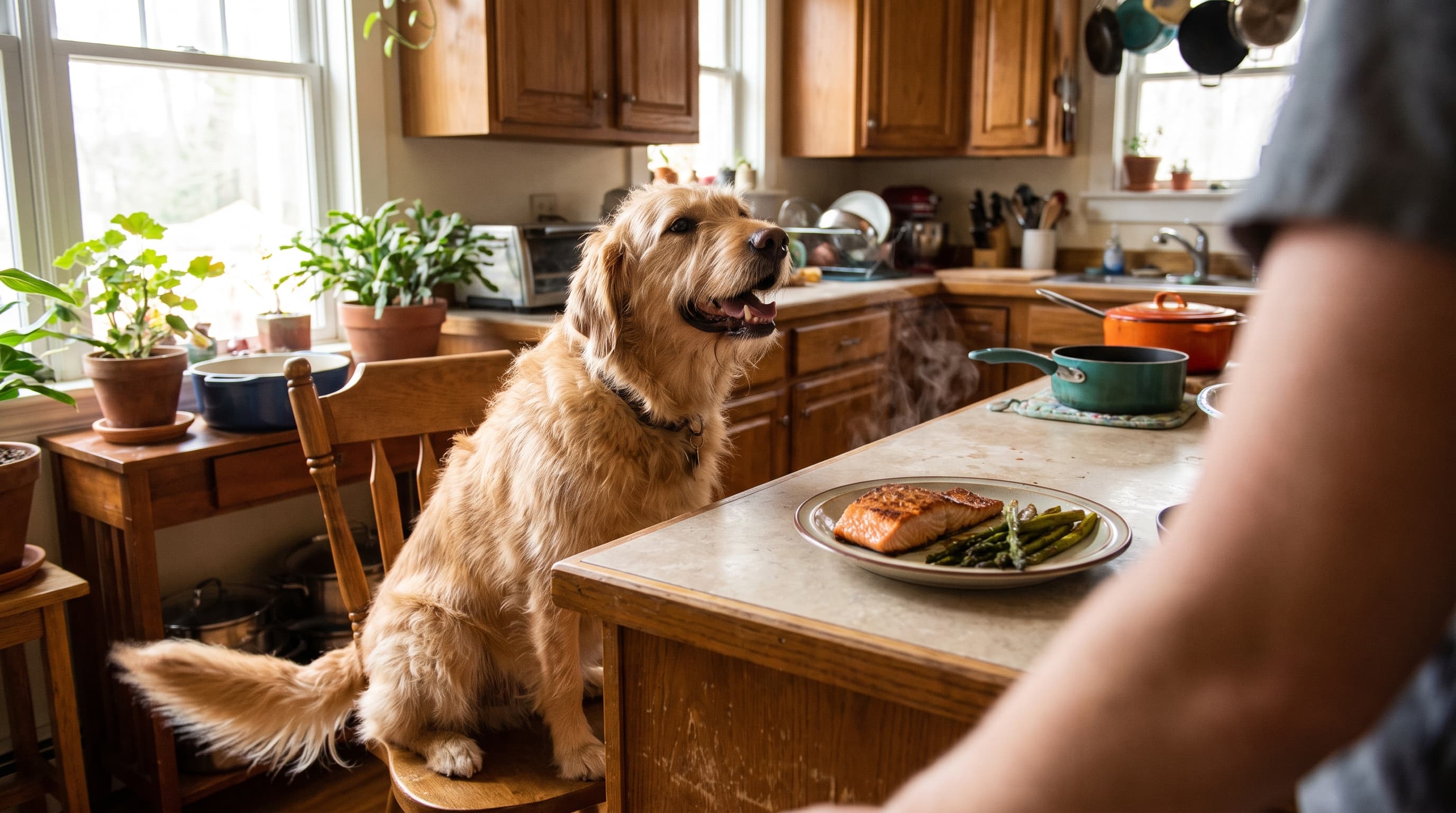
If your dog just snatched a piece off the counter, don't panic — but do read on, because the reason smoked salmon is risky is different from why plain salmon is good, and knowing the difference tells you when to simply watch and when to call your veterinarian.
Is Smoked Salmon Safe for Dogs?
No, smoked salmon is not a safe food to feed dogs, even though the salmon itself is a nutritious fish. The problem is not the fish — it's what smoking does to it. According to the American Kennel Club, dogs can safely eat salmon only when it is boneless, plain, and cooked thoroughly to an internal temperature of about 145°F. Smoked salmon fails that test on two counts: it is cured with heavy salt, and cold-smoked varieties (like lox) are never cooked to a temperature high enough to kill parasites.
There is a meaningful difference between "won't hurt them in a pinch" and "safe to feed." A single small bite of smoked salmon is unlikely to poison a healthy medium or large dog. But making it a regular treat exposes your dog to sodium overload and, in the case of raw or cold-smoked fish, a potentially fatal parasitic infection. Both risks are easy to avoid.
Why Smoked Salmon Is Risky: Salt, Seasoning, and Parasites
Too Much Salt
Smoking is a curing process, and curing means salt — a lot of it. A few ounces of smoked salmon can contain far more sodium than a small dog should have in an entire day. Excess salt causes increased thirst and urination at low doses, and at higher doses it can lead to salt poisoning. The Pet Poison Helpline notes that a sodium overdose in dogs can produce vomiting, diarrhea, a stumbling gait, tremors, seizures, and in severe cases death. Small breeds are especially vulnerable simply because it takes far less salt to overwhelm a 10-pound body.
Onion and Garlic Seasoning
Most smoked salmon is flavored — with dill, pepper, and very often onion or garlic. Onions and garlic belong to the allium family, which is toxic to dogs and can damage red blood cells, leading to anemia. Because seasonings are baked into commercial smoked salmon rather than sprinkled on top, you can't simply rinse them off.
Parasites in Raw and Cold-Smoked Fish
This is the risk owners underestimate most. Cold-smoked salmon and lox are cured but never cooked hot enough to kill parasites. Raw Pacific salmon can carry a fluke that transmits Neorickettsia helminthoeca, the organism behind salmon poisoning disease — a condition the AKC warns can be fatal to dogs if untreated. Symptoms usually appear within about a week and include vomiting, diarrhea, fever, lethargy, and swollen lymph nodes. Thorough cooking is the only reliable way to destroy these parasites, which is exactly what smoking does not do.
My Dog Ate Smoked Salmon — What Should I Do?
First, figure out how much and what kind. A dog that licked a bagel with a smear of lox is in a very different situation from one that ate a whole fillet of salted, garlic-seasoned salmon.
- A small, plain amount: Offer fresh water and watch for the next 24–72 hours. Most healthy dogs will be fine after a small taste.
- A large amount, or seasoned/garlic-onion salmon: Call your veterinarian or an animal poison control line right away, especially for small dogs.
- Any signs of trouble: Vomiting, diarrhea, extreme thirst, restlessness, weakness, tremors, or a fever that shows up days later all warrant a prompt call to your vet.
Because salmon poisoning disease can take several days to appear, don't assume your dog is out of the woods just because the first evening passes quietly. If your dog ate raw or cold-smoked fish, mention that specifically to your vet.
The Safe Alternative: Plain Cooked Salmon
The good news is that your dog doesn't have to miss out on salmon's benefits. Plain, boneless, fully cooked salmon is rich in omega-3 fatty acids that support skin, coat, joint, and heart health, which is why it appears in so many premium dog foods. PetMD recommends serving cooked salmon plain — no oil, butter, salt, or seasoning — and removing all bones first, since cooked fish bones can splinter.
To share salmon safely:
- Choose fresh, boneless fillets and cook them fully (baked, steamed, or poached) with no seasoning.
- Let it cool, flake it, and check carefully for stray bones.
- Serve a small portion as an occasional topper, not a daily meal. As with any treat, keep extras to under 10% of daily calories.
- Introduce it gradually — fish is a common protein for food sensitivities in some dogs.
If you'd rather skip the cooking, look for commercial dog foods and treats that list cooked salmon or salmon oil as an ingredient. For more on which parts are safe, see our guides to whether dogs can eat salmon skin and whether dogs can have tuna.
Smoked vs. Canned vs. Fresh Salmon: Which Is Best?
Not all salmon is created equal when it comes to your dog's bowl. Here's how the common forms stack up:
- Fresh, cooked, boneless salmon — the gold standard. Plain and fully cooked, it delivers omega-3s with no added salt or seasoning. This is what the Pooch & Mutt veterinary team and most vets recommend.
- Canned salmon — can work in small amounts if it's packed in water (not oil or brine) and is low- or no-salt. Rinse it well and check for bones. Skip anything packed in heavy salt or sauce.
- Raw salmon — avoid. It can carry the parasite behind salmon poisoning disease, which is why the Wild Alaskan Company and veterinary sources stress thorough cooking.
- Smoked or cured salmon (lox) — avoid. Too salty, often seasoned, and not cooked hot enough to kill parasites.
When you want to treat your dog to fish, reach for the fresh, cooked, unseasoned option every time. It's the version that gives your dog salmon's real benefits without the baggage.
Other Cured and Salty "People Foods" to Skip
Smoked salmon sits in a broader category of cured, salted, and preserved foods that share the same drawbacks: high sodium, added seasonings, and sometimes smoke or nitrates. The same caution applies to smoked and cured meats. Our breakdown of beef jerky for dogs covers similar salt and seasoning concerns, and our guide to olives looks at another salty snack owners often want to share. When in doubt, the plainer and less processed a food is, the safer it tends to be for your dog.
Frequently Asked Questions
Can dogs eat a little bit of smoked salmon?
A tiny, one-time taste is unlikely to harm a healthy medium or large dog, but it isn't recommended. The salt and any garlic or onion seasoning make even small amounts a poor choice, and small dogs are far more sensitive. It's best not to offer it at all.
What about lox or cold-smoked salmon?
Lox and cold-smoked salmon are riskier than hot-smoked salmon because they are cured but never cooked to a temperature that kills parasites. That raises the risk of salmon poisoning disease in addition to the salt concern, so avoid them entirely.
Can smoked salmon kill a dog?
It's uncommon from a small accidental bite, but yes, serious outcomes are possible. Large amounts can cause salt poisoning, allium seasonings can damage red blood cells, and untreated salmon poisoning disease from raw or cold-smoked fish can be fatal. These risks are why smoked salmon should never be fed on purpose.
How much salt is too much for a dog?
There's no single safe number for a treat like this because it depends heavily on your dog's size and health. A serving that's harmless to a large dog can be dangerous to a small one. Rather than guess, keep salty cured foods off the menu and provide constant access to fresh water.
Is cooked salmon better than smoked salmon for dogs?
Yes, by a wide margin. Plain, boneless, fully cooked salmon delivers healthy omega-3 fatty acids without the added salt, seasoning, or parasite risk of smoked fish. It's the only form of salmon most veterinary sources recommend feeding.
My dog ate smoked salmon and seems fine — should I still worry?
Keep an eye out for a few days. Salt-related signs can appear within hours, but salmon poisoning disease from raw or cold-smoked fish may not show up for about a week. If any vomiting, diarrhea, fever, or lethargy develops, contact your veterinarian.
The Bottom Line
Smoked salmon is a treat to keep for yourself. Between the heavy salt, the garlic and onion seasonings, and the parasite risk in cold-smoked varieties, it offers your dog real hazards and no benefit you can't get more safely from plain cooked salmon. Feed the fish the way vets recommend — boneless, unseasoned, and fully cooked — and skip the smoked version entirely.
This article is for general information and isn't a substitute for professional advice. If your dog has eaten smoked salmon and shows any concerning symptoms, or if you're unsure how much they ate, contact your veterinarian or an animal poison control service right away.
Want more straight answers about what's safe in your dog's bowl? Subscribe to the Daily Wag newsletter for vet-informed feeding tips, treat guides, and healthy-dog advice delivered to your inbox.