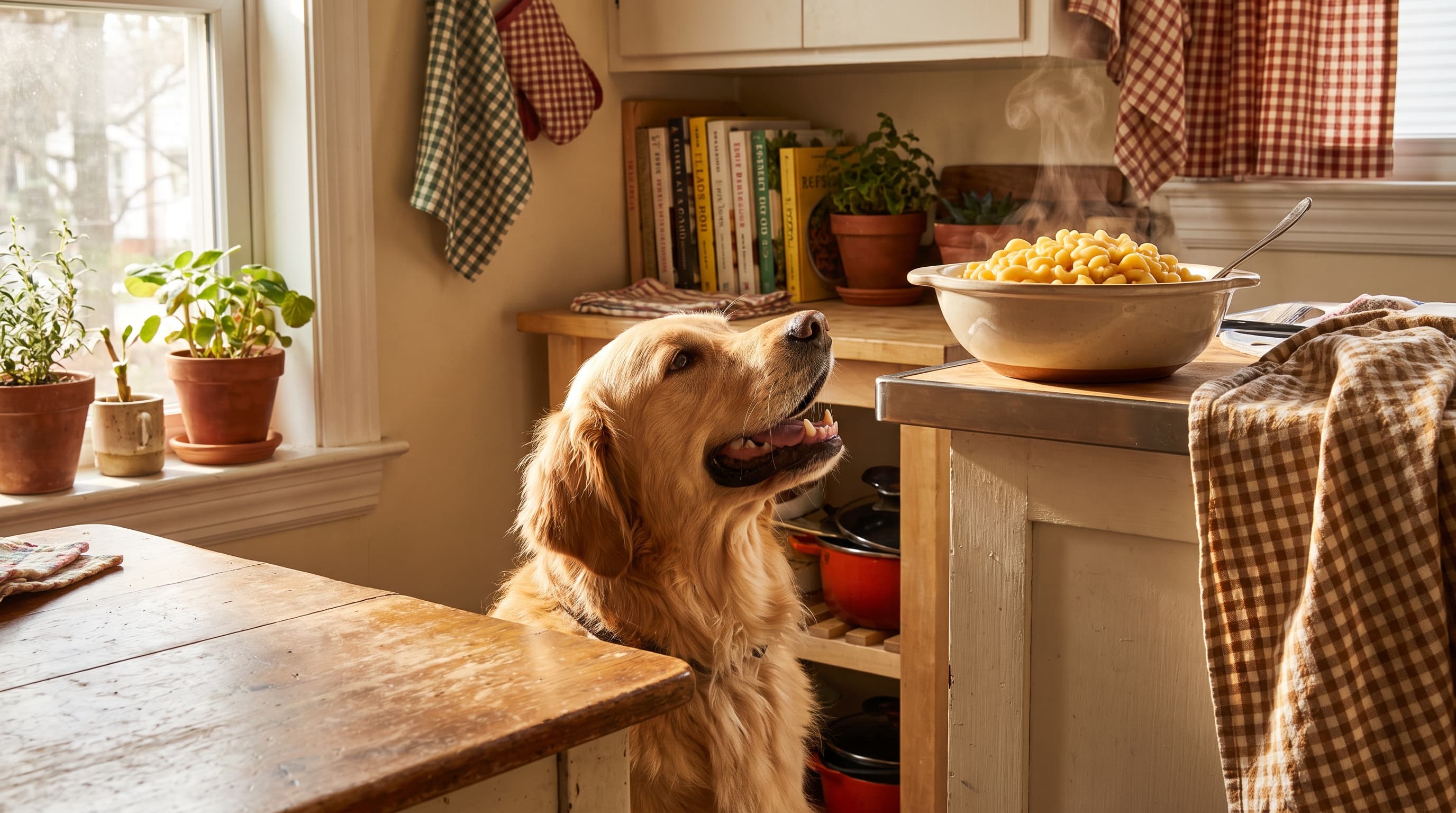

Can dogs have mac and cheese? It's best not to share it. Mac and cheese isn't toxic in a single stray noodle, but it's a poor choice for dogs: it's high in fat, salt, and lactose-heavy dairy, and many boxed or restaurant versions contain onion and garlic powder, which are genuinely toxic to dogs. A rare lick won't hurt most dogs, but it should never be a regular treat.
Is Mac and Cheese Safe for Dogs?
Plain cooked macaroni pasta on its own is not harmful to dogs. The problem is everything else in the bowl. Traditional mac and cheese combines pasta with butter, milk, cream, and large amounts of cheese, then usually adds salt and seasoning. That mix is rich, fatty, and salty in ways a dog's digestive system isn't built to handle well.
Think of mac and cheese the way you'd think of a decadent dessert for yourself: not poisonous, but not something you'd want to eat every day, and definitely not something to build a diet around. For dogs, the calorie density alone is a concern. According to veterinary nutrition guidance, treats and table scraps should make up no more than about 10% of a dog's daily calories, and a single serving of mac and cheese can blow past that limit fast for a small or medium dog.
Why Mac and Cheese Isn't Great for Dogs
Several ingredients stack up to make mac and cheese a food to avoid. Here's what's actually going on in that creamy bowl.
Dairy and Lactose Intolerance
Most dogs lose much of their ability to digest lactose after puppyhood. As PetMD notes, many dogs are lactose intolerant and can only handle small amounts of dairy before reacting with diarrhea, gas, bloating, or vomiting. Mac and cheese is essentially concentrated dairy — milk, butter, and cheese all at once — so it delivers a big lactose load in one sitting. Even dogs who tolerate a nibble of cheese may get an upset stomach from a full serving.
Fat and Pancreatitis Risk
Cheese and butter make mac and cheese a high-fat food, and fat is the bigger long-term worry. The American Kennel Club warns that feeding too much cheese can lead to weight gain, obesity, and in some cases pancreatitis, a serious and potentially fatal inflammation of the pancreas. VCA Animal Hospitals explains that a sudden fatty meal is one of the recognized triggers for a pancreatitis flare-up. Breeds prone to pancreatitis, overweight dogs, and seniors are especially vulnerable.
Sodium and Additives
Boxed and restaurant mac and cheese is loaded with salt. The ASPCA notes that excessive salt intake can cause increased thirst and urination and, in larger amounts, dangerous electrolyte imbalances, tremors, and seizures. Powdered "cheese" packets also often include artificial colors, preservatives, and flavor enhancers that add nothing beneficial to a dog's diet.
The Hidden Danger: Onion and Garlic
This is the ingredient most owners overlook. Many mac and cheese recipes — and a surprising number of boxed and frozen versions — contain onion powder or garlic powder for flavor. Both are toxic to dogs. Onions and garlic belong to the Allium family, and they cause oxidative damage to a dog's red blood cells that can lead to a condition called hemolytic anemia.
The AKC explains that onions contain N-propyl disulfide, the compound responsible for destroying red blood cells. The Merck Veterinary Manual reports that clinical signs can appear after ingestion of roughly 15–30 grams of onion per kilogram of body weight, with red-blood-cell destruction typically showing up three to five days later. Importantly, powdered forms are more concentrated than fresh, so onion and garlic powder in seasoning can be riskier by volume than a slice of raw onion. Signs to watch for include weakness, pale gums, lethargy, rapid breathing, and reddish or brown urine.
What to Do If Your Dog Eats Mac and Cheese
Don't panic if your dog snatches a forkful off the counter. For a healthy adult dog, a small amount of plain mac and cheese usually causes nothing worse than a temporary upset stomach. Here's a sensible response:
- Check the ingredients. Read the box or recall the recipe. Onion or garlic powder, or a very large amount eaten, moves this from "monitor at home" to "call the vet."
- Note how much and what size your dog is. A tablespoon for a Labrador is trivial; the same amount for a Chihuahua is a much bigger deal.
- Watch for 24–48 hours. Mild vomiting or loose stool that resolves quickly is common. Provide fresh water and hold off on the next meal if the stomach seems unsettled.
- Call your veterinarian if you see persistent vomiting, diarrhea, lethargy, pale gums, or dark urine, or if the dish contained onion or garlic. When in doubt, the ASPCA Animal Poison Control Center (888-426-4435) is available 24/7.
How Much Mac and Cheese Is Too Much?
There's no safe "serving size" of mac and cheese for dogs, because it offers no nutritional upside — only risk. If your dog happens to lick a spoon or eats a stray noodle, that's a low-stakes accident. But a full scoop, a shared bowl, or anything containing onion or garlic crosses into territory where you should be paying close attention or calling your vet. The safest number is zero as a deliberate treat. If you want to give your dog a taste of something cheesy, a single small cube of low-lactose cheese is a far better bet than pasta drenched in sauce.
Dog-Safe Alternatives to Mac and Cheese
If you want to treat your dog to something they'll love without the downsides, try these instead:
- A small cube of low-fat cheese such as mozzarella or cottage cheese, offered sparingly. See our full guide to whether dogs can eat cheese for safe portions.
- Plain cooked pasta with no sauce, salt, or seasoning, as an occasional carb treat.
- A spoonful of plain, unsweetened yogurt, which contains probiotics and is often easier on the stomach than cheese.
- Cooked plain pumpkin or steamed vegetables like green beans for a low-calorie, fiber-rich snack.
Curious about other people-food temptations? We've broken down whether dogs can safely have parmesan cheese, and why pizza and french fries land on the "skip it" list for similar reasons — fat, salt, and hidden seasonings.
Frequently Asked Questions
Can dogs eat a little bit of mac and cheese?
A tiny taste of plain mac and cheese is unlikely to harm a healthy adult dog, but it may cause mild stomach upset in lactose-intolerant dogs. It should never become a regular treat, and any version made with onion or garlic should be avoided entirely.
What happens if my dog eats a lot of mac and cheese?
A large amount can cause vomiting, diarrhea, and gas from the fat and lactose. In sensitive or overweight dogs, a rich, fatty meal can trigger pancreatitis. If the dish contained onion or garlic, watch for signs of anemia and contact your vet.
Is the cheese or the pasta the problem?
Both contribute. Plain cooked pasta is harmless in small amounts, but the cheese, butter, cream, and salt make the dish fatty and hard to digest. The seasonings — especially onion and garlic powder — are the most dangerous part.
Can puppies have mac and cheese?
No. Puppies have sensitive, developing digestive systems and need a complete, balanced puppy diet. Rich, fatty, salty foods like mac and cheese are more likely to cause digestive upset in puppies than in adult dogs.
Is boxed mac and cheese worse than homemade?
Often, yes. Boxed and frozen versions tend to be higher in sodium and more likely to include onion powder, garlic powder, artificial colors, and preservatives. Homemade can be slightly less risky if it's unseasoned, but it's still fatty and dairy-heavy.
My dog ate mac and cheese with onion — what should I do?
Call your veterinarian or the ASPCA Animal Poison Control Center (888-426-4435) right away, even if your dog seems fine. Onion toxicity signs like pale gums, weakness, and dark urine can take several days to appear, so early guidance matters.
This article is for general informational purposes and isn't a substitute for veterinary advice. If your dog has eaten something questionable or is showing symptoms, contact your veterinarian.
Love learning what's safe for your pup? Subscribe to the Daily Wag newsletter for vet-informed answers to your "can my dog eat this?" questions, delivered fresh every week.