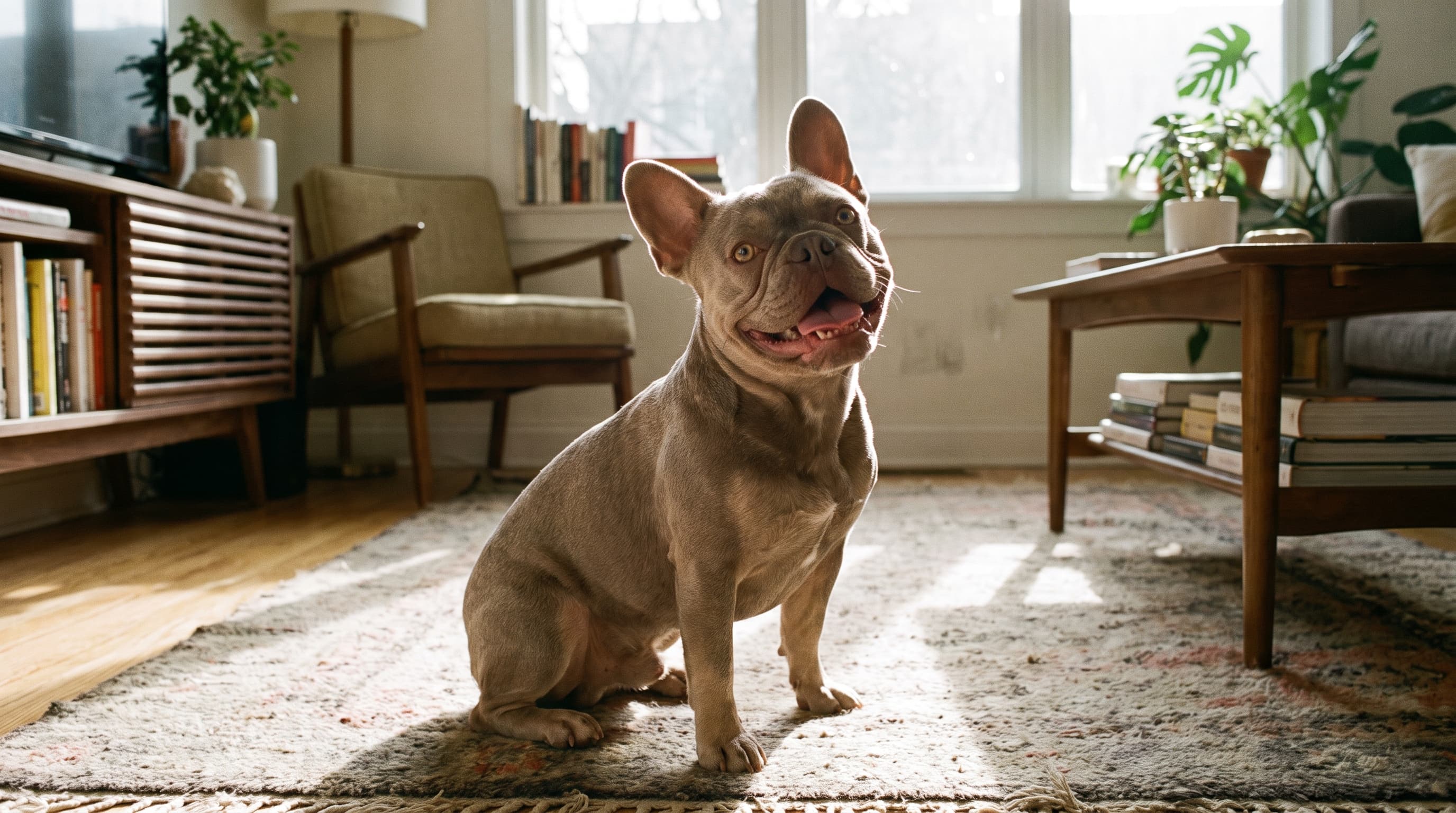

An Isabella Frenchie is a French Bulldog with a rare, diluted coat that reads as warm silvery-brown with a faint lavender cast. The color comes from a double dose of recessive genes (chocolate plus dilution), which is why Isabella Frenchies are so uncommon, so expensive, and unfortunately more prone to a skin condition called color dilution alopecia.
What Is an Isabella French Bulldog?
The Isabella French Bulldog is not a separate breed — it is a standard French Bulldog that happens to carry a specific stack of coat-color genes. "Isabella" describes the shade: a dusty, taupe-brown coat with a cool lilac or grey undertone, usually paired with light amber or greenish eyes and a self-colored (brown, not black) nose, lips, and paw pads. Because the pigment is so diluted, no part of an Isabella Frenchie is truly black.
You will often see "Isabella" and "lilac" used interchangeably, and there is real overlap. Many breeders reserve Isabella for the rarest genetic recipe — a dog that carries both the chocolate and blue dilution genes at once — while lilac is used more loosely for any silvery-lavender Frenchie. The American Kennel Club recognizes brindle, fawn, cream, and white for the French Bulldog, but it does not recognize Isabella or lilac as standard colors, so these dogs cannot be shown in conformation.
The Genetics Behind the Isabella Coat
Coat color in dogs is built from a handful of gene "switches." An Isabella Frenchie needs at least two recessive pairs working together:
- The chocolate gene (b/b): turns black pigment brown. A dog must inherit one copy from each parent to show it.
- The dilution gene (d/d): lightens whatever pigment is present, softening brown into that hazy taupe-lilac tone.
Because every one of these genes is recessive, both parents have to carry them for a puppy to be born Isabella. That genetic bottleneck is the entire reason the color is rare — and it is also why some breeders resort to tight line-breeding to reliably produce it, which raises the risk of inherited health problems. Reputable breeders DNA-test their dogs and can show you the color genotype in writing.
Isabella vs. Lilac vs. Blue: Telling the Colors Apart
Dilute Frenchies get confused constantly. Here is a quick way to keep them straight:
- Isabella: diluted chocolate base — warm, greyish-brown with a lavender wash; brown nose and light eyes.
- Lilac: often used for the same dog, but sometimes for a cooler, more silver-purple version; nose is typically self-colored.
- Blue: diluted black base — a slate or steel-grey coat with a grey (not brown) nose.
The only way to be certain is a genetic color panel, since lighting and puppy coats can fool the eye. As breed resources note, an Isabella's tell-tale sign is the brown pigment on the nose and paw pads combined with unusually light eyes.
Appearance and Size
Underneath the unusual color, an Isabella is a textbook French Bulldog: a compact, muscular small dog with the signature "bat ears," a short muzzle, a wrinkled brow, and a stocky, cobby body. Most adults stand about 11 to 13 inches at the shoulder and weigh between 16 and 28 pounds, with males on the heavier end. The coat is short, fine, and single-layered, which is why these dogs feel the cold quickly and sunburn easily on exposed skin.
Temperament and Personality
Color has no effect on personality, and Isabella Frenchies share the same lovable temperament that made the French Bulldog one of the most popular breeds in the world. They are affectionate, people-oriented lap dogs that thrive on companionship and often struggle with being left alone for long stretches. They are playful without being hyperactive, generally friendly with children and other pets, and famously stubborn in a comic, food-motivated way. Their low-to-moderate exercise needs and quiet indoor manners make them outstanding apartment dogs, provided they get daily walks and mental stimulation.
Health Concerns Every Isabella Owner Should Know
This is where the Isabella coat carries real trade-offs. Because the color depends on the dilution gene, these dogs are predisposed to color dilution alopecia (CDA), a hereditary condition the VCA describes as a recessive, inherited disorder that causes patchy hair thinning, dry flaky skin, and recurrent skin infections in dilute-colored dogs. There is currently no cure and no reliable pre-breeding test for it, though good skin care can manage symptoms.
On top of that, every Isabella is still a flat-faced (brachycephalic) breed and inherits the whole French Bulldog health profile: breathing difficulty from brachycephalic obstructive airway syndrome, heat intolerance, spinal issues like intervertebral disc disease, eye problems, and skin-fold dermatitis. The breed's documented health challenges also include a shorter average lifespan than many small breeds. Joint conditions such as hip dysplasia and luxating patellas appear as well.
This article is general information, not veterinary advice. Isabella Frenchies are a higher-maintenance dog medically — work with a veterinarian who knows brachycephalic breeds for screening, and see a vet promptly if you notice labored breathing, hair loss, or persistent skin irritation.
Grooming and Skin Care
The short coat itself is easy — a weekly once-over with a rubber curry brush and the occasional bath keep shedding low. The skin is the real job. Clean and dry the facial and body folds several times a week to prevent yeast and bacterial infections, keep baths gentle and infrequent to avoid stripping oils, and use dog-safe sunscreen or shade on that thin, lightly pigmented coat in summer. If CDA develops, a vet may recommend medicated shampoos and moisturizing routines to keep the skin comfortable.
Daily Life, Exercise, and Living Environment
Isabella Frenchies are low-energy homebodies, which is a big part of their appeal. Two or three short walks and some indoor play usually cover their exercise needs — but timing matters. Because they're brachycephalic and their thin coat offers little protection, walk them in the cool parts of the day, avoid strenuous activity in heat or humidity, and never leave them in a warm car or yard. They can't cool themselves efficiently by panting the way longer-nosed breeds do, so heat is a genuine danger. In cold weather, that same short single coat means they'll want a sweater. They're a natural fit for apartments and condos, don't need a yard, and generally do best as indoor companions who are rarely left alone for long periods.
Cost and Finding a Responsible Breeder
Isabella is one of the most expensive French Bulldog colors on the market, frequently running from $5,000 to well over $20,000 depending on pedigree and the exact dilute genotype. That price tag attracts backyard breeders and puppy mills chasing a trend, which is exactly the wrong place to buy a dog already predisposed to skin and airway problems. Insist on: written health testing of both parents, a color DNA panel, in-person or video meetings with the litter, and a breeder who asks you as many questions as you ask them. Walk away from anyone selling "rare" Frenchies at bargain prices or unwilling to show health records.
Is an Isabella Frenchie Right for You?
An Isabella is a wonderful companion for someone who wants a devoted, low-energy small dog and goes in clear-eyed about the medical realities and cost. If your heart is set on the color, budget for pet insurance and routine vet care, prioritize a healthy dog over a picture-perfect shade, and consider that a standard-colored Frenchie from health-tested lines is often the safer — and far cheaper — path to the same big-eared, snuggly companion.
Frequently Asked Questions
Are Isabella Frenchies purebred French Bulldogs?
Yes. An Isabella Frenchie is a purebred French Bulldog carrying recessive dilute coat-color genes. It is not a mix. However, because Isabella is not an AKC-recognized color, these dogs cannot compete in conformation shows.
Why are Isabella French Bulldogs so expensive?
The color requires both parents to carry rare recessive genes, so producing an Isabella litter is genetically difficult. High demand for "rare" colors plus limited supply pushes prices into the five-figure range.
Are Isabella Frenchies less healthy than standard French Bulldogs?
They share every standard French Bulldog health risk plus a predisposition to color dilution alopecia tied to the dilution gene. Responsible breeding and good veterinary care reduce, but do not eliminate, these risks.
What is the difference between Isabella and lilac Frenchies?
The terms overlap heavily. Both are dilute, silvery-brown Frenchies. Many breeders use "Isabella" for the specific double-dilute chocolate genotype and "lilac" more broadly, but only a DNA color panel confirms the exact genetics.
What color eyes and nose does an Isabella Frenchie have?
Because their pigment is diluted, Isabellas typically have a brown (self-colored) nose, lips, and paw pads, along with light amber, hazel, or greenish eyes rather than dark brown.
How long do Isabella French Bulldogs live?
Most live roughly 10 to 12 years. Lifespan depends heavily on breeding quality, weight management, and how well brachycephalic and skin issues are managed with veterinary support.
Keep Exploring
Fell for those bat ears? Read our full French Bulldog breed guide and learn how to protect a flat-faced dog in summer with French Bulldog heat stroke warning signs. Curious about other unique-looking dogs? Browse our guide to brindle dogs. And to get breed deep-dives, health tips, and dog-parenting guides delivered to your inbox, subscribe to the Daily Wag newsletter.