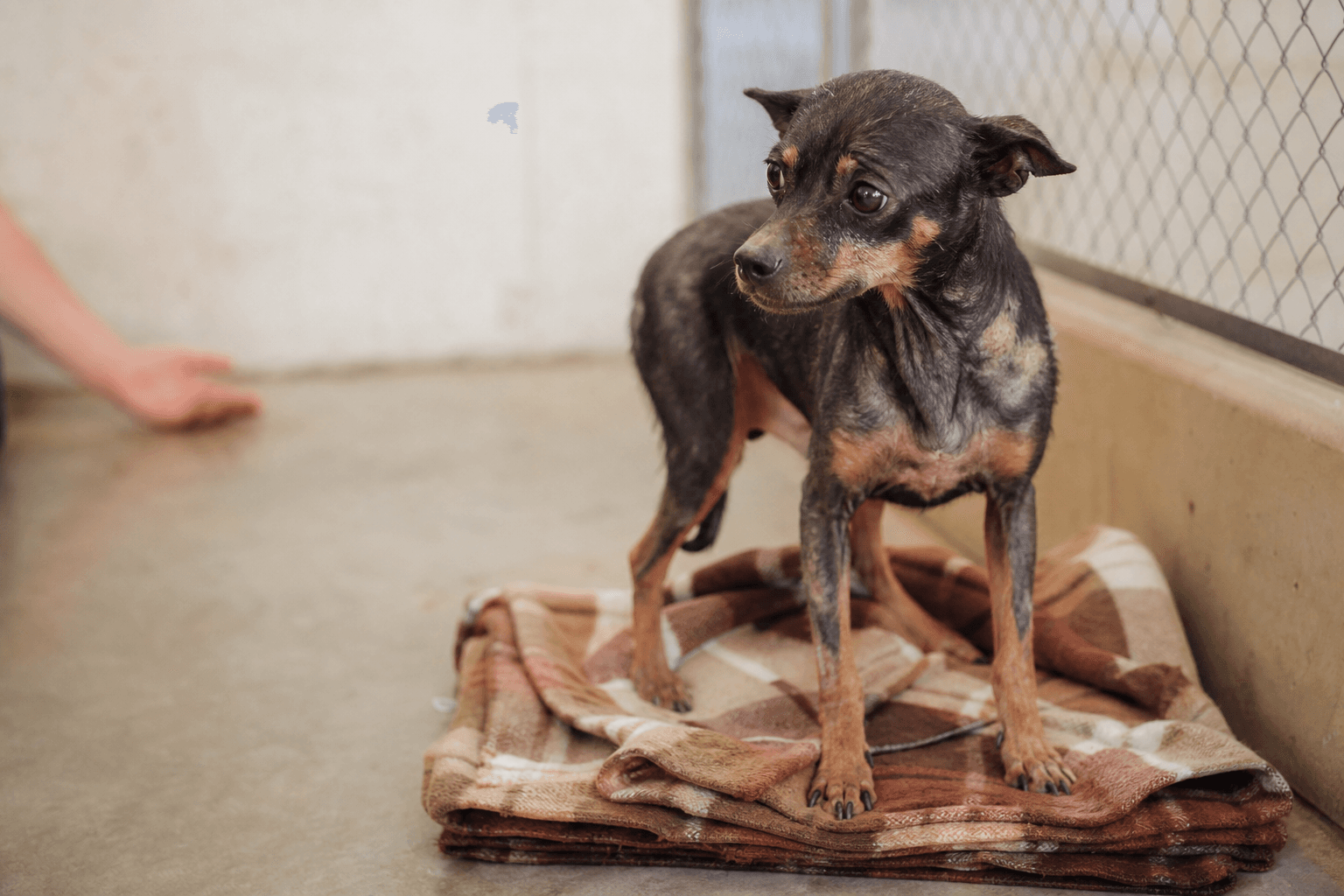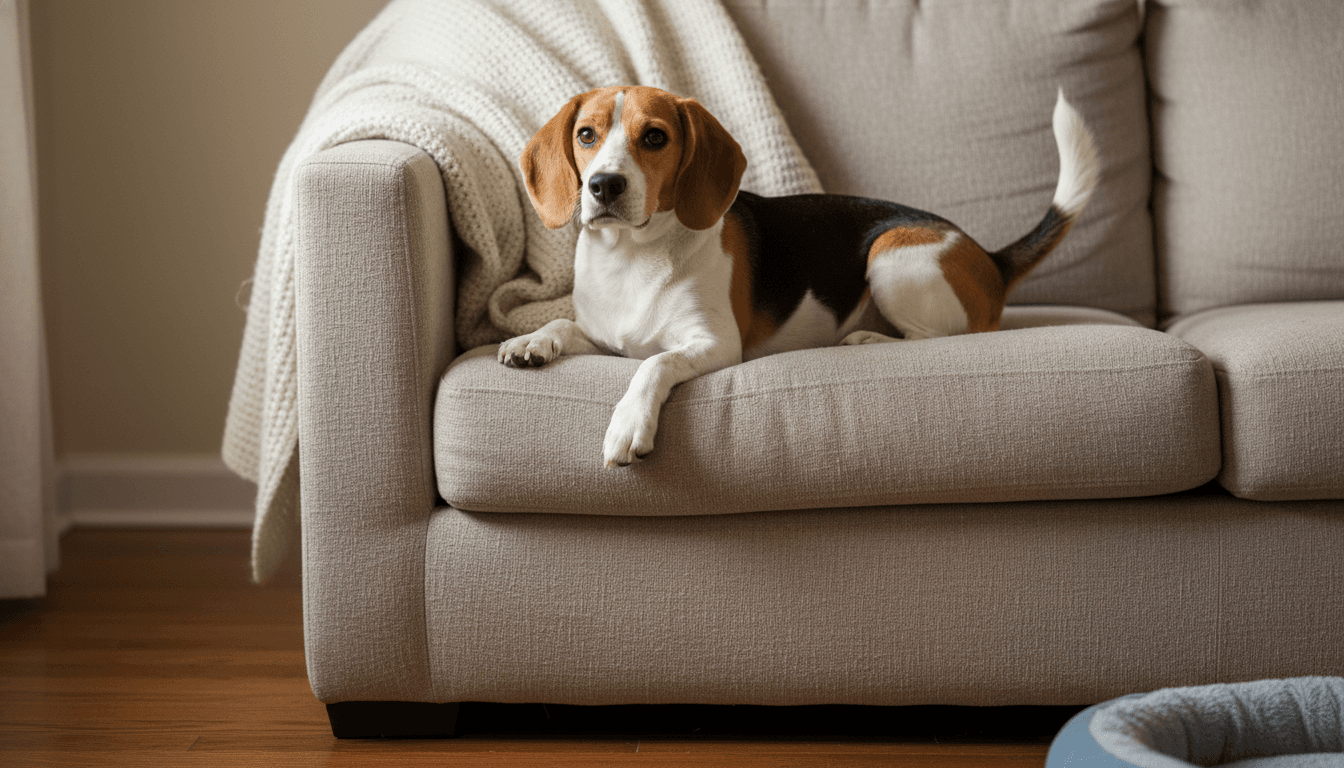

On Friday afternoon, a four-year-old beagle named "Beagie Smalls" sat in a kennel at the Wisconsin Humane Society's Green Bay campus. He had spent his entire life inside a commercial breeding facility called Ridglan Farms, where dogs are bred to be sold to laboratories for medical and pharmaceutical testing. Within 90 minutes of becoming available for adoption, he had a new name — Merle — and a home in Little Suamico, Wisconsin, with John Kolstad and six other dogs. If this caught your interest, don't miss 2,000 Beagles Are Waiting to Be Freed From a Wisconsin Farm.
Merle is one of more than 1,500 beagles that Big Dog Ranch Rescue and the Center for a Humane Economy purchased from Ridglan Farms in late April. It's the largest single release of laboratory-destined beagles in U.S. history — bigger than the 4,000-dog Envigo rescue of 2022, which is widely credited with pushing the testing industry toward greater scrutiny.
"He's shy to be picked up, but once you pick him up, he loved to be held and pet," Kolstad told reporters. "His confidence, his tail is held high, he's starting to play with the other dogs."
Stories like Merle's are about to play out 1,499 more times across America over the next several months — and a lot of new adopters are going to find out, quickly, that a rescue beagle who has never seen grass or felt a leash is its own kind of dog.
What just happened at Ridglan Farms
Ridglan Farms, a USDA-licensed facility in Mount Horeb, Wisconsin, has been one of the country's largest suppliers of beagles to medical research labs for decades. The dogs are bred and raised in indoor kennels and sold by the hundreds.
For years, animal-welfare groups have tried — and failed — to shut the facility down through the courts. The math shifted in April. Activists from the Nonhuman Rights Project and other groups had documented roughly 1,900 beagles inside Ridglan on April 18. Within two weeks, a coalition led by Big Dog Ranch Rescue and the Center for a Humane Economy negotiated a purchase agreement covering 1,500 of those animals.
Big Dog Ranch Rescue president Lauree Simmons said the purchase price was "well under" $1 million, and that buying the dogs outright was the only viable option. "Money was the only way we could guarantee the safe future of these dogs," she said.
Wayne Pacelle, who leads the Center for a Humane Economy, has been candid that the dogs will need a long runway at home. They are healthy. They are also not socialized to people, not housetrained, and have never set paw outside a kennel.
Where the dogs are going
The 1,500 dogs are being distributed through a network of partners:
- Beagle Freedom Project is placing 500 of the beagles through 34 partner rescue organizations across multiple states. Foster and adoption applications closed within days of opening.
- Dane County Humane Society in Wisconsin is providing vaccinations and basic medical care to 500 dogs, with roughly 50 going up for local adoption in coming weeks.
- Wisconsin Humane Society has been taking in groups of dogs at its Green Bay and Milwaukee campuses — that's where Merle's adopter found him.
- Several hundred dogs will stay in Wisconsin; more than 1,000 are headed to homes in other states, including families in Ohio's Miami Valley, New York, and Florida.
That distribution is moving fast, and demand for these adoption slots has been enormous. If you're not already approved as a foster or adopter with one of these organizations, the realistic move right now is to support the work financially or sign up for a future cohort — both Pacelle and Simmons have said they want to come back for the dogs still inside the facility.
What lab-survivor beagles need at home
A dog that has spent four years in a stainless-steel kennel is, in some ways, a puppy in an adult body. They have to learn things most dogs learn at eight weeks: stairs, grass, leashes, doorways, the existence of a couch. Veterinarians and behaviorists who worked with the Envigo cohort and earlier lab releases say a few patterns hold across nearly every dog.
1. They imitate other dogs faster than they imitate people
This is why Merle's adoption story includes six other dogs. Multi-dog households, or households with a confident "demonstrator" dog, tend to onboard lab survivors significantly faster. "Having our other dogs here, he's been adjusting well," Kolstad said. "I see improvements every day." If you live with a calm resident dog, you're already ahead. If you don't, foster-based introductions to friendly neighborhood dogs can help fill in.
2. They need predictability before they need exposure
The instinct to "socialize" a new rescue by introducing them to friends, dog parks, and city streets can backfire badly with lab survivors. They need a quiet, predictable schedule for the first several weeks — same feeding times, same walking route, the same two or three humans. Adventures come later, and they come slowly. For a deeper dive, check out Scientists Just Released the First-Ever Guidelines for Dog Dementia.
3. Housetraining usually starts from zero
Kenneled dogs typically have no concept of "outside is the toilet." Most lab survivors can be housetrained, but it takes weeks of structured potty trips, not days. Expect setbacks. Crate and pen setups designed for puppies tend to work well for the first month.
4. The first walk may be terrifying
The clip of a leash on a collar is, to a lab-survivor dog, a wholly unfamiliar sensation. Outdoor surfaces — concrete, grass, gravel — can cause panic or freezing. Many rescue groups recommend starting with a harness, letting the dog drag the leash inside the house for a few days, and only then attempting short trips into the yard.
5. Quiet wins are still wins
"His tail is held high" is the kind of sentence that means a lot in this world. Lab survivors often arrive with tucked tails and flat body language. The first time a dog wags, accepts a hand, or chooses to lie next to a human is a real milestone — not a small one. Adopters who measure progress in those quiet wins tend to keep their patience longer.
The fight isn't over
The 1,500 dogs in the current deal do not account for every animal at Ridglan. Hundreds remain inside the facility, and the federal taxpayer-funded research pipeline that uses beagles for toxicology testing is unchanged.
That fight is now playing out in Congress. Rep. Mark Pocan (D-WI) passed a bipartisan House amendment in May requiring federal USDA oversight when states revoke a research-breeding license. The Healthy Dog Importation Act (H.R. 3349), which passed the House on April 30 and would tighten standards for dogs entering the U.S., is now waiting in the Senate. Rep. Nick Langworthy (R-NY), who visited Ridglan, was blunt about what he saw: "2,000 of them in one facility was gross."
At the state level, Wisconsin's "Beagle Freedom Bill," which would have required healthy dogs from research facilities to be released for adoption rather than euthanized at the end of a study, died on the Senate floor this spring. Advocates expect it to return next session.
How to help if you can't adopt
If foster lists are full and a Ridglan beagle isn't in the cards for you right now, there are still ways in:
- Donate to a partner rescue. Medical costs for each dog are running between $500 and $1,200, on top of basic supplies. Beagle Freedom Project, Big Dog Ranch Rescue, Wisconsin Humane Society, and Dane County Humane Society are all accepting designated Ridglan donations.
- Apply for the next wave. Both Big Dog Ranch and BFP have said they plan to negotiate for the remaining Ridglan beagles. If you can't help now, you may be able to in the fall.
- Support the legislation. Wisconsin residents in particular have outsized leverage on the next attempt at the Beagle Freedom Bill. Federally, the Healthy Dog Importation Act is still moving in the Senate.
If Merle's first week is any indication — six dogs to learn from, a patient adopter, a tail that started low and is now held high — the story of the Ridglan 1,500 is going to be one of the most heartening dog stories of the year. And there are still 1,499 of them to go.
Sidewalk Dog covers training, behavior, and rescue stories every week. If you're new to working with a fearful or under-socialized dog, our piece on how dogs learn from the humans around them is a useful starting point — and you can find more in our articles section.