
Redbone Coonhound: The Complete Breed Guide
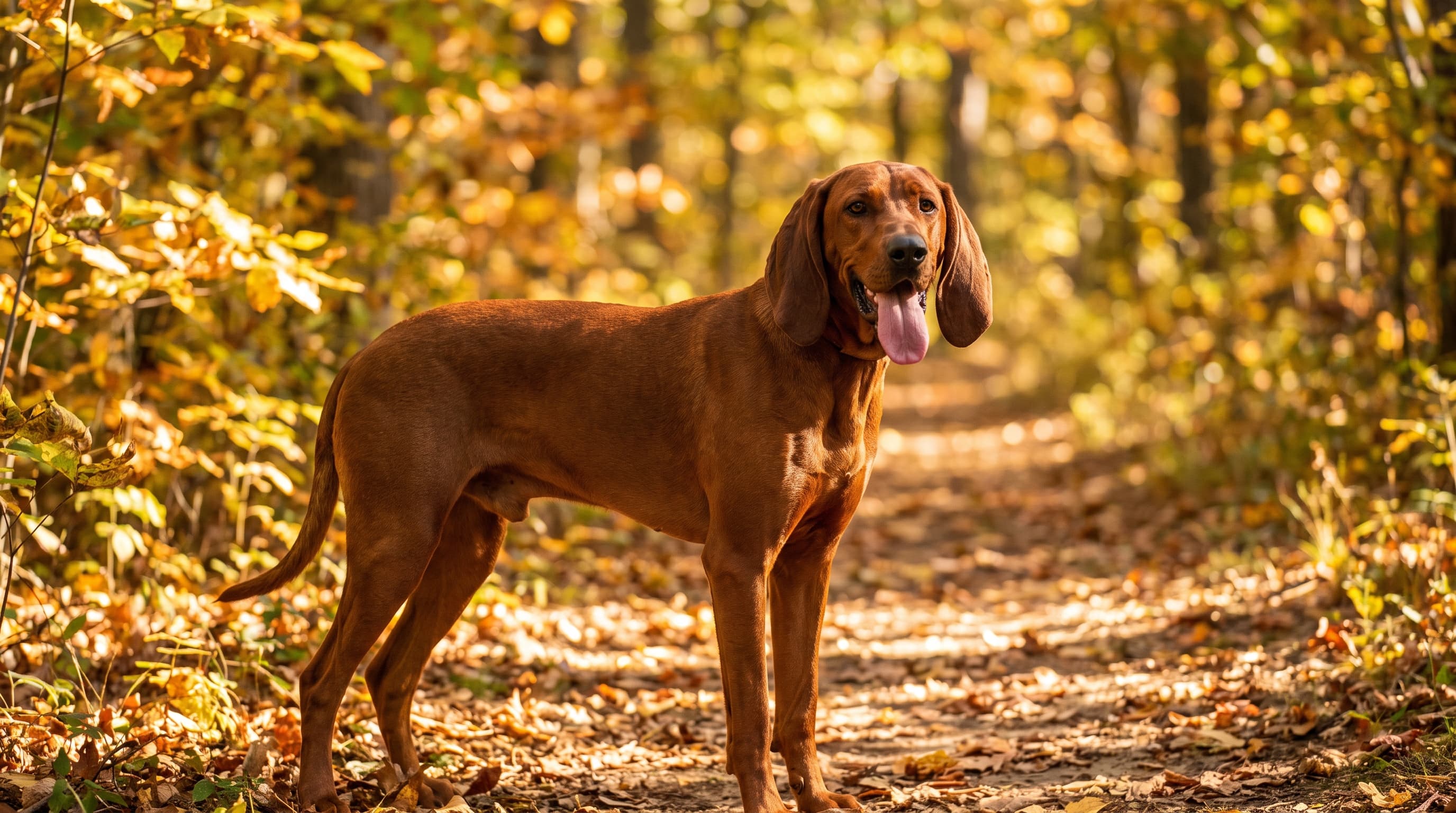
The Redbone Coonhound is a medium-to-large American scenthound bred to trail and tree raccoons, standing 21–27 inches tall and weighing 45–70 pounds. Known for its striking solid-red coat, mellow family manners, and relentless drive on the hunt, it lives 12–15 years and thrives with active owners who can meet its high exercise needs.
What Is a Redbone Coonhound?
The Redbone Coonhound is one of six recognized coonhound breeds and a true American original. It was developed in the American South to hunt raccoons and other small game by scent, driving them up trees and "baying" — a loud, musical howl — to signal the hunter. Today the same qualities that make it a tireless tracker also make it a devoted, easygoing companion at home.
According to the American Kennel Club, the breed is "even-tempered and kindly at home, but a tiger on the trail." That dual nature — calm couch dog by evening, driven athlete by day — is the single most important thing to understand before bringing one home. If you love hiking, running, or hunting and want a affectionate, low-maintenance dog to share it with, the Redbone belongs on your shortlist. If you want a quiet apartment pet, it almost certainly does not.
History and Origins
The Redbone's roots reach back to red foxhounds brought to Georgia by Scottish immigrants in the early 19th century. Around 1840, breeders added Irish-bred foxhound and bloodhound lines to sharpen scenting ability and cold-nose tracking, per breed histories. The name is generally traced to an early breeder, Peter Redbone of Tennessee, although much of the foundational work happened in Georgia.
Early Redbones sometimes carried a black "saddle," but breeders selected deliberately for the now-signature solid red coat. The United Kennel Club recognized the breed in 1902, while the American Kennel Club granted full recognition much more recently, in 2010. Generations of selection for hunting versatility mean the modern Redbone can track raccoon, opossum, and squirrel, and has been used on game as large as bear and cougar.
Appearance and Size
The Redbone is built for endurance: lean, muscular, and balanced, with a slightly longer-than-tall silhouette. Males typically stand 22–27 inches at the shoulder and females 21–26 inches, with weight ranging roughly 45–70 pounds. The coat is short, smooth, and coarse enough to protect the dog in rough brush and cold water.
Color is the breed's calling card: a rich, solid red ranging from deep chestnut to mahogany. A small amount of white on the chest and feet is permitted by the standard. Add expressive dark-brown eyes, long velvety ears, and that famously "pleading" houndy expression, and you have one of the most photogenic dogs in the scenthound family.
Temperament and Personality
At home, Redbones are affectionate, playful, and genuinely people-oriented — often called the most cuddly of the coonhounds. They bond closely with their families and can develop separation anxiety if left alone too long. Early, consistent socialization brings out a dog that is good with children and other dogs alike, though their boisterous energy suits homes with older kids better than toddlers.
Two instincts define daily life with a Redbone: prey drive and voice. A strong nose and hunting heritage mean small pets like cats can trigger a chase, and a securely fenced yard plus a reliable leash are non-negotiable. The breed's deep, carrying bay is beautiful in the woods and challenging in a townhouse — worth weighing carefully if you have close neighbors. Learn more about managing a big voice in our guide to managing your dog's barking.
Exercise, Training, and Grooming
The Redbone is a high-energy working dog that needs a solid hour or more of vigorous daily exercise — long walks, trail runs, swimming, or scent games. A bored, under-exercised Redbone will bay, dig, and find its own entertainment. These dogs make outstanding trail partners; pack the right kit from our roundup of the best dog hiking gear before you hit the woods.
Training rewards patience. Redbones are intelligent but independent, bred to make decisions on a scent trail far from their handler, so expect some selective hearing. Positive, reward-based methods work far better than corrections; short, upbeat sessions and a reliable recall built indoors first pay off. Our primer on clicker training is a great starting point for a food-motivated hound.
Grooming is refreshingly simple. A weekly once-over with a rubber curry or hound glove controls the moderate shedding, and the short coat needs only occasional baths — though the breed does carry a characteristic "houndy" musk. The bigger maintenance job is those gorgeous drop ears, which trap moisture and are prone to infection; check and gently clean them weekly.
Health and Lifespan
Redbone Coonhounds are generally hardy, with a typical lifespan of 12–15 years, but responsible buyers should know the breed's health watch-list. Hip dysplasia — an inherited malformation of the hip joint — appears in the breed, so look for a breeder who screens breeding stock through the OFA or equivalent hip evaluations. Chronic ear infections are common in any drop-eared hound and are largely preventable with routine cleaning.
As a deep-chested, active breed, the Redbone also carries some risk of bloat (gastric dilatation-volvulus), a sudden, life-threatening emergency. Because these dogs work in raccoon country, owners should also be aware of coonhound paralysis (acute polyradiculoneuritis), a temporary but frightening paralysis that can develop 7–11 days after contact with raccoon saliva. This article is general information only and is not a substitute for veterinary care — if your dog shows sudden weakness, a bloated abdomen, or persistent ear pain, contact your veterinarian promptly, and build a relationship with a vet you trust for routine screening and preventive care.
Is a Redbone Coonhound Right for You?
The ideal Redbone home has a securely fenced yard, an active lifestyle, tolerance for a loud voice, and time for a dog that wants to be part of the family. They excel with hikers, runners, hunters, and rural or suburban households. They struggle in apartments, in homes where they're alone all day, or with owners expecting instant off-leash obedience. Puppies from a reputable breeder generally run $500–$1,500, though adoption through coonhound rescues is often far less and fills a real need.
Frequently Asked Questions
Are Redbone Coonhounds good family dogs?
Yes. Well-socialized Redbones are affectionate, patient, and devoted to their people, and they generally do well with children and other dogs. Their size and exuberance make them a better fit for families with older kids than for homes with toddlers.
Do Redbone Coonhounds bark or howl a lot?
They do. The breed's signature bay is a loud, carrying howl that they use enthusiastically, especially when bored or on a scent. Consistent training and plenty of exercise help, but this is not a naturally quiet breed and can be a challenge in close quarters.
How much exercise does a Redbone Coonhound need?
Plan on at least 60 minutes of vigorous activity every day, plus mental enrichment. Hiking, running, swimming, and scent-based games are ideal. An under-exercised Redbone will become vocal, destructive, and hard to live with.
Are Redbone Coonhounds easy to train?
They're intelligent but independent, bred to think for themselves on a trail. They respond best to patient, reward-based training and early socialization. Recall is the hardest skill because their nose can override their ears, so a fenced yard and leash are essential.
How much does a Redbone Coonhound cost?
A puppy from a health-screening breeder typically costs $500–$1,500. Adopting through a coonhound or hound rescue usually costs a fraction of that and gives a deserving dog a home.
The Bottom Line
The Redbone Coonhound is a handsome, warm-hearted athlete that rewards active owners with loyalty and companionship — and tests everyone else with its voice, nose, and boundless energy. If your life has room for long trails and a big personality, few dogs are more devoted. Explore more scenthounds in our guides to the Bluetick Coonhound and the endlessly capable Catahoula Leopard Dog, and subscribe to the Daily Wag newsletter for breed spotlights, training tips, and adventure gear picks delivered to your inbox.