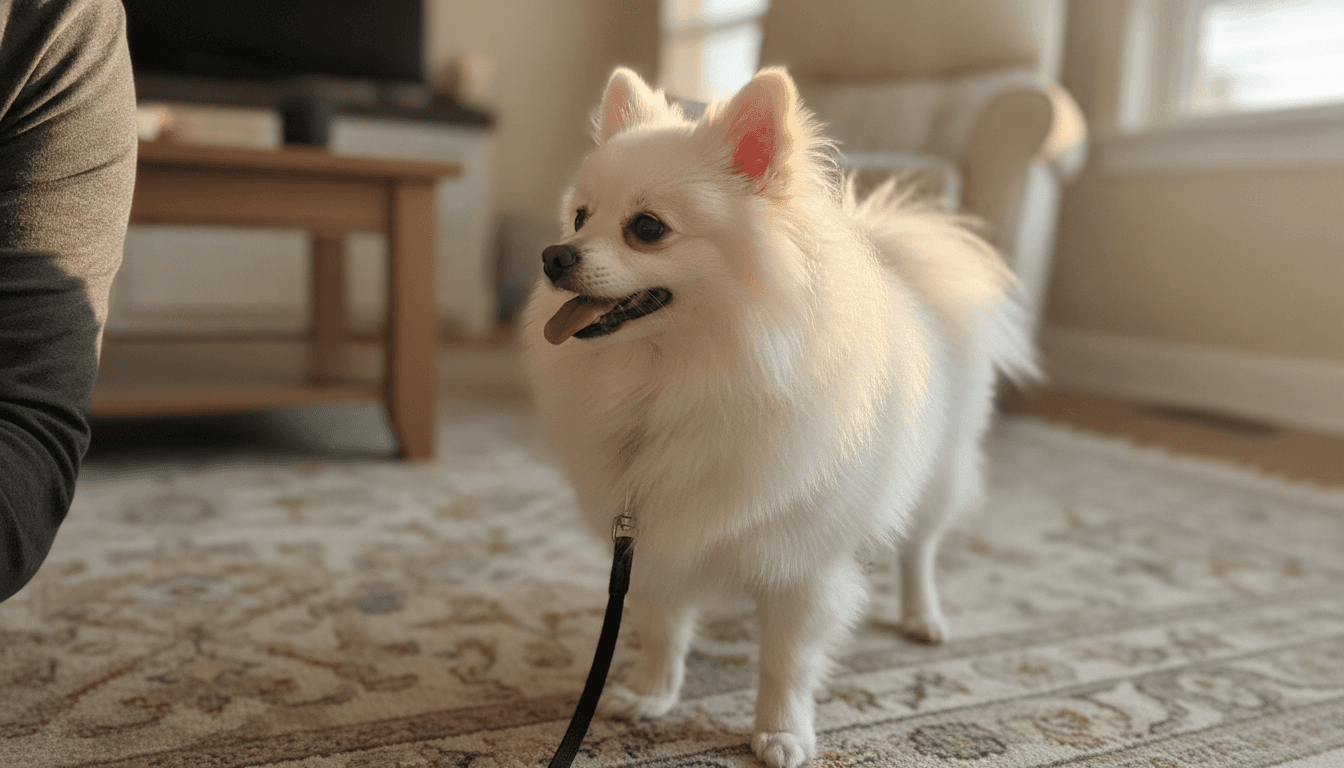

A white Pomeranian is a Pomeranian with a pure, snow-white coat and solid black points — black nose, eye rims, lips, and paw pads — and no cream, lemon, or biscuit shading anywhere. True whites are among the rarest Pom colors because so many warmer-toned genes dominate the breed. Many puppies sold as "white" are actually cream or lighten with age.
What Makes a Pomeranian Truly White?
A genuine white Pomeranian has an even, ice-white coat from root to tip with crisp black pigment on the nose, lips, eye rims, and pads. According to Pomeranian breed specialists, the absence of any cream, tan, or "biscuit" tint is what separates a true white from the far more common cream Pom. Hold the coat in natural daylight: if you see warm or yellow undertones, the dog is cream, not white.
Black points matter as much as coat color. A white Pom with brown or liver-colored pigment instead of black is considered a different color variety. The combination of bright white fur and dark, well-defined features is precisely what gives the white Pomeranian its dramatic, fox-like look.
Why White Pomeranians Are So Rare
White is one of the hardest Pomeranian colors to breed reliably. As Pomeranian color guides note, the breed's gene pool is dominated by warmer colors like orange, red, sable, and cream, which easily reintroduce shading. To produce a stable true white, breeders generally need solid-white ancestry running back several generations with no other color appearing — a slow, selective process.
This rarity is reflected in price. White Pomeranian puppies often command a premium over standard orange or sable Poms, with ice-white examples from established lines reaching into the thousands of dollars depending on lineage and region.
White Pomeranian Puppies: How the Coat Develops
Newborn white Pomeranians often arrive ice-white with pink, undeveloped points. Over the first several weeks the nose, eye rims, and pads should darken to black, while the coat ideally stays white. This is a key checkpoint for buyers: a puppy whose coat begins warming toward cream by 8–12 weeks will usually mature into a cream adult, not a white one.
Because color can shift, reputable breeders are honest about whether a puppy is a true white or a light cream. If color is important to you, ask to see the parents and grandparents and look for consistent white pigment across the line.
Size, Coat, and Grooming
White Pomeranians are identical to other Poms in build: a tiny spitz-type toy dog typically weighing 3–7 pounds and standing 6–7 inches tall, per the AKC breed standard. They carry a thick double coat with a soft undercoat and a longer, stand-off outer coat that creates the signature pom-pom silhouette.
White coats demand extra grooming attention. They show dirt, tear stains, and grass marks more obviously than darker colors, so plan on brushing several times a week and gentle face cleaning to manage staining. Poms shed seasonally; consistent brushing keeps loose undercoat under control. Our guide to reducing dog shedding has practical tips that apply well to double-coated toys.
Temperament and Living With a White Pom
Coat color has no bearing on personality, and white Pomeranians have the same bold, curious, lively temperament the breed is known for. They're affectionate, alert, and surprisingly confident for their size, which makes them excellent watchdogs but also prone to barking if it isn't managed early. They adapt beautifully to apartments thanks to their tiny size.
Like all Poms, they're intelligent and trainable but can be a touch stubborn, so positive, consistent training works best. If you're drawn to spitz-type toys, you might also enjoy the Chinese Pomeranian and the spitz-Husky cross Pomsky.
Health Considerations
White Pomeranians share the breed's general health profile. Common concerns across Pomeranians include luxating patella, collapsing trachea, dental disease, and hypoglycemia in very small puppies, as outlined in breed health references. Their small mouths make routine dental care especially important.
This is general information, not veterinary advice. For guidance on your individual dog's health, screening, or any symptoms, please consult your veterinarian.
White Pomeranian vs. Cream and Other Light Colors
The single biggest point of confusion for buyers is telling a true white apart from the breed's many light shades. Cream Pomeranians are by far the most common look-alike: they carry the same pale appearance but with warm, buttery undertones that become obvious next to a genuine white. "Biscuit" and "lemon" describe even subtler warm tints. There are also white-based patterns — such as parti-color Poms, which are white with patches of another color, and the rare "ice white" prized for its cool, almost bluish brilliance.
A practical test is to lay the Pom's coat against a sheet of pure white paper in daylight. A true white will blend in, while a cream or biscuit coat will read as noticeably warmer. Because young puppies often look whiter than they will as adults, color verification is most reliable once the coat matures and after seeing the parents' true shades.
Training a White Pomeranian
White Pomeranians are bright, eager learners with a streak of independence typical of spitz breeds. They respond best to short, upbeat, reward-based sessions and can master obedience basics, tricks, and even agility for their size. Two training priorities stand out for the breed. The first is barking: Poms are alert and vocal, so teaching a reliable "quiet" cue early prevents nuisance barking, especially in apartments. The second is socialization — small dogs that aren't exposed to new people, dogs, and situations can become timid or snappy, so positive early experiences matter.
Housetraining a toy breed takes patience and consistency because of their tiny bladders; a predictable schedule and generous rewards speed the process. Avoid harsh corrections, which tend to make sensitive Poms anxious rather than compliant.
Exercise and Daily Life
Despite their size, white Pomeranians are energetic and playful and need daily activity to stay balanced. A couple of short walks plus indoor play and training games are usually enough to satisfy them. Their thick double coat makes them sensitive to heat, so exercise during the cooler parts of the day in summer and always provide shade and water. In winter, many Poms enjoy the cold but still appreciate protection from ice and salt on tiny paws. Because they bond intensely with their people, Poms dislike long stretches alone and do best in homes where someone is around for much of the day.
A Brief History of the Pomeranian
Today's tiny Pomeranian is the downsized descendant of much larger spitz-type sled and working dogs from the Arctic, by way of the Pomerania region along the Baltic Sea. Early Pomeranians weighed 20 pounds or more — closer to a small sled dog than a lap dog, reflecting the breed's spitz family roots. The breed shrank dramatically over the 19th century, famously championed by Queen Victoria, whose preference for smaller Poms helped drive the breed toward the toy size we recognize now.
White holds a special place in that history. Many of the larger ancestral spitz dogs were white, so in a sense the white Pomeranian echoes the breed's heritage even though decades of breeding for fashionable oranges, reds, and sables later pushed white into rarity. Understanding this background helps explain both the breed's bold, hardy personality — pure spitz — and why recovering a consistently white line takes such dedicated, generations-long effort from breeders. The breed's spitz ancestry and royal popularization are well documented in breed history records, and that lineage is part of why even a three-pound white Pom still acts like a much bigger dog.
For prospective owners, this history carries a practical lesson: prioritize health, temperament, and honest color representation over the novelty of "rare white." A reputable breeder who breeds for sound structure, good patellas, and stable temperament — and who is upfront about whether a puppy is truly white or cream — is worth far more than one marketing color alone. Breed-rescue organizations are also a wonderful place to find Pomeranians of every shade, including the occasional white, in need of homes.
Frequently Asked Questions
Are white Pomeranians rare?
Yes. True whites are among the rarest Pomeranian colors because warmer genes dominate the breed, and producing a stable white requires many generations of solid-white ancestry.
How can I tell a white Pomeranian from a cream one?
Look at the coat in natural daylight. A true white is pure ice-white with no warm tint, while a cream Pom shows yellow, tan, or biscuit shading, especially on the ears and back.
Do white Pomeranian puppies stay white?
Not always. Some lighten toward cream as they mature. Checking the puppy's coat at 8–12 weeks and viewing the parents helps predict the adult color.
How much does a white Pomeranian cost?
Because of their rarity, white Poms typically cost more than standard colors, often ranging from roughly $1,500 to several thousand dollars depending on lineage and breeder.
Are white Pomeranians good apartment dogs?
Yes. Their tiny size and adaptable nature make them well suited to apartments, though early training helps curb the breed's tendency to bark.
Is a White Pomeranian Right for You?
A white Pomeranian is a stunning, spirited companion — best for owners who appreciate its rarity, can commit to the grooming a bright coat demands, and want a confident little dog with a big personality. Explore related breeds like the Chinese Pomeranian and the Pomsky, and subscribe to the Daily Wag newsletter for more breed guides, grooming advice, and dog news delivered to your inbox.