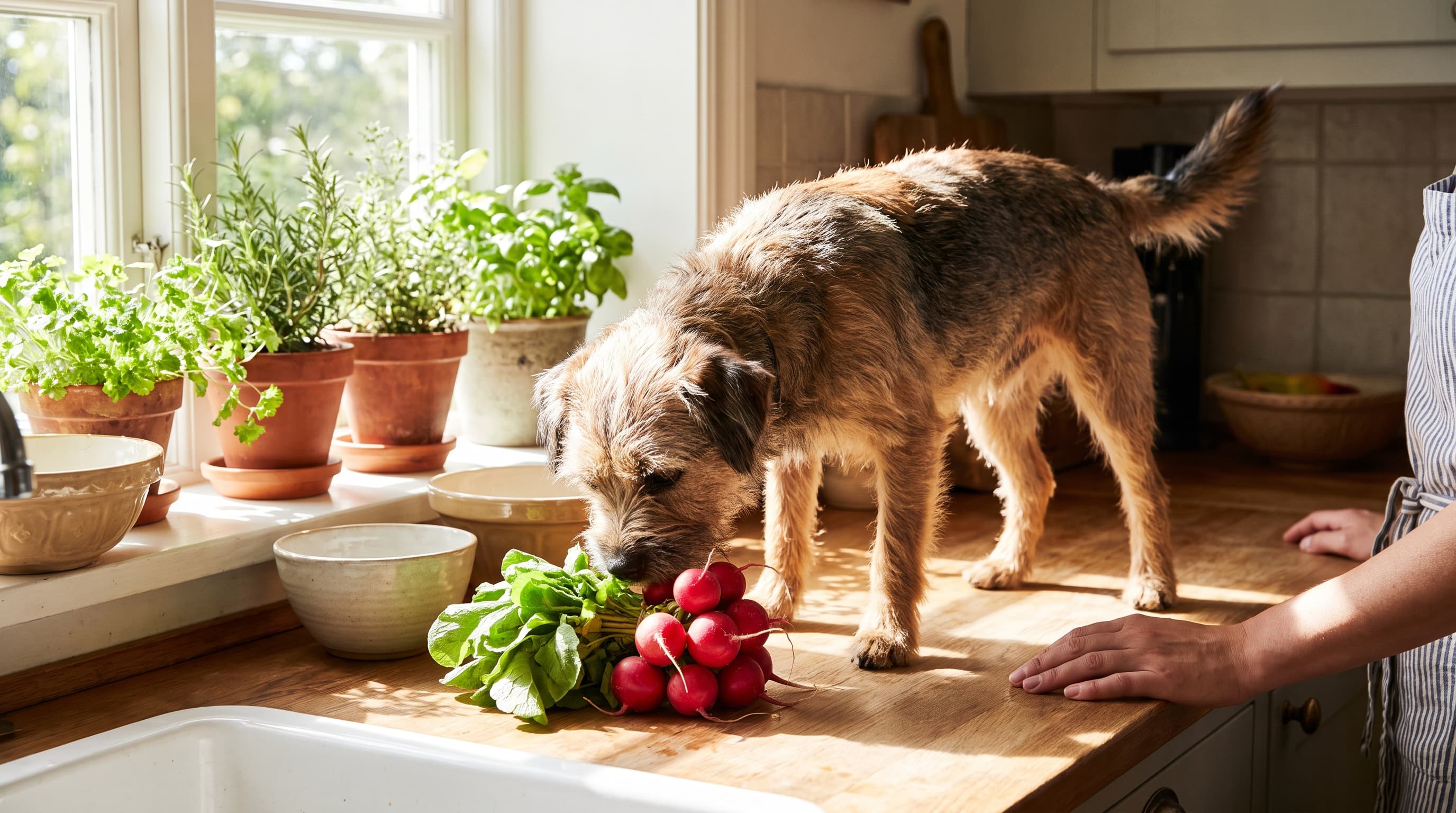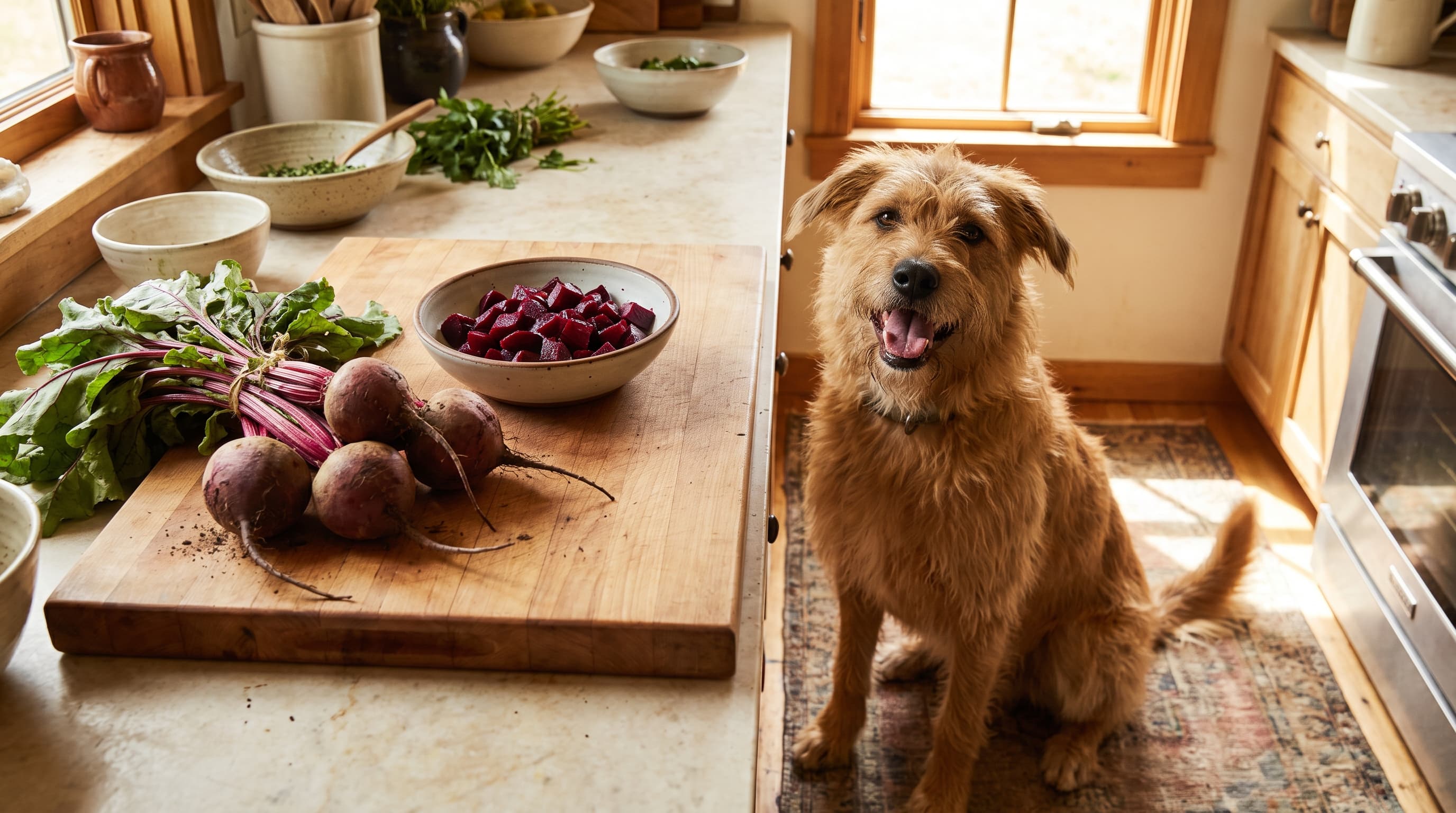

Can dogs eat beets? Yes—plain, cooked or raw beets are safe for most dogs in small amounts and offer fiber, folate, and antioxidants. Serve them peeled, washed, and unseasoned, no more than a few times a week. Skip canned or pickled beets, and check with your vet first if your dog is prone to kidney or bladder stones.
Are Beets Safe for Dogs?
Beets are not toxic to dogs, and you'll even find beet pulp listed as a fiber source in many commercial dog foods. Fed as an occasional fresh snack or food topper, beets can support healthy digestion and a glossy coat thanks to their fiber and micronutrient content, according to the American Kennel Club. The key word is moderation: beets are higher in natural sugar and carbohydrates than many vegetables, so they should be treated as a once-in-a-while extra rather than a daily staple.
Like any new food, beets should be introduced slowly. Offer a small piece, then wait 24 hours to make sure your dog's stomach handles it well before serving more. If your pup has a sensitive digestive system, you may want to start with a single teaspoon and watch for any loose stool.
Health Benefits of Beets for Dogs
When served correctly, beets bring several nutrients to the bowl:
- Fiber supports regular digestion and feeds healthy gut bacteria.
- Vitamin C and other antioxidants help neutralize free radicals.
- Folate, potassium, and manganese play roles in metabolism and cell function.
- Betalains—the pigments that give beets their deep red color—are studied for natural anti-inflammatory properties, notes PetMD.
That said, dogs are not biologically required to eat vegetables to be healthy. A complete, balanced dog food already covers their needs, so think of beets as a colorful bonus rather than a nutritional necessity. If you love adding veggies to your dog's bowl, beets pair nicely with other dog-safe options like squash and pumpkin.
The Risks: Oxalates, Sugar, and Choking
Beets come with a few important caveats. They are relatively high in oxalic acid (oxalates), compounds that can contribute to calcium-oxalate bladder and kidney stones in susceptible dogs. Rover and other sources recommend that dogs with a history of urinary crystals, stones, or kidney disease avoid beets unless a veterinarian approves them.
Other concerns to keep in mind:
- Sugar and carbs: The natural sugars mean beets aren't ideal for overweight or diabetic dogs.
- Choking and blockage: Whole or large chunks of firm raw beet can be a choking hazard, especially for small dogs. Always cut into bite-sized pieces or grate them.
- Digestive upset: Too much fiber at once can cause gas, loose stool, or vomiting.
Why Is My Dog's Pee Pink After Eating Beets?
Don't panic if your dog's urine—or stool—turns pink or reddish for a day after a beet snack. This harmless effect, sometimes called "beeturia," comes from the same betalain pigments that stain your cutting board, and per Petco it typically clears within 12 to 24 hours. If the pink color persists beyond a day, or you see straining, accidents, or signs of pain while urinating, that's a reason to call your vet, since true blood in the urine looks similar.
How to Safely Prepare Beets for Dogs
Fresh beets are the best choice. Here's a simple, dog-safe routine:
- Wash and peel: Scrub off dirt and remove the skin to reduce grit and pesticide residue.
- Skip the seasoning: No salt, butter, garlic, onion, or oil—several of these are toxic to dogs.
- Cook or grate: Steam or boil plain beets until soft, or grate raw beet finely as a topper. Cooking softens them and makes them easier to digest.
- Cut small: Dice cooked beets into bite-sized pieces to prevent choking.
- Avoid the leaves: Beet greens are higher in oxalates and best left out of your dog's diet.
Want a homemade option? You can fold a spoonful of plain cooked beet into vet-approved homemade dog treats for a colorful, fiber-rich snack.
What About Canned, Pickled, or Beet Juice?
Stick to plain. Pickled beets are loaded with vinegar, salt, and sometimes onion or garlic, all of which are problematic for dogs. Canned beets often contain added sodium and preservatives. Beet juice concentrates the sugar and is easy to over-serve. And while beet pulp in commercial dog food is a fine, processed fiber source, that's different from feeding fresh beets at home. When in doubt, plain and simple wins.
How Much Beet Can a Dog Eat?
Treats and extras—beets included—should make up no more than 10% of your dog's daily calories, a guideline echoed by Native Pet. As a rough starting point for plain cooked beet, offered just 2–3 times per week:
- Extra-small dogs (under 10 lbs): about 1 teaspoon
- Small dogs (10–25 lbs): 1–2 teaspoons
- Medium dogs (25–50 lbs): 1–2 tablespoons
- Large dogs (50+ lbs): 2–3 tablespoons
These are general guidelines, not medical advice. Your dog's ideal portion depends on their weight, activity level, and health, so your veterinarian is always the best source for a personalized answer.
Frequently Asked Questions
Can dogs eat raw beets?
Yes, in small amounts—but raw beet is firm and harder to digest. Grate it finely or cut into tiny pieces to reduce the choking risk, and watch for any digestive upset.
Can puppies eat beets?
It's best to wait. Puppies have developing digestive systems and very specific nutritional needs. Check with your vet before offering beets or any new "people food" to a puppy.
Are beet greens safe for dogs?
Beet greens are higher in oxalic acid than the root, so it's safest to skip them, especially for dogs prone to urinary or kidney issues.
Why did my dog's poop turn red after eating beets?
Beet pigments can tint stool and urine pink or red for up to a day. It's usually harmless, but if it lasts longer or you see other symptoms, call your vet to rule out true blood.
Can dogs with kidney problems eat beets?
Generally no. Because of their oxalate content, beets are not recommended for dogs with a history of kidney disease, bladder stones, or urinary crystals without veterinary guidance.
Are beets good for a dog's coat?
The antioxidants, vitamins, and fiber in beets can support overall skin and coat health as part of a balanced diet, but they're a supplement to good nutrition—not a cure-all.
The Bottom Line
Plain, washed, peeled beets—cooked or finely grated—are a safe, vitamin-rich occasional treat for most healthy dogs. Keep portions small, skip the salt, sugar, and pickling, and avoid them entirely for dogs prone to kidney or bladder stones. As with any change to your dog's diet, talk to your veterinarian if you have questions about your individual pup, especially if they have an existing health condition.
This article is for general informational purposes and is not a substitute for professional veterinary advice. If your dog shows signs of illness after eating any new food, contact your veterinarian.
Love practical, dog-safe feeding tips like these? See which other veggies make the cut and subscribe to the Daily Wag newsletter for fresh, vet-savvy advice delivered to your inbox.