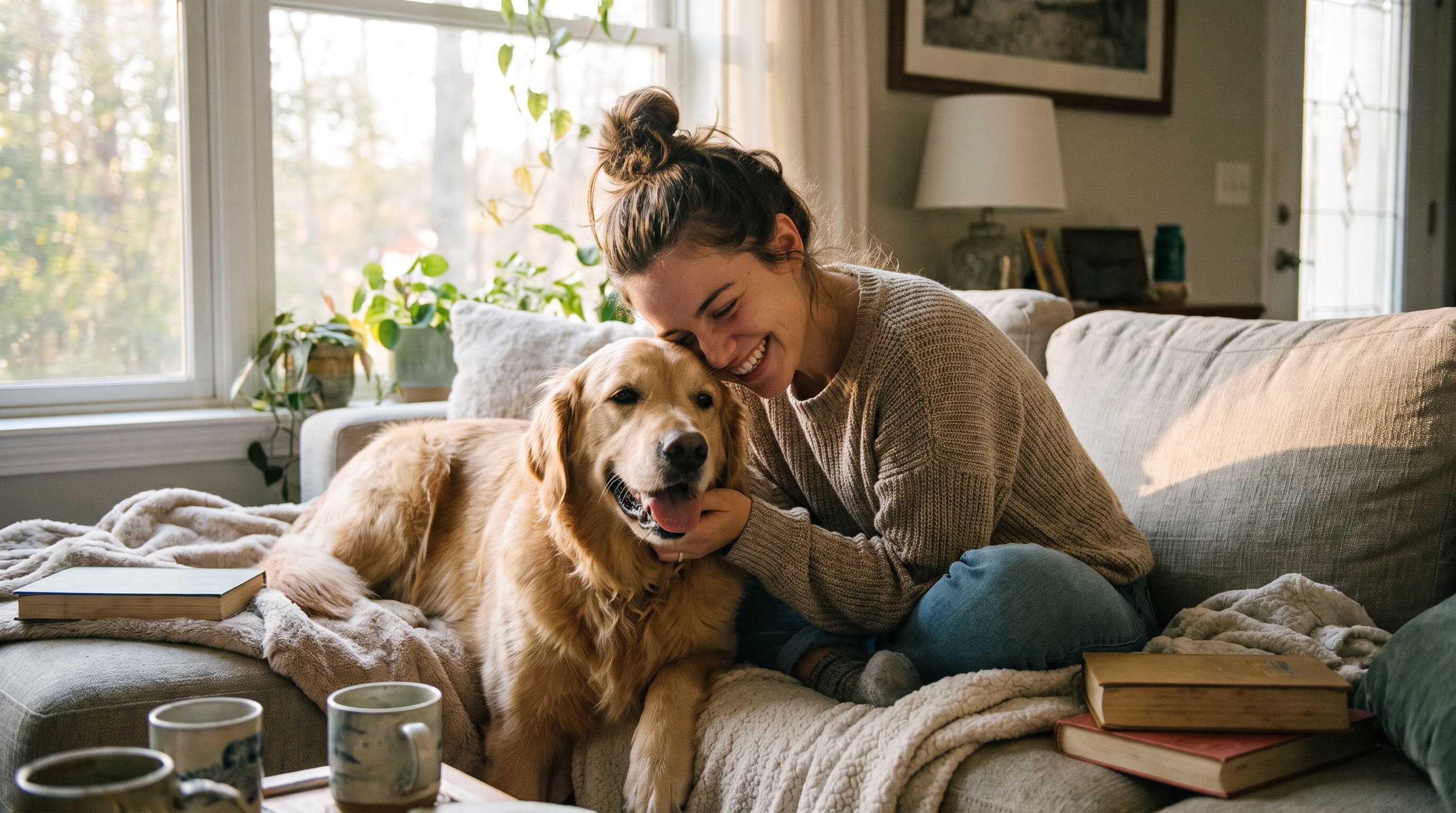

Do Dogs Understand Kisses? What Your Dog Really Thinks When You Smooch
Do dogs understand kisses? Not the way humans do—kissing simply isn't a natural canine gesture. But dogs are expert readers of tone, facial expression, and routine, so most learn to associate a gentle kiss with warmth, praise, and affection. With enough happy repetition, your dog links your smooch to feeling loved, safe, and connected to you.
If you've ever planted a kiss on your dog's head and wondered whether any of it actually registers, you're asking a question behaviorists find genuinely fascinating. The short answer is that kisses aren't hardwired into the canine playbook—but that doesn't mean they're meaningless to your dog. Below, we unpack the science of what your dog perceives, how to tell if your pup enjoys being kissed, and better ways to say "I love you" in a language your dog was born speaking.
Do Dogs Understand Kisses the Way Humans Do?
Kissing is a human invention. Dogs don't press their lips together to show love to other dogs, so a kiss carries no instinctive meaning for them. As Certified Applied Animal Behaviorist Dr. Mary R. Burch explains, "Dogs don't understand human kisses the same way that humans do"—because the behavior is entirely outside their natural communication system (Dogster).
What dogs do understand is context. Your dog is constantly reading your voice, your posture, and your face for clues about how you feel and what happens next. When a kiss arrives wrapped in a soft voice, gentle petting, and a relaxed expression, your dog decodes the whole bundle as "good things are happening" (Newsweek). The lips themselves mean nothing; the affectionate package around them means everything.
How Dogs Learn to Associate Kisses With Affection
Dogs are association machines. Through repeated pairing—kiss, then a scratch behind the ears, then a warm "good girl"—your dog begins to predict that a kiss reliably precedes something pleasant. Over time, many dogs move from merely tolerating kisses to genuinely enjoying the ritual and everything that surrounds it (Dogster).
There's even a biological thread here. Affectionate interaction between dogs and their people can raise levels of oxytocin—the so-called "bonding hormone"—in both species, reinforcing the emotional connection you share (West & Willow). So while your dog isn't interpreting the kiss itself, the loving exchange it's part of can measurably deepen your bond.
Puppies vs. Adult Dogs
Young puppies have no prior experience to draw on, so early kisses are neutral events they're still cataloging. Introduce them gently and pair them with treats and calm praise, and your puppy grows up filing "face coming close" under "safe and good." A dog who was startled or overwhelmed by face contact early on may need more patience—and that's completely normal.
Signs Your Dog Enjoys Being Kissed
Because dogs can't tell you in words, their bodies do the talking. Watch for these green-light signals that your smooches are welcome:
- A loose, wagging tail held at a relaxed height
- Leaning in or moving closer for more contact
- Soft, blinky eyes rather than a hard stare
- A relaxed mouth and open, wiggly body posture
- Gentle licking or nuzzling you back
These are the same cues that tell you a dog is comfortable and content in any situation—learning to read them makes you fluent in your dog's emotional language (American Kennel Club).
Signs Your Dog Doesn't Like Kisses
Not every dog is a fan, and pushing the issue can erode trust or, in some cases, provoke a defensive snap. A face looming toward a dog's face can feel confrontational—especially to dogs who are shy, in pain, or still learning to trust. Back off if you see:
- Yawning or lip-licking when there's no food or fatigue in play—these are appeasement signals meaning "I'm a little uneasy"
- Turning the head away or leaning back
- Ears pinned back and a tucked tail
- Whale eye (whites of the eyes showing) or a stiff, frozen body
- Growling, showing teeth, or ducking out of reach
These signals aren't your dog being difficult—they're honest communication. Respecting a "no thanks" keeps kisses a positive experience and protects the bond you're trying to celebrate.
Why Some Dogs Kiss You Back (Licking Explained)
When your dog licks your face after a kiss, it's tempting to read it as a returned smooch. Licking is a real affiliative behavior—puppies lick their mother's face, and adult dogs lick to greet, appease, and bond. But it can also be information-gathering (you taste interesting), attention-seeking, or a stress-driven habit. Context is everything: a relaxed, wiggly dog licking during a cuddle is showing affection, while frantic licking paired with tense body language may signal anxiety (Dogster). If your dog's licking ever seems compulsive, it's worth a chat with your veterinarian.
Better Ways to Show Your Dog You Love Them
If kisses are more for you than for your dog—and that's okay—there are plenty of gestures your dog understands instinctively:
- Long, calm petting sessions in the spots your dog loves (chest, base of the neck, along the back)
- Soft eye contact, which can trigger that mutual oxytocin release
- Play and training games that engage your dog's brain and body
- A predictable routine of walks, meals, and rest that makes your dog feel secure
- Simply being present—many dogs treasure quiet togetherness above all
These speak directly to a dog's native language of touch, scent, and companionship, no translation required.
What Science Says About the Dog-Human Bond
The reason your affection lands even without translation comes down to biology and thousands of years of coevolution. Dogs domesticated alongside humans, and in the process they became uniquely tuned to our social signals—reading our facial expressions, following our pointing gestures, and syncing to our emotional states in ways few other animals can. When you and your dog share a calm, loving moment, both of your brains can release oxytocin, the same hormone that bonds parents and infants (West & Willow).
That's the deeper truth behind the kiss question: your dog isn't decoding the gesture, but they are absolutely feeling the connection it represents. The lips are just the delivery mechanism for a message your dog receives loud and clear through your voice, your scent, and your touch. In other words, it's not the kiss that matters to your dog—it's you.
How to Kiss Your Dog Safely and Kindly
If your dog enjoys kisses, a few small habits keep the ritual positive for both of you:
- Approach from the side, not head-on. A face coming straight down at a dog's eyes can feel confrontational; a gentle kiss on the head or cheek from beside them is far less threatening.
- Let your dog opt in. Pause and see if they lean toward you before making contact. Consent makes affection mutual.
- Keep it calm. Pair the kiss with soft praise and slow petting rather than sudden grabbing or squeezing.
- Teach kids the rules. Most dog bites to children happen around the face during hugging and kissing. Supervise closely and coach children to let dogs come to them.
- Skip it with unfamiliar dogs. Never lean in to kiss a dog you don't know well, no matter how friendly they seem.
Frequently Asked Questions
Do dogs know that kisses mean love?
Not innately. Dogs don't recognize a kiss as a symbol of love the way people do, but through repeated pairing with affection, praise, and treats, most dogs learn that kisses predict good feelings—and come to associate them with love.
Why does my dog lick me when I kiss him?
Licking is a natural canine greeting and bonding behavior rooted in puppyhood. Your dog may be showing affection, seeking attention, or simply exploring your taste and scent. Relaxed body language means it's friendly; tense licking may signal stress.
Can kissing my dog ever be a bad idea?
For most comfortable dogs, gentle kisses are fine. But looming over a nervous, painful, or unfamiliar dog can feel threatening and lead to a defensive bite—especially with children. Always read the dog's body language first and skip face-to-face contact with dogs you don't know well.
Do dogs prefer kisses or belly rubs?
Most dogs prefer physical affection they can interpret naturally, like belly rubs, ear scratches, and petting, over face kisses. These gestures deliver the pleasant touch your dog craves without the ambiguity of a human kiss.
Is it safe to let my dog lick my face?
Occasional face licking is generally low-risk for healthy adults, though dogs' mouths do carry bacteria. Avoid letting dogs lick open wounds, your eyes, nose, or mouth, and wash up afterward—especially if you're immunocompromised, pregnant, or caring for young children. When in doubt, ask your veterinarian.
The Bottom Line
Your dog may not grasp the concept of a kiss, but that doesn't make your affection wasted. Through the tone, touch, and love that accompany every smooch, your dog learns exactly what you mean: you're mine, and you're safe. Pay attention to your dog's signals, meet them in their own language, and the bond only grows stronger.
Want more science-backed answers to the quirky things your dog does? Explore how dogs perceive human affection, and check out our companion guides on canine love and communication below. Subscribe to the Daily Wag newsletter for a fresh dose of dog science, training tips, and joy in your inbox every day.