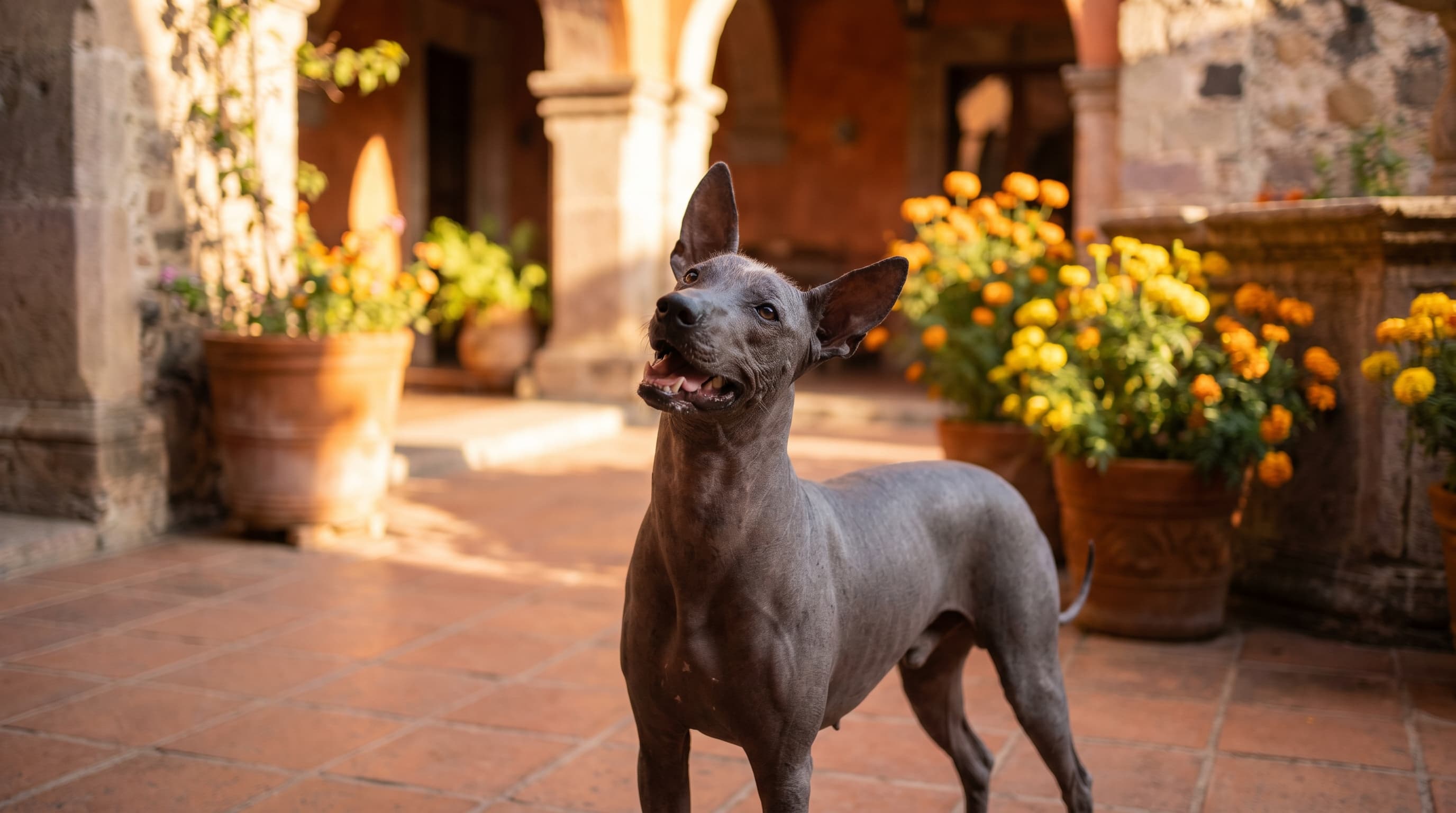

The dog from Coco is Dante, a Xoloitzcuintli (pronounced "show-low-eats-QUEENT-lee"), the ancient Mexican hairless breed often called the Xolo. Once revered by the Aztecs as a guide for souls into the afterlife, the Xolo is the national dog of Mexico and one of the oldest dog breeds on Earth, with roots stretching back more than 3,000 years.
Pixar's Coco turned this lanky, hairless, tongue-lolling goofball into an overnight celebrity. But Dante is far more than comic relief. His breed carries thousands of years of myth, symbolism, and culture, and the filmmakers chose him deliberately. Below, we unpack exactly what Dante is, why a Xolo was the perfect fit for a movie about the Land of the Dead, and what the breed is really like to live with.
What Breed Is the Dog From Coco?
Dante is a Xoloitzcuintli, the Mexican hairless dog. The name comes from Xolotl, the Aztec god of lightning, fire, and death, combined with itzcuintli, the Nahuatl word for dog. According to the American Kennel Club, the breed comes in three sizes (Toy, Miniature, and Standard) and two coat types: a hairless variety with smooth, tough skin, and a less common coated variety covered in short fur.
In the film, Dante is depicted as a scrappy, skinny street dog with patchy skin, missing teeth, and a tongue that constantly flops out of his mouth. That look isn't just cartoon exaggeration. Hairless Xolos are genetically prone to missing or incomplete teeth, which is why their tongues often hang loose, a trait the animators leaned into for maximum laughs.
Why Did Pixar Choose a Xoloitzcuintli for Coco?
The choice was deeply intentional. In Aztec and broader Mesoamerican belief, the Xolo was thought to guide the souls of the dead through the underworld of Mictlan. Dogs were sometimes buried alongside their owners to serve as spirit guides on that journey, and Xolo remains have been found in ancient burial sites across Mexico and Central America. For a movie centered on the Día de los Muertos and a boy crossing into the Land of the Dead, no breed could be more fitting.
Dante literally fulfills this mythological role in the story, ultimately revealed as Miguel's spirit guide (an alebrije). Pixar's research trips to Mexico shaped countless cultural details in the film, and casting the national dog of Mexico as the loyal companion was a quiet nod to authenticity that Mexican audiences immediately recognized, as outlets like Newsweek noted after the film's release.
A 3,000-Year History: The Aztec Dog of the Gods
The Xolo is genuinely ancient. Evidence of the breed traces back more than 3,500 years to the indigenous peoples of Mexico and Central America, including the Maya, Toltec, and Aztec civilizations. Revered as sacred, Xolos were believed to ward off evil spirits and intruders and to have healing powers, with their warm, hairless bodies used to soothe aches and pains, an early form of the heating pad.
The breed nearly vanished in the 20th century. As the historical record shows, the AKC actually dropped the Xolo from its stud book in 1959 due to scarcity, only readmitting it in 2009. Dedicated breeders in Mexico and the United States pulled the breed back from the brink, and today it enjoys a devoted following, helped in no small part by Dante's big-screen fame.
What Are Xolos Actually Like as Pets?
If Coco made you want a Dante of your own, it helps to know the real breed behind the cartoon. Per Hill's Pet and WebMD, Xolos are typically calm, attentive, loyal, and deeply bonded to their families, while remaining aloof with strangers. They're intelligent, moderately energetic, and known to be excellent watchdogs.
- Size: Toy (10–15 lb), Miniature (15–30 lb), and Standard (30–55 lb).
- Lifespan: A long-lived breed, commonly 13–18 years.
- Grooming: Hairless Xolos need almost no brushing but require sunscreen and skin care; coated Xolos shed minimally.
- Temperament: Velcro-style companions that crave closeness and don't do well left alone for long stretches.
Despite their unusual appearance, hairless dogs like the Xolo are not automatically "hypoallergenic." No dog truly is, but the lack of fur means less shedding around the home.
Xolo Skin Care: Living Without a Coat
The hairless variety's most distinctive feature also creates its biggest care need. Without a protective coat, a Xolo's skin is exposed to the elements. Owners should apply dog-safe sunscreen before extended sun exposure, provide a sweater or coat in cold weather, and bathe occasionally to prevent clogged pores and blackheads. The upside: no fur tumbleweeds, minimal grooming bills, and a dog that's genuinely warm to the touch, which is exactly why ancient peoples treasured them as living bed-warmers.
Is the Xolo Right for You?
A Xolo can be a wonderful companion for the right home, but it isn't a low-commitment pet. These dogs thrive with owners who are home often, value a quiet but devoted shadow, and don't mind a striking, conversation-starting appearance. They're sensitive, trainable, and surprisingly athletic. If you want a breed with deep cultural roots and a personality as memorable as Dante's, the Xolo delivers, just remember that adopting one means committing to a 13- to 18-year relationship with a true Velcro dog.
How Accurate Is Dante to a Real Xolo?
Surprisingly accurate, with a few cartoon liberties. Dante's smooth, mottled skin, oversized bat-like ears, lean and leggy frame, wrinkled forehead, and perpetually dangling tongue are all genuine hallmarks of the hairless Xolo. Even his somewhat goofy, clumsy energy reflects the breed's playful side, though real Xolos are typically calmer and more dignified than the film's lovable klutz.
Where the movie takes creative license is in Dante's scruffy, malnourished street-dog condition. A healthy, well-cared-for Xolo has clear, supple skin and an athletic build, not the patchy, scrawny look Dante sports for much of the story. The filmmakers used that rough appearance to underline his journey from neglected stray to cherished companion and spirit guide, a narrative arc rather than an accurate portrait of the breed in good health.
The Xolo in Art, Culture, and Pop Culture
Long before Coco, the Xolo held a celebrated place in Mexican culture. The breed was a favorite subject of artists Frida Kahlo and Diego Rivera, who kept Xolos and featured them in their work, helping cement the dog as a symbol of Mexican identity in the 20th century. Archaeological ceramic figures of plump, hairless dogs, particularly from the Colima region, show how deeply the breed was woven into ancient life and ritual.
Coco introduced this living piece of history to a global audience of millions, sparking a wave of interest in adopting Xolos and learning about Mexican heritage. While that spotlight has been wonderful for raising awareness, breed advocates caution that no one should adopt a Xolo on impulse simply because of a movie, this is a long-lived, high-bonding dog that deserves a committed home. If you fell for Dante, do your homework first, just as you would with any breed.
Frequently Asked Questions
What kind of dog is Dante from Coco?
Dante is a Xoloitzcuintli, also called the Mexican hairless dog or Xolo. It is the national dog of Mexico and one of the world's oldest breeds, historically believed to guide souls to the afterlife.
Why does Dante's tongue always hang out?
Hairless Xolos frequently have missing or incomplete teeth due to the same gene that causes hairlessness. With fewer teeth to hold it in, the tongue often lolls out, a real trait the animators exaggerated for humor.
Are Xoloitzcuintlis good family dogs?
Yes. Xolos are loyal, calm, and affectionate with their families, though they can be reserved with strangers. They bond intensely and prefer not to be left alone for long periods, making them better suited to homes where someone is around often.
How much does a Xoloitzcuintli cost?
Prices vary widely by size and breeder, but Xolo puppies from reputable breeders typically range from roughly $1,500 to $3,000. Adoption through breed-specific rescues is often far less and gives an older Xolo a second chance.
Are hairless dogs like the Xolo hypoallergenic?
Not entirely. No dog is truly hypoallergenic, but because hairless Xolos shed almost no fur, many allergy sufferers tolerate them better than heavily shedding breeds. Spend time with one before committing if allergies are a concern.
How long do Xoloitzcuintlis live?
The Xolo is a notably long-lived breed, often reaching 13 to 18 years with good nutrition, regular veterinary care, and attention to skin and dental health.
Curious About Other Famous and Unusual Breeds?
If Dante sparked your curiosity about Mexico's ancient dogs, dive into our guide to the Mexican lap dog and our complete profile of the spirited Chihuahua, another iconic Mexican breed. Movie buffs will also love our roundup of iconic dogs in movies and our list of dog names inspired by movies.
Want more breed deep-dives, dog-culture stories, and pup-friendly tips in your inbox? Subscribe to the Daily Wag newsletter and never miss a story.