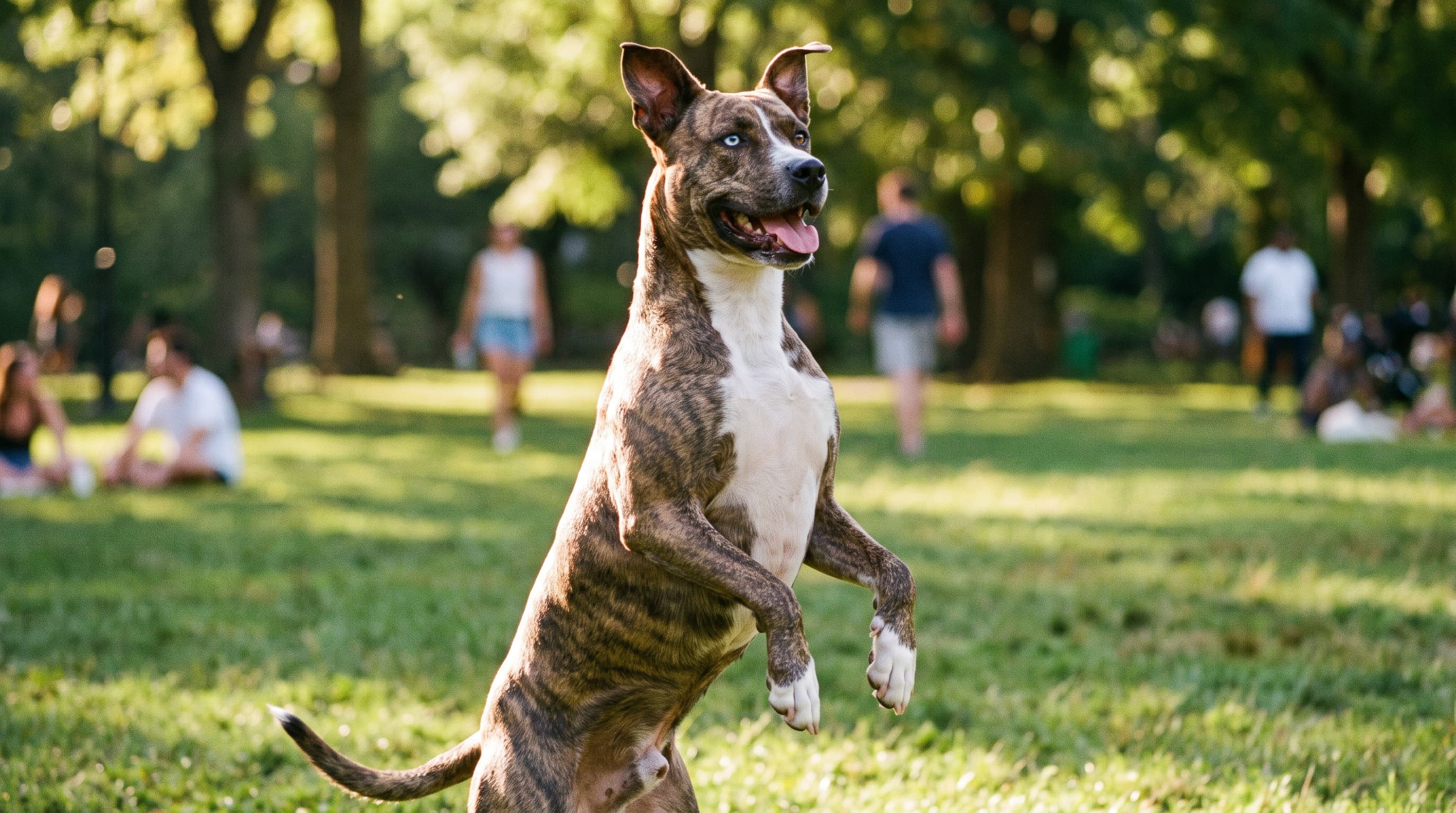

The Pitsky is a mixed-breed dog created by crossing an American Pitbull Terrier with a Siberian or Alaskan Husky. Expect a medium-to-large, muscular, high-energy companion that typically weighs 30–80 pounds, stands 16–25 inches tall, and lives 12–16 years. Loyal, smart, and athletic, the Pitsky dog needs an active owner who can meet its serious exercise and training demands.
What Is a Pitsky?
A Pitsky is a designer crossbreed—the offspring of a Pitbull-type dog and a Husky. Because it's a mix, no two Pitskies look exactly alike; a single litter can range from Husky-leaning pups with blue eyes and thicker coats to stockier, short-coated dogs that favor the Pitbull side. As DogTime notes, Pitskies weigh roughly 30 to 80 pounds, stand 16 to 25 inches tall, and generally live 12 to 16 years. This is a hybrid built from two working breeds, so energy and intelligence are almost guaranteed regardless of appearance.
Pitsky Appearance and Coat
Pitskies are athletic and well-muscled, with a broad chest and a look that blends both parents. Common colors include black, white, brown, gray, and brindle, often in combination. Coats vary widely: dogs that take after the Husky may have a dense double coat that sheds heavily and blows out seasonally, while Pitbull-leaning dogs tend to have a short, smooth single coat. Eye color can be brown, amber, blue, or even two different colors when the Husky genes come through. Because brindle is common in Pitbull lines, many Pitskies inherit that striking tiger-striped pattern.
Pitsky Temperament and Personality
Pitskies are typically loyal, affectionate, and people-oriented. Vet-reviewed profiles from Dogster describe them as loyal, loving, intelligent, and kid-friendly dogs that thrive with consistent training and plenty of exercise in an active household. Both parent breeds are highly social, which means Pitskies often bond intensely with their families and can struggle with being left alone for long stretches.
That intelligence comes with a stubborn, independent streak inherited from the Husky, plus the drive and strength of the Pitbull. Early socialization is essential. A well-raised Pitsky is friendly and playful; an under-exercised, under-socialized one can become destructive or reactive out of sheer boredom.
Exercise and Training Needs
This is not a low-maintenance dog. Both parent breeds were bred to work—the Husky for endurance sledding, the Pitbull for tenacity and athleticism—so the Pitsky needs substantial daily activity. Plan on:
- At least 60–90 minutes of vigorous exercise per day: running, hiking, fetch, or structured play.
- Mental enrichment such as puzzle feeders, scent games, and training sessions to prevent boredom.
- A secure yard or leash discipline—Huskies are notorious escape artists and strong prey-drivers.
- Consistent, reward-based training started early, since the Pitsky can be strong-willed.
According to Canine Journal, the Pitsky is a muscular medium-to-large dog that genuinely needs an owner who leads an active lifestyle. Skip the daily workout and you'll likely see chewing, digging, howling, or escape attempts. For a sense of the athletic Husky side, see the Siberian Husky breed profile.
Pitsky Health and Lifespan
As a mixed breed, the Pitsky can benefit from hybrid vigor, but it can also inherit health issues from either parent. Conditions to be aware of include hip dysplasia, allergies and skin conditions, eye problems (including those seen in Huskies), and heart concerns more common in Pitbull lines. Responsible breeders screen parent dogs for hip and eye issues. With good care, most Pitskies live 12–16 years—comparable to the typical Pitbull lifespan. Routine vet visits, a quality diet, dental care, and weight management go a long way toward a long, healthy life.
Is a Pitsky Right for You?
A Pitsky suits an experienced, active owner or family that can offer structure, exercise, and companionship. It's a strong dog with a big personality, so first-time owners or those with limited time may find it a handful. Also check local rules: some cities and housing providers have breed-specific restrictions that apply to Pitbull-type dogs and their mixes. The breed-profile team at Adopt a Pet emphasizes matching this energetic crossbreed to a home that can keep up. If you love the muscular Pitbull side, our blue nose Pitbull guide is a great next read.
Pitsky History and Origins
Like most designer crossbreeds, the Pitsky doesn't have a long, documented history—it emerged as intentional Pitbull-Husky crosses became popular over roughly the last two decades. Both parent breeds bring serious working heritage. The American Pitbull Terrier descends from bull-and-terrier dogs bred for strength, tenacity, and—despite their reputation—a famously people-loving temperament that earned them the old nickname "nanny dog." The Siberian Husky was developed by the Chukchi people of northeastern Asia as an endurance sled dog built to run for miles in brutal cold. Combine a tenacious athlete with a tireless runner and you get the Pitsky: a dog with deep reserves of energy and drive. Understanding where each parent comes from explains almost everything about why this mix needs so much activity.
Feeding and Nutrition
Pitskies are active, muscular dogs, and their diet should reflect that. Feed a high-quality food formulated for medium-to-large, active breeds, with real animal protein as the first ingredient to support muscle maintenance. Portion according to your dog's weight, age, and activity level—most adult Pitskies do well on two measured meals a day rather than free-feeding, which helps prevent both obesity and bloat. Puppies need a large-breed puppy formula to support steady, controlled growth. Because both parent breeds can be prone to allergies and sensitive skin, some Pitskies do better on limited-ingredient or fish-based diets; work with your vet if you notice itching, ear infections, or digestive upset. Always keep fresh water available, especially given how much these dogs exercise.
Grooming a Pitsky
Grooming needs depend on which coat your Pitsky inherits. Short-coated, Pitbull-leaning dogs are wash-and-wear: a weekly brush and the occasional bath keep them looking sharp. Double-coated, Husky-leaning Pitskies are a bigger commitment—they shed year-round and "blow" their undercoat heavily a couple of times a year, requiring several brushing sessions a week during those periods to manage the fur. Regardless of coat, keep up with nail trims, ear checks, and dental care. Brushing your Pitsky's teeth several times a week helps prevent the periodontal disease that affects the majority of adult dogs.
Pitsky Puppies and Price
Pitsky puppies typically cost between $500 and $2,000 depending on the breeder, location, and the parents' lineage, though many wonderful Pitskies end up in shelters and rescues and can be adopted for far less. Because Pitbull-type dogs are among the most common dogs in U.S. shelters, adoption is very much worth exploring—you may find an adult Pitsky whose size and temperament are already known, which takes the guesswork out of a mixed breed. Whether you adopt or buy, prioritize temperament and health over appearance, meet the dog in person, and ask about the parents' health screening. Also confirm your city and housing allow Pitbull-type dogs before committing, since breed-specific rules can apply to Pitsky mixes.
Common Myths About Pitsky Dogs
Because the Pitsky carries the Pitbull name, it inherits some unfair myths worth clearing up. The first is that Pitskies are inherently dangerous or aggressive. Temperament is shaped far more by breeding, socialization, and training than by breed label, and a well-raised Pitsky is typically friendly, loyal, and eager to please. The second myth is that mixed breeds are automatically healthier than purebreds. While hybrids can benefit from greater genetic diversity, a Pitsky can still inherit conditions from either parent, so health screening and routine vet care still matter. A third misconception is that a big, muscular dog can be exercised with a quick walk around the block—in reality, the Pitsky's working heritage demands vigorous daily activity and mental work to stay balanced. Finally, some assume a Pitsky's look tells you its personality; because coat, size, and drive vary so much in this mix, you should always judge the individual dog in front of you rather than its appearance.
Frequently Asked Questions
How big does a Pitsky get?
Most Pitskies are medium-to-large dogs weighing 30–80 pounds and standing 16–25 inches tall. Size depends heavily on which parent the individual dog favors.
Are Pitskies good family dogs?
They can be excellent family dogs—loyal, affectionate, and often good with kids—when well-socialized and properly exercised. Their strength and energy mean supervision around small children and early training are important.
Do Pitskies shed a lot?
It depends on the coat. Husky-leaning Pitskies with a double coat shed heavily and "blow" their coat seasonally, while Pitbull-leaning dogs with short coats shed less. Regular brushing helps either way.
How much exercise does a Pitsky need?
A lot—at least 60–90 minutes of vigorous activity daily, plus mental enrichment. Without enough exercise, Pitskies often develop destructive or escape behaviors.
Are Pitskies aggressive?
No, aggression is not a defining trait. A well-bred, well-socialized Pitsky is friendly and loyal. As with any powerful, high-drive dog, responsible ownership, training, and socialization are key.
The Bottom Line
The Pitsky dog is a loyal, athletic, intelligent crossbreed that rewards active owners with devotion and fun—but it demands time, exercise, and consistent training. If you can meet those needs, a Pitsky can be a wonderful companion for many years.
Thinking about a Pitsky or a similar high-energy dog? Explore our Siberian Husky guide and blue nose Pitbull profile to understand both sides of this mix—then subscribe to the Daily Wag newsletter for more breed guides and training tips.